

National dialogue advances labour rights and social protection for domestic and farm workers
United Nations Agencies and Government strengthen action for domestic and farm workers, to turn labour rights into reality.
31 July 2026
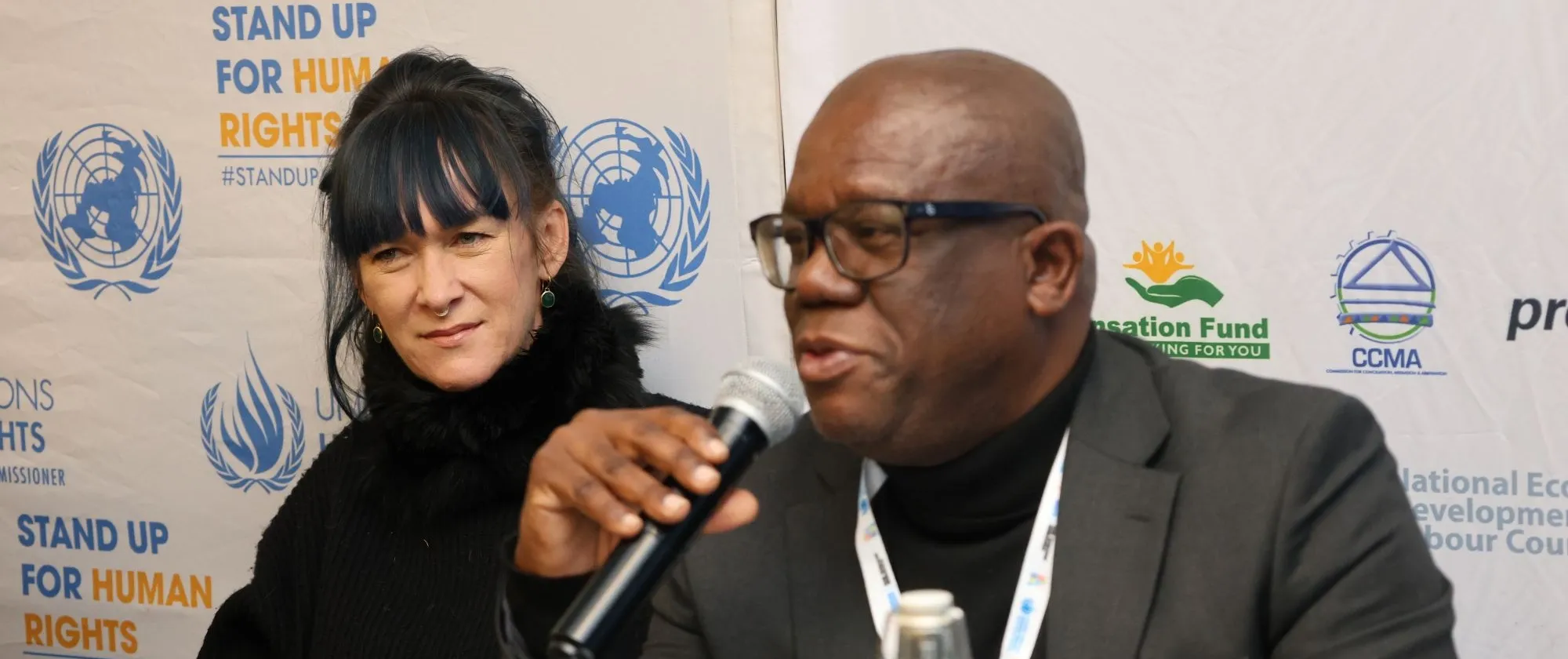
PRETORIA (ILO NEWS) - In collaboration with South Africa’s Department of Employment and Labour (DEL), the United Nations, convened a High Level National Policy Dialogue: Strengthening the rights to work and social security for workers in the informal economy workers, with particular focus on domestic and farm workers, including migrant women.
The dialogue brought together DEL, the Office of the United Nations High Commissioner for Human Rights (OHCHR), the United Nations Entity for Gender Equality and the Empowerment of Women (UN Women), the International Labour Organization (ILO) and the United Nations Children's Fund (UNICEF), alongside representatives of several government institutions, workers’ and employers’ organisations, Chapter 9 institutions, civil society, as well as domestic and farm workers.
Discussions addressed persistent challenges affecting workers, including unsafe working and living conditions, precarious and seasonal employment, exclusion from social protection, non-compliance with labour laws and challenges related to labour inspection and enforcement.
The dialogue built on consultations undertaken with domestic and farm workers by the OHCHR in 2025, including work conducted in partnership with the South African Human Rights Commission (SAHRC). These consultations generated a rights-holder-driven evidence base and draft roadmaps identifying priorities such as stronger labour inspection, improved enforcement and more inclusive policymaking.
UN Women, through its Making Migration Safe for Women programme, brought a gender-transformative and migrant-inclusive perspective, helping ensure that migrant women’s experiences were reflected in discussions on gender-based violence, exploitation and labour rights violations. UNICEF contributed to the broader social protection dimension, reinforcing the importance of coordinated approaches to addressing workers’ vulnerabilities.
Within this collaborative effort, the ILO brought a distinctive focus on international labour standards, decent work, social dialogue and strengthening the institutions responsible for translating labour protections into reality.
The national Labour administration system, including labour inspection formed an important part of this discussion. Domestic workers often work in private households, while farm workers are frequently located in geographically dispersed and remote workplaces. These realities present challenges for organising workers, reporting and identifying violations, and conducting effective labour inspections and ensuring labour law compliance.
The ILO contributed with its normative and technical expertise to discussions on strengthening labour institutions, enforcement mechanisms and approaches to worker protection.
International labour standards provided an important framework for the dialogue, including the Right to Organise and Collective Bargaining Convention, 1949 (No. 98), the Equal Remuneration Convention, 1951 (No. 100), and more recently that of the Domestic Workers Convention, 2011 (No. 189), the Violence and Harassment Convention, 2019 (No. 190).
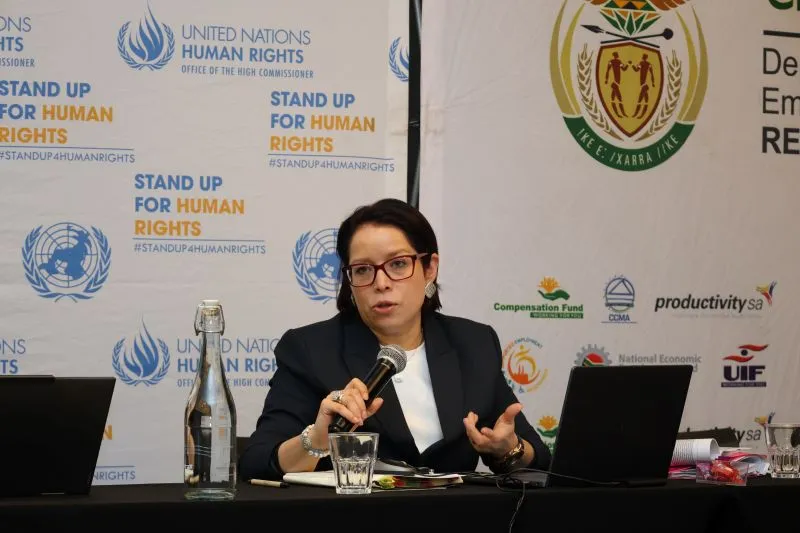
The ILO’s tripartite approach also reinforced the importance of social dialogue. Bringing government, employers and workers together provided an opportunity to strengthen shared responsibility for practical and sustainable solutions.
From dialogue to action
A central message emerging from the dialogue was the need to move from evidence and consultation towards coordinated implementation and accountability.
The collaboration with the Department of Employment and Labour was particularly important in connecting the dialogue and its recommendations with the national institutions responsible for labour policy, administration and enforcement.
The participating UN agencies brought complementary mandates: OHCHR grounded discussions in human rights and workers’ lived experiences; UN Women strengthened the gender and migration dimensions; UNICEF contributed to the broader social protection agenda; and the ILO connected international labour standards and decent work principles with labour-market institutions, enforcement and social dialogue.
Together with DEL and the social partners, these contributions strengthened a shared agenda for gender-responsive and migrant-inclusive reforms and action to expand access to decent work and social protection.
For domestic and farm workers, including migrant women, the dialogue underscored a fundamental priority: closing the gap between rights recognised on paper and rights realised in practice.
Additional details
References
- DOI: N/A