


Narratives for change: How can the media tell impactful stories on child labour?
27 September 2024
By: Ibrahim Khalilulahi Usman, Journalist from Ghana, participant to the "Voices against child labour" training
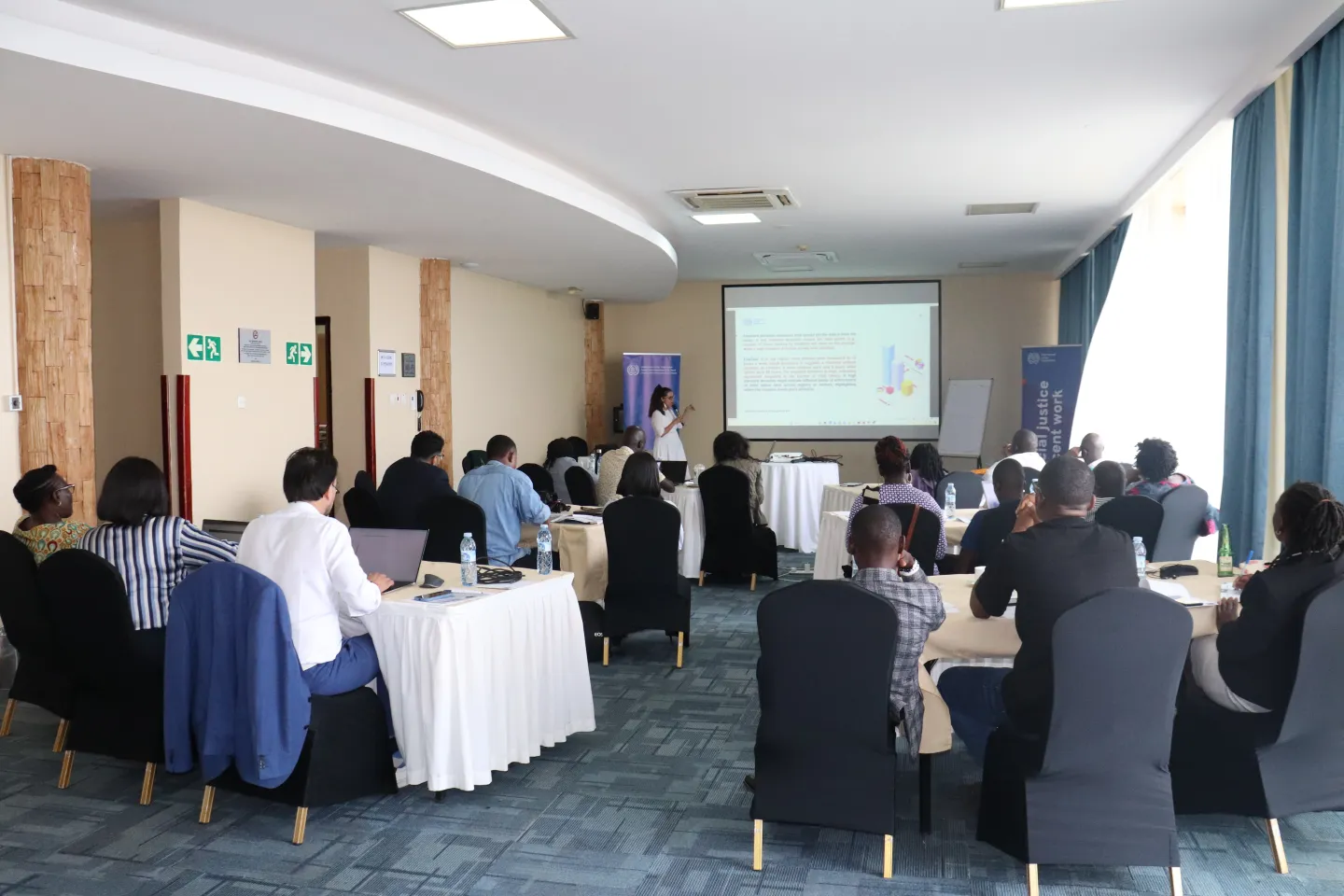
Entebbe, Uganda, September 23 to 25, 2024 — In a square conference room overlooking the serene shores of Lake Victoria, a chorus of murmurs fills the air.
From a distance, one might be curious about the nature of these hushed conversations. As you draw nearer, it becomes clear that these voices carry a profound purpose, resonating far beyond the room's four walls.
These are the voices of journalists from across the African region, gathered here for a significant training session. They are learning about the complexities of child labour and how to report on it effectively, as part of the ILO's Accel Project.
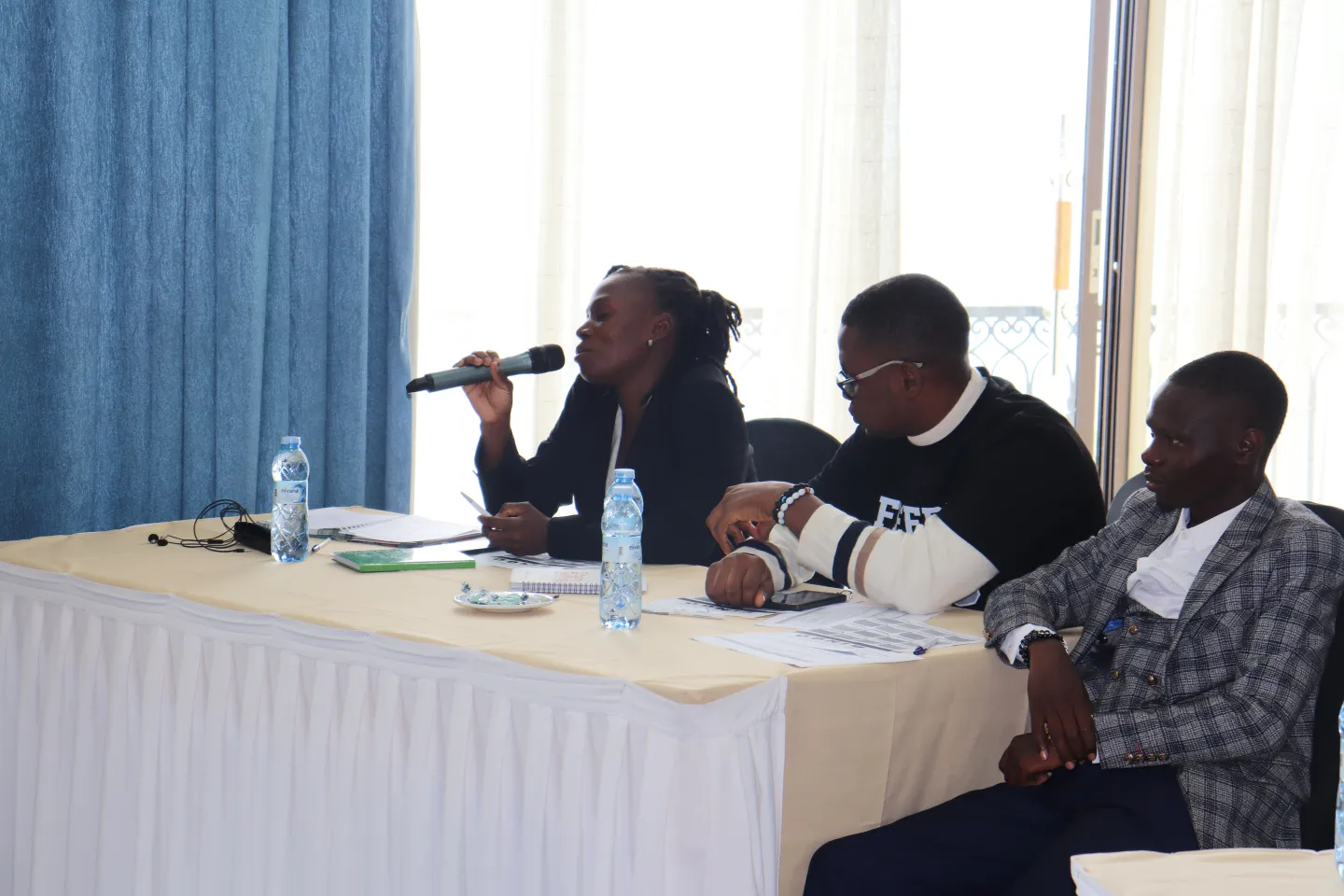
Their discussions are not just for the moment but are intended to spark change and awareness that will ripple out to the wider world.
Child labour is a global phenomenon, the ILO 2020 Global Estimates of Child Labour indicate that, for the first time in 20 years, the absolute number of children in child labour has risen from 152 million in 2016 to 160 million in 2020. This means an increase of 8 million children, the same as the population of New York City.
Across the three days of intensive training, many questions arose, key among them, how can the media tell impactful stories on child labour that will bring about change?
In his view, Alick Ponje, a journalist from Malawi, where about 2.1 million children are in labour: for a story to bring about change it has to be of interest to both the editor, journalist, and the media organisation, "The biggest challenge I have faced is the issue of sponsored stories, where I come up with a story that depicts a child labour issue somewhere, only to realise that the organisation/employer … chooses to highlight stories that suggest the contrary" He narrates, from his experience.
"The stories that promote change - are those that go to the most local subjects: the children, the parents, the community, and all parties involved!" He added
In Egypt, where about 1.8 million working children, Mohannad Diab, a documentary filmmaker, wanted to tell a story that would change the narrative, about child labour. He made a film, "Not Really Children" . In this documentary the journalist focuses on something positive – the creativity of victims of child labour - which offers a glimpse of their talents and the potential of our children.
He believes that the media can only shift the narrative on child labour through balanced and fair reporting.
"It is important for the media to view every story with multiple lenses. Each character has a story - how the story is portrayed will be a result of how the story is reported" Mohannad Diab expressed.
Journalists face challenges in telling positive stories due to sensationalism, limited resources, and a focus on governance, says Zainab Adewale, a Nigerian Journalist.
"Media outlets prioritise conflict-driven stories and that overshadows positive ones. This cycle perpetuates negativity and reinforces existing cultural narratives." She said.
To change this, Zainab is of the view that media organisations and journalists need to adopt a solutions-driven journalism.
"Utilizing solution-driven journalism, we can highlight grassroots innovations and successful initiatives, which showcase what's working or not in communities." She added.
The media has the power to advocate and the inherent ability to shape political issues, influencing local, national, and global agendas. They can bring about a total change of perception just as Investigative photographer, Lewis Hine, who between 1908 and 1924 took over 5,000 photographs of American child labourers. His compelling pictures helped to persuade legislators and the general public to support laws prohibiting child labour. His photographs were instrumental in bringing about the passage of the first child labour laws in the United States.
The responsibility of the Press, News Media, and journalists is to seek the truth and provide a balanced and comprehensive account of events and issues. Regardless of the medium or speciality, their goal should be to serve the public with integrity and diligence.
When they report on challenges, it is to highlight issues that need correction; when they report on effective solutions, it is to offer models for others to follow.
Relevant projects
Feasibility study and design of an impact bond to reduce child labour in Côte d’Ivoire