

Migrant Workers Gain a Voice in South Sudan's Trade Union Movement
Thousands of migrant workers in South Sudan build homes, staff hotels, and trade in local markets. Most have no union to turn to. That is starting to change.
13 April 2026
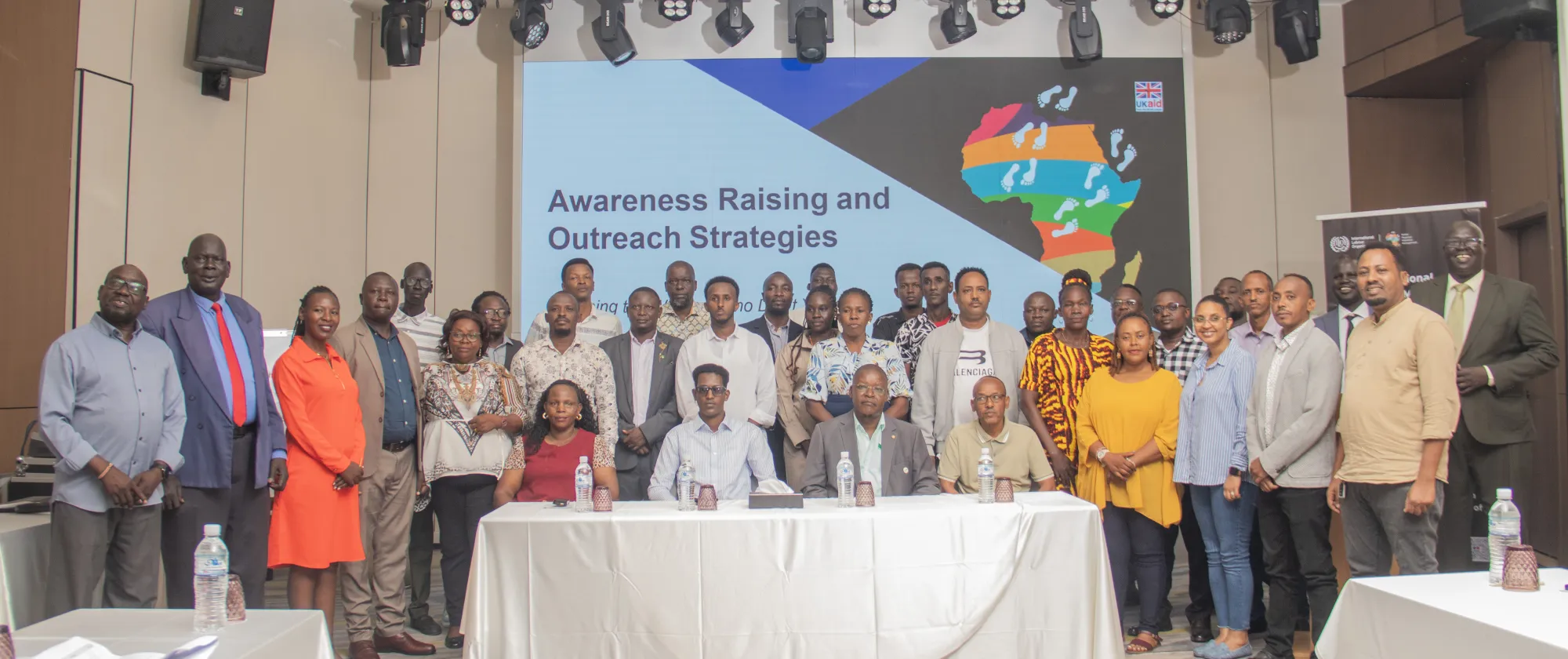
JUBA, South Sudan (ILO News, 8 to 10 April 2026): The South Sudan Workers Trade Union Federation (SSWTUF), with ILO support under the BRMM Programme, funded by the UKFCDO, convened a three-day workshop in Juba to establish Migrant Workers Committees within SSWTUF trade union structures. The event brought together 60 participants (15 women) drawn from migrant community associations representing Kenya, Eritrea, Uganda, Somalia, Burundi, and the Democratic Republic of Congo, alongside the Ministry of Labour, EASS, and SSWTUF leadership.
South Sudan has emerged as a significant country of transit and destination for migrant workers, who are predominantly concentrated in the construction, domestic work, hospitality, and petty trade. While these sectors contribute to national economic activities, they are often characterized by fragmented labour protections and weak regulatory oversight. Despite the clear legal framework provided under the Labour Act 2017 and the SSWTUF Act 2013, migrant workers remain largely excluded from trade union structures. This lack of integration severely limits their access to collective representation or grievance mechanisms, leaving them vulnerable.
Strengthening migrant workers’ representation within trade unions is essential to ensure their voices are heard, their rights are protected, and their dignity is upheld
H.E. Hon. Anthony Lino Makana, Minister, Ministry of Labour, Republic of South Sudan
The three days followed a clear progression. Day one focused on an in-depth analysis of South Sudan’s labour migration dynamics, with the Ministry of Labour presenting current migration trends and the ILO covering international labour standards and worker rights. These technical sessions were grounded by community- led discussions that shed light on critical protection gaps and the daily realities of migrant workers, including challenges related to exploitation, discrimination, and barriers to accessing justice. Day two centred on building the operational framework of the migrant workers committees. Participants examined governance structures, leadership responsibilities, and membership recruitment strategies, culminating in dedicated formation sessions for each of the six represented nationalities. Focusing on long-term impact, the last day equipped participants with essential leadership and social dialogue competencies. Participants engaged in community outreach planning and concluded the workshop by presenting comprehensive action plans to guide the operational sustainability of each committee.

By the end of the workshop, four nationality-based migrant worker committees were successfully established. Each departed with a clear roadmap for action, encompassing outreach and membership recruitment strategies, and a formalized grievance handling mechanism. By facilitating direct engagement with employers and government authorities, the new structures broaden the mandate of SSWTUF, ensuring decent work for all, including migrant workers. Building on this momentum, participants highly recommended implementing similar interventions in the States of Aweil, Yambio, Wau, and Renk, ensuring that protection is extended to migrant prone areas.
Relevant projects

East and Horn of Africa
Better Regional Migration Management