

Media Professionals in Africa Equipped for Improved Reporting on Labour Migration
Promoting accurate, balanced, and gender-sensitive coverage of labour migration in Africa while strengthening regional collaboration.
30 April 2025
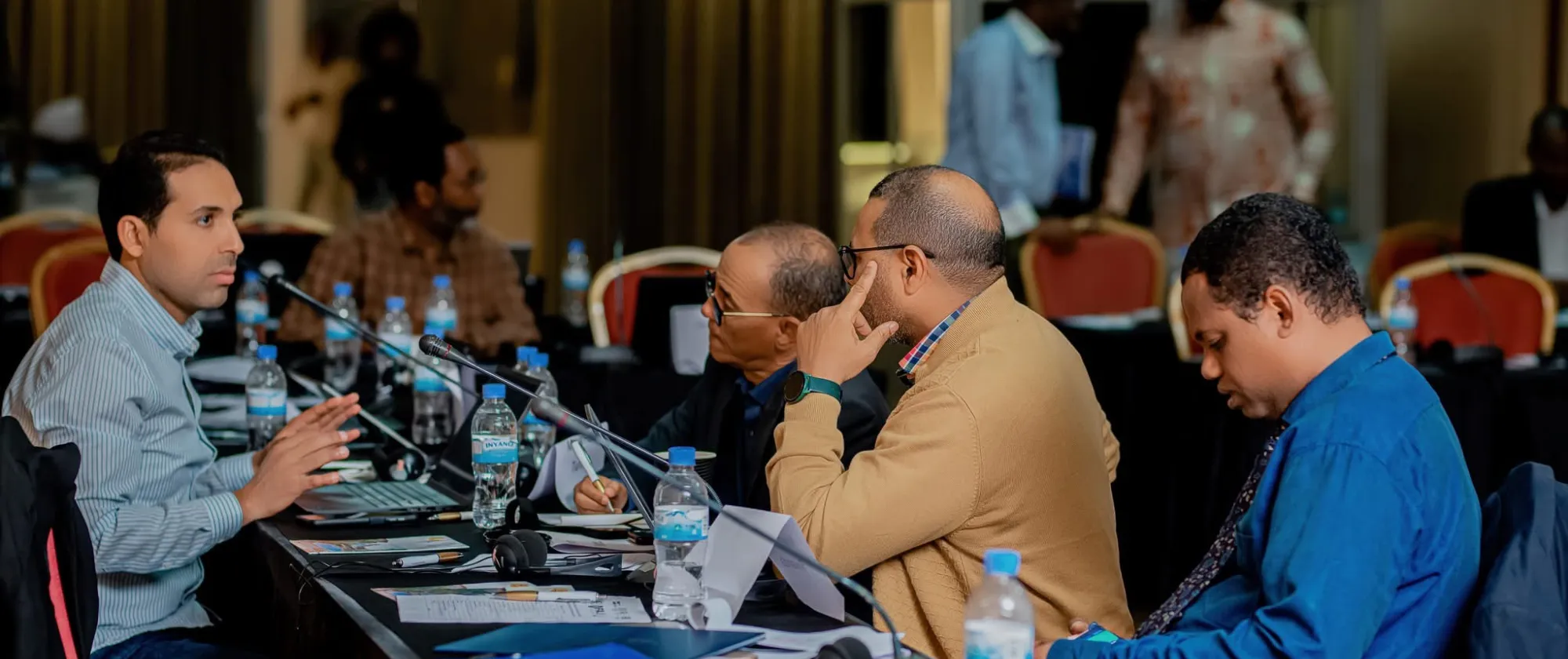
The International Labour Organization (ILO) and the Federation of African Journalists (FAJ) organised a training workshop in Kigali, Rwanda for over 30 journalists to promote accurate, balanced, and gender-sensitive coverage of labour migration in Africa while strengthening regional collaboration.
The International Labour Organization (ILO), through the Better Regional Migration Management (BRMM) Programme and the Labour, Employment and Mobility actions of the AU-ILO-IOM Programme on Labour Migration Governance for Development and Integration in Africa (JLMP-Lead), in partnership with the Federation of African Journalists (FAJ) organised a continental capacity-building workshop for media professionals in Africa in Kigali, Rwanda from 15 – 17 January 2024, under the theme: “Communicating on Labour Migration and Mobility”. The workshop was attended by over 30 media professionals, leaders of unions, as well as journalists from across the continent.
The broader aim of the workshop was to equip African media professionals working on the issues of labour and employment with the skills to produce balanced, accurate and gender-sensitive reporting on labour migration, given its significance in the continent.
Migration has a long history of hope, opportunity and resilience in the continent, and it is important to acknowledge the role of media is shaping narratives around it, said Mr. Emmanuel Habumuremyi, Executive Secretary, in his opening remark on behalf of the Rwanda Journalists Association (ARJ).
Mr. Joel Odigie, General Secretary of the International Trade Union Confederation (ITUC)-Africa, added,
Migration is a human right, an integral part of our history, and given the demographic shifts globally, it is not a phenomenon that is going to stop any time soon. When we do not tell the accurate stories of African realities, nobody else will. It is time we think about how we can have a home-grown voice to change the predominant narrative around migration.”
As per the recently released ILO Global Estimates on International Migrant Workers, there are 14.3 million international migrants in the labour force in Africa as of 2022. While labour migration can contribute to the socio-economic development of countries of origin and countries of destination, as well as migrant workers and their families, misinformation and negative narratives continue to dominate media coverage, often exposing migrants to risks of discrimination, violence, and exploitation.
The workshop further delved into understanding the challenges faced by media personnel when reporting on labour migration while equipping the participants with practical skills to overcome these challenges, including using the rights terminology and visuals, gender-sensitive reporting, ensuring safety and security and ethical communication with vulnerable groups. The workshop also included technical sessions on understanding labour migration dynamics- global as well as in Africa, how international labour standards work, and key concepts related to labour migration and mobility. The sessions also introduced participants to available resources and tools such as the ILO Toolkit on Reporting on Fair Recruitment, Media-Friendly Glossary on Labour Migration and the online repository of labour migration statistics and labour standards. Further, the workshop also aimed to strengthen regional collaboration by strengthening the Africa Labour Migration Journalists Network, enabling cross-border reporting and knowledge-sharing among journalists covering migration issues.
Participants of the workshop emphasized the need for a home-grown narrative on labour migration, which brings forth the specificities of the African labour migration context. Mr. Ephrem Genet, Project Manager of the Joint Labour Migration Programme (JLMP-Lead), ILO, reiterated the crucial role media plays in shaping narratives, stating,
As media professionals, you are not just observers; you are agents of change. By reporting on the experiences of migrant workers - both their positive contributions and the challenges they face - you can influence public opinion, policy and practice. You can help shift the narrative from one of fear and hostility to one of empathy, solidarity and human rights.
The President of the Federation of African Journalists (FAJ), Mr. Omar Faruk Osman, described the workshop as a turning point for advancing public interest journalism. He said,
This activity demonstrated the undeniable power of ethical and informed journalism in addressing the struggles of African migrant workers. Together, we’ve laid the foundation for a future where these stories are told with empathy, integrity and accountability.
This workshop built on the capacity-building workshop held by the Joint Labour Migration Programme (JLMP) in Dakar, Senegal, from 5 to 7 August 2024, which led to the formation of the Africa Labour Migration Journalists Network (ALMJN) to enhance media engagement on labour migration and mobility across the continent. The meeting in August has adopted the Dakar Communique. The workshop in Kigali adopted a draft Action Plan to support the operationalisation of the commitments made under the Communique to strengthen labour migration reporting in the continent.
This initiative is part of the ILO’s broader efforts to enhance the capacity of media professionals to advocate for strengthened migration governance and raise public awareness about the realities of labour migration in Africa.
Relevant projects

East and Horn of Africa
Better Regional Migration Management