

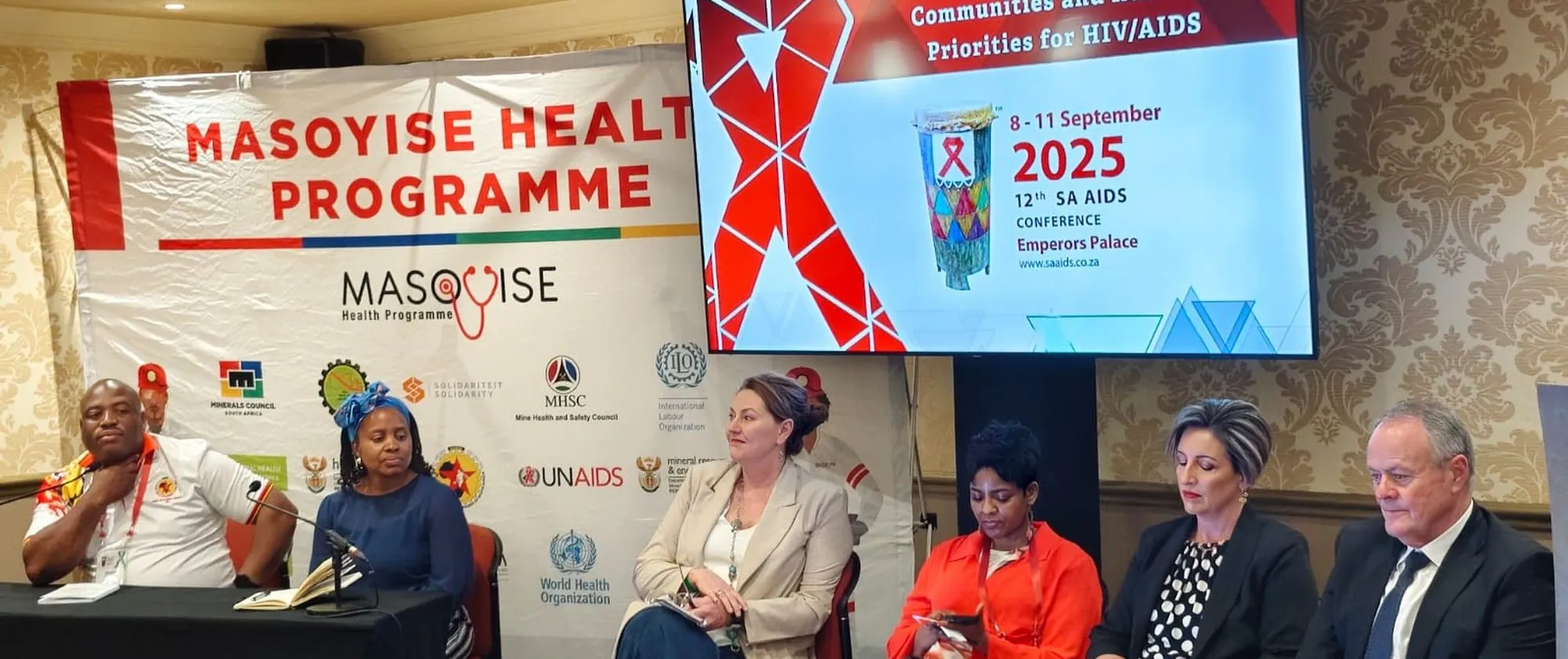
Masoyise Health Programme unveils bold 2025 - 2030 Strategy at the 12th SA-AIDS Conference
Johannesburg, South Africa. In a landmark moment for workplace health in South Africa, the Masoyise Health Programme (MHP) officially launched its 2025 - 2030 Strategy on the sidelines of the 12th South African AIDS Conference. The event, held at Emperors Palace, drew more than 120 in-person attendees and 25 virtual participants, representing a powerful cross-section of government, business, labour, and civil society.
The launch, facilitated through a dynamic satellite session themed “Strengthening Workplace Wellness Partnerships and Synergies with Masoyise Health Programme,” marked a renewed commitment to closing the HIV gap and advancing the Decent Work Agenda in South Africa’s most critical sectors.
A Multi-Sectoral Response to HIV, TB, and Beyond
Since its inception in 2015, the Masoyise Health Programme has been at the forefront of workplace-based responses to HIV and AIDS, particularly in high-risk sectors such as mining, manufacturing, and transport. The new strategy expands this vision, integrating responses to tuberculosis (TB), non-communicable diseases (NCDs), and mental health, recognizing the interconnected nature of health challenges facing South African workers.
“Workplaces are not just sites of economic activity - they are vital platforms for health promotion, prevention, and care,” said Dr Thuthula Balfour, Head of Health at the Minerals Council South Africa.
The Masoyise Strategy is about harnessing partnerships to ensure no worker is left behind.
Closing the HIV Gap: 2025–2030
The 2025 - 2030 Strategy is designed to accelerate progress towards national and global HIV targets by embedding HIV prevention, testing, and treatment into the fabric of workplace wellness. By leveraging the reach and influence of employers, unions, and sectoral bodies, the strategy aims to:
- Increase access to HIV and TB services for workers and their families;
- Reduce stigma and discrimination in the workplace, in line with ILO Recommendation No. 200;
- Promote early intervention and sustained care through education and support services; and
- Foster innovation in health delivery, including digital tools and peer-led initiatives.
Eva Kiwango, UNAIDS Country Director for South Africa, delivered a keynote address highlighting the urgent need for integrated, rights-based approaches: “The workplace is where we can reach millions with life-saving interventions. The Masoyise Strategy is a model for how multi-sectoral collaboration can drive real impact.”
Advancing the Decent Work Agenda
Central to the Masoyise HP Strategy is its alignment with the International Labour Organization’s Decent Work Agenda. The strategy upholds the principles of safe, inclusive, and healthy workplaces, ensuring that workers affected by HIV, TB, and other health conditions are protected from stigma and discrimination. It also champions gender equality, social dialogue, and the active participation of all stakeholders.
“The launch of the Masoyise Health Programme Strategy 2025–2030 is a milestone in advancing the ILO’s Decent Work Agenda,” said Simphiwe Mabhele of the ILO Decent Work Team for East and Southern Africa. “By integrating HIV, TB, NCDs, and mental health into workplace wellness, we are building a future where every worker’s health and dignity are protected.”
A Call to Action
The satellite session featured a rapid-fire panel discussion with representatives from mining, TEBA, organized labour, manufacturing, trucking, and government, each sharing their sector’s top priorities for workplace wellness. The session concluded with the official unveiling of the strategy by Dr. Nothando MOYO, Deputy Head of Occupational Medicine at the Minerals Council SA, who called on all stakeholders to endorse and support the new vision.
As the session closed, the message was clear: the Masoyise Health Programme Strategy 2025 - 2030 is not just a document, it is a call to action for every employer, worker, and policymaker to join forces in closing the HIV gap and realizing the promise of Decent Work for all.