

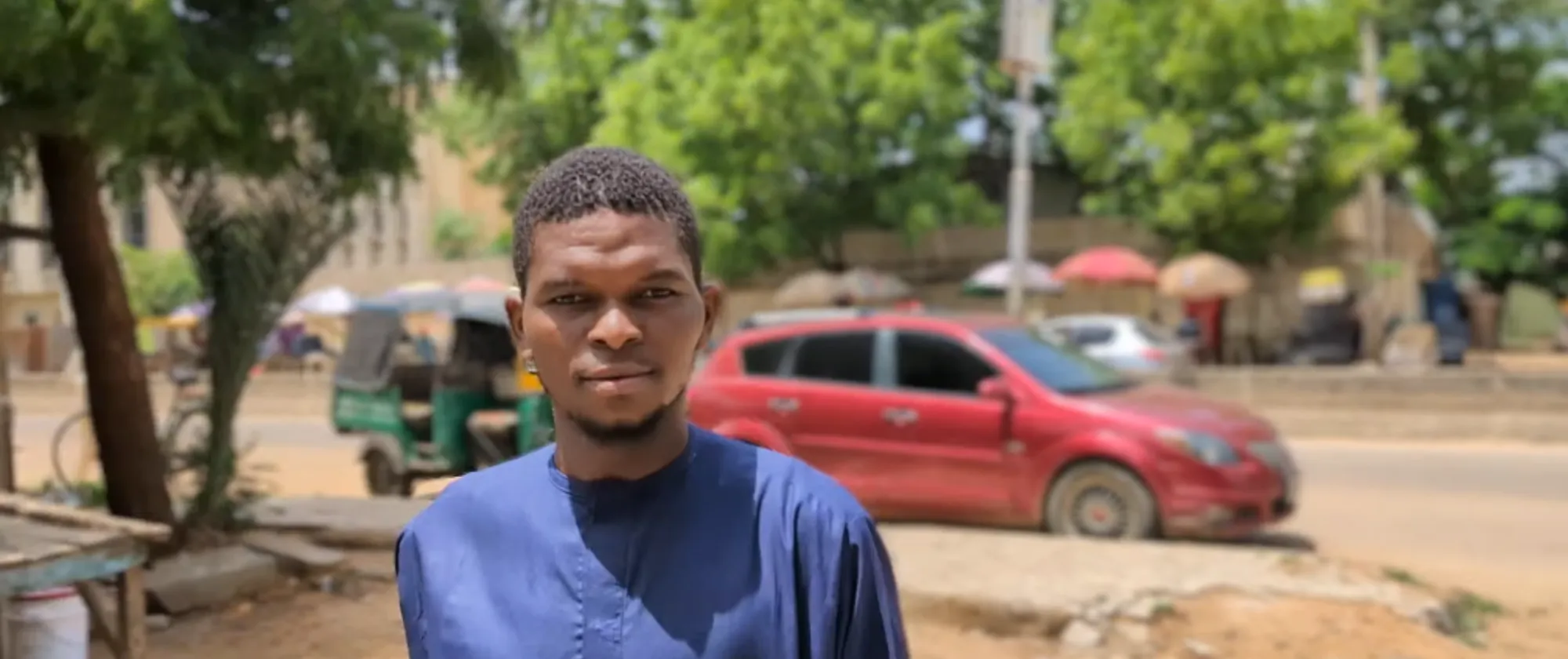
Looking Back: ILO catches up with Usman and the Shehu’s 10 Years after being rescued from Child Labour
9 September 2024
Usman Abdullahi and Hafsat Shehu, once child labourers, transformed their lives through the ILO Eliminating child labour in West Africa and strengthening sub-regional cooperation through ECOWAS (ECOWAS II) Project, which provided education and vocational training. Today, Usman is a final-year Public Health student, and Hafsat, a recent Microbiology graduate, both credit the project for their success. Their journeys highlight the life-changing impact of targeted interventions against child labour.
Usman Isah Abdullahi, a native of Bunkure in the Nigerian state of Kano, could not continue his education after finishing his primary education due to financial constraints. His parents could not afford to sponsor him in school, which led him to migrate to Ibadan in Southwestern Nigeria in search of work.
Upon arriving in Ibadan, Usman stayed with his brother and started selling cassettes to sustain himself and the family.
In 2012, through the ILO- ECOWAS II project funded by USDOL supported the Federal Ministry of Labour and Galilee Foundation (an NGO), in reaching out to vulnerable children in or at risk of child labour. The ILO implemented the project in Ogun and Oyo State. The project covered communities such as Iwo Road, Sabo, Agbaje, and Bodija communities in Ibadan, West Africa’s largest city.
Sabo, Usman’s community, is a Hausa-speaking Muslim neighbourhood. Home to approximately 25,000 people, the community is primarily composed of migrants from northern Nigeria and neighbouring countries like Chad and Niger. Situated in Ibadan North Local Government Area, Sabo has a traditional ruler known as the Sarkin Sabo.
Sabo is a community with polygamous practices and early child marriages, leading to high birth rates and poverty. Women have limited economic capacity, while the financial burden rests on men or the children themselves.
“Within this community, diverse types of child labour activities persist, such as street hawking, beggars-guide, and scavenging. Many of the children are not schooling, seriously impoverished and unkempt. The major trade of the people is transaction in foreign exchange, trade in cows and other petty businesses.”
A Battle Against Child Labour
Usman was among the children identified to be involved in child labour in the Sabo community. To address the prevalence in Sabo, Galilee Foundation conducted a sensitization campaign to educate the communities about child rights, the importance of education, and the harmful consequences of child labour. The intervention also involved conducting focus group discussions with community and market leaders to gather diverse perspectives.
To enhance community engagement, the project established a ten-member Child Labour Monitoring Committees (CLMCs) which met bi-monthly until the project concluded in February 2014.
Transforming lives
The intervention, however, changed Usman's life. With the intervention’s support, he returned to school and completed junior secondary school.
They enrolled me back to school and provided us with all necessary materials needed and after completing my junior secondary school, I returned to Kano and continued my education with my brother’s support.
Usman Isah Abdullahi
Like Usman, Hafsat Shehu's family grappled with severe financial difficulties in 2013, forcing her to sell pure water sachets to support them. Hafsat, through the ECOWAS II project, enrolled in a vocational training programme. She learned tailoring and got start-up equipment such as sewing machine, scissors, sewing threads etc.
“The support from them [ECOWAS II project through Galilee Foundation] transformed my life. It allowed me to become self-reliant,” Hafsat said.
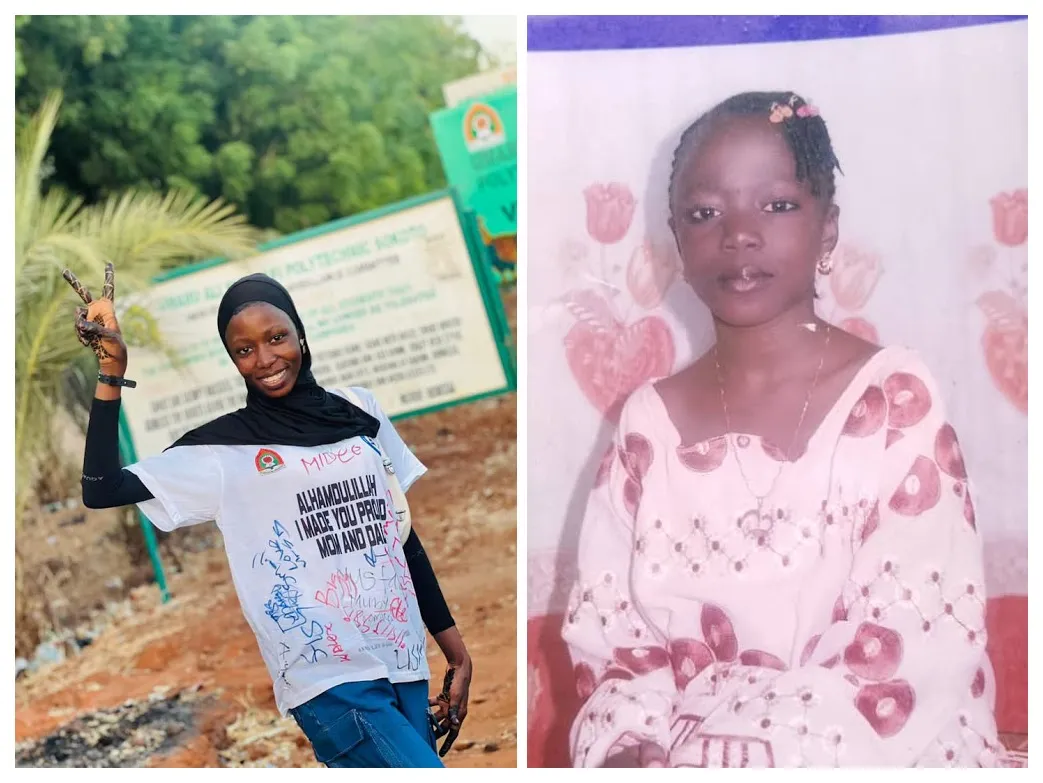
Sumayya Shehu, Hafsat’s sister, recounted their family’s financial struggles, particularly in covering school fees. Prior to the intervention, their mother earned a living by selling rice, water, and other drinks. Learning tailoring and receiving sewing machines through the intervention has proved to be a lifeline for the family. Although grateful, Sumayya noted that continued support or training would have made their recovery quicker.
By 2014, the project saw the withdrawal of 70 teenagers aged 14 to 17 from the worst forms of child labour and provided them with protection services, vocational skills, and literacy training. The project also rescued Eighty younger children, between 5 and 17, from Child Labour and provided them with shelter, education, and skills development. Preventive measures implemented in the four communities safeguarded 180 children at risk of the worst forms of child labour through formal and informal educational programs.
Sustaining The Impact
Despite challenges, the project's successes are evident. Usman, now a final-year Public Health student at the Federal College of Health Science and Technology Wudil, Kano, attributes her life transformation to the project’s intervention.
“They [ILO- through USDOL ECOWAS II project] have laid a solid foundation for my education because I can even be self-reliant from the course I'm studying after graduation,” he asserted.”
Hafsat, who recently graduated, cherishes the project's impact. The opportunity led her to earn a Higher National Diploma in Microbiology from Umaru Ali Shinkafi Polytechnic, Sokoto, in 2024. Her sister, Sumayya, also a 2024 Biochemistry graduate from Usmanu Danfodiyo University, Sokoto, is currently job-hunting. Both sisters now live in their hometown, Sokoto.
Sumayya urges parents to prioritize education over street hawking, emphasizing its importance, especially for girls. Hafsat offers words of encouragement to child labour victims:
My message is do not give up. We did not, and it made all the difference today.
Sumayya Shehu
While Usman believes in the power of education to transform lives, he encourages young people to focus on their studies regardless of challenges. “Education is the key to reaching your goals and supporting others. My ambition is to secure a scholarship to further my education abroad, and I hope my dream comes true,” he said in an interview at his Kano residence.