

Lebanon’s cherry farmers embrace safer and more sustainable practices through ILO support
The ILO’s BOUZOUR project, funded by Sweden, is helping cherry farmers like Hasan Sharaf and the Ismail family strengthen value chains, improve occupational safety and health and open more inclusive access to global markets.
30 October 2025
BEIRUT (ILO News) - In the cherry-growing region of Lebanon’s Bekaa Valley, farmers are learning that small changes can make a big difference. With support from the International Labour Organization (ILO) and funding from the Swedish International Development Agency (Sida), they are improving decent work and occupational safety and health in the field, and finding new opportunities to reach global markets.
Through the Building Inclusive Markets and Decent Work for Lebanese host communities and Syrian refugees (BOUZOUR) project, the ILO is helping farmers like Hasan Sharaf and the Ismail family strengthen value chains and open fairer and more inclusive access to international markets. The initiative links smallholder cherry farmers with exporters and helps farmers meet international standards to ensure compliance with buyer expectations and global requirements, with particular emphasis on fostering women’s participation and economic empowerment. Through training initiatives, it also promotes decent work and safe and healthy work practices for both Lebanese and Syrian workers. The result is improved incomes for farmers’ incomes, better livelihoods and safer workplaces for workers, and greater resilience for farming communities.

Staying safe in the fields
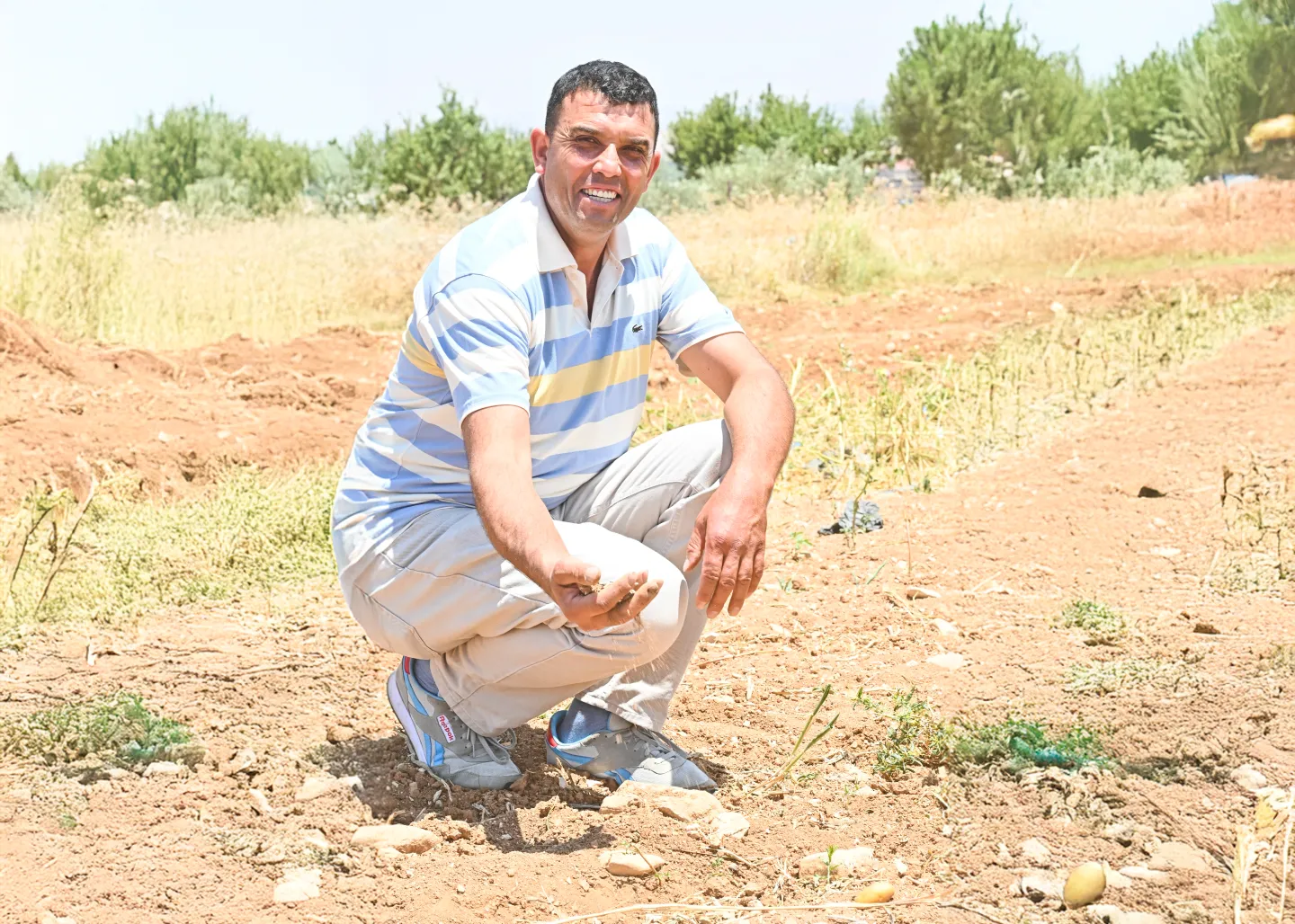
For Hasan Sharaf, a farmer in the village of Shimstar, the cherry harvest season brings both promise and risk.
“One of the biggest risks I face in the field is wild animals. In the summer, the heat brings another challenge as well: how to secure enough water for the crops,” said Sharaf. “It’s exhausting, both economically and physically. We work 10 to 12 hours a day just to keep everything alive.”
The impact of climate change means that, with less rainfall and frequent droughts, Sharaf and other farmers are forced to dig deeper for water, often finding only dry soil and twigs where moisture once existed.
Simple steps, lasting impact
Like many farmers, Sharaf had long relied on basic protective habits, such as wearing a hat during peak sun hours. But after attending occupational safety and health training sessions organized by the exporter company Fadel Trading under the BOUZOUR initiative, his approach has transformed.
“I learned how to protect myself from the sun, and how important it is to stay hydrated. I also learned the importance of the first aid kit. I keep it with me at all times now. I have a lot more information than before, to keep myself protected and safe.”
Looking out for each other
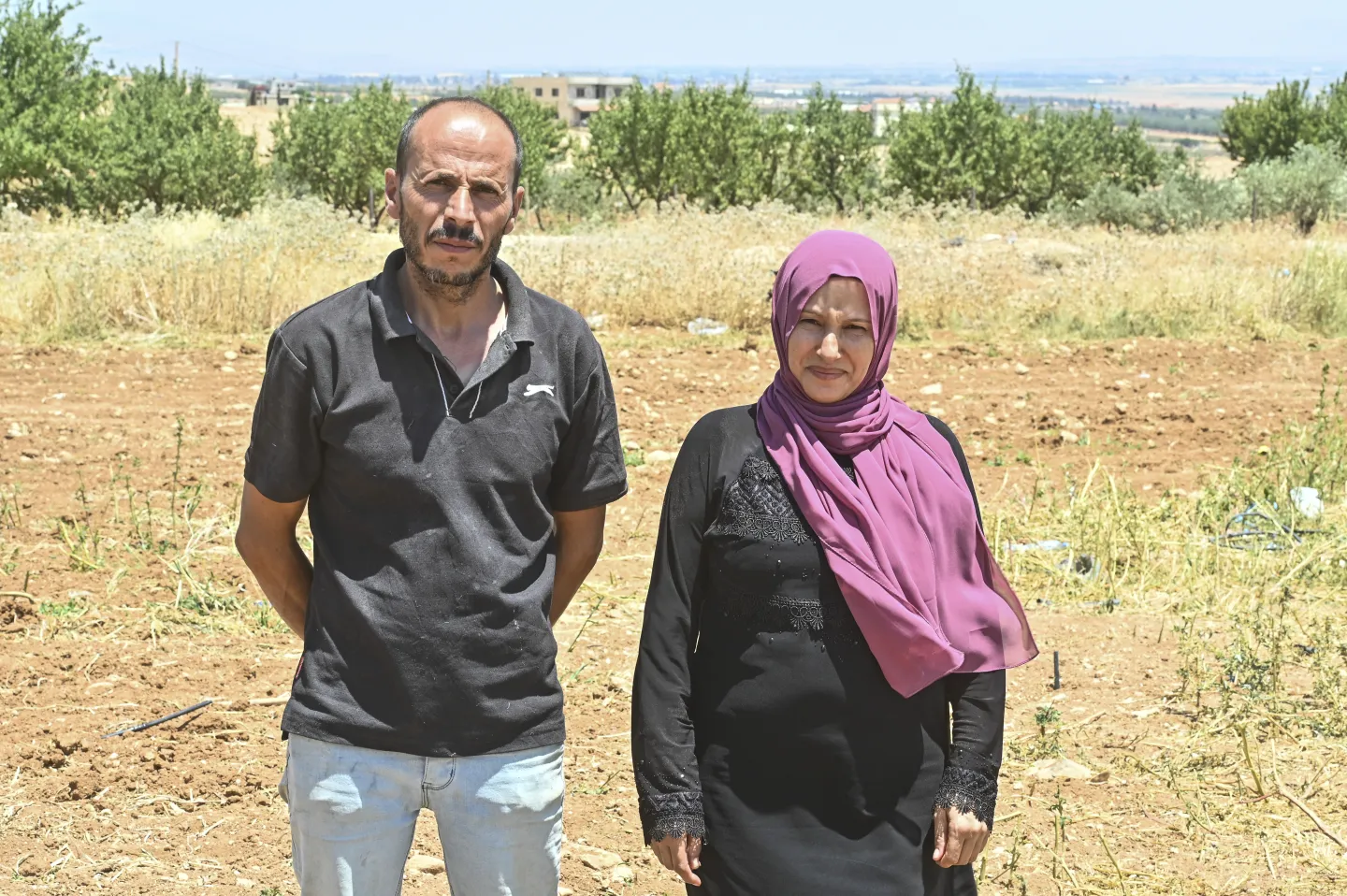
For husband and wife Saadallah and Roukayye Ismail, a Syrian couple who work together in the field, everyday farm tasks also carried hidden risks. Climbing ladders, spraying pesticides, and working long hours under the sun often left them feeling unsafe.
“Before, we didn’t use masks when spraying,” Roukayye Ismail recalls. “When climbing a ladder, we wouldn’t always make sure it was positioned well. The weather was another danger, especially when it’s hot.”
Today, after attending occupational safety and health training sessions, the couple feels a new sense of security.
“We now use the first aid kit a lot and keep water with us in case someone gets a heatstroke,” says Saadallah Ismail. “We also work in specific hours to avoid the sun and its dangers. Work is better now, emotionally we feel better because we’re safer. We’re much happier now.”
Safer work, stronger communities
The changes may seem small - carrying water, resting in the shade, using protective equipment - but they are making a tangible difference in the lives of farmers, workers and their families.
“We feel we have a role to play now, taking care of each other,” says Roukayye Ismail.
Monitoring mechanism and procedure for child labour in cooperative and farm operations
The initiative also supports exporting companies in understanding their role in eliminating child labour and establishing a practical monitoring mechanism that helps cooperatives and farms identify, prevent and respond to child labour as part of their daily operations.
This is particularly relevant, as child labour in agriculture is often invisible, with many children in rural areas working on family farms, assisting their parents in agricultural activities. However, even when framed as "helping hands," children often perform the same tasks as adults, including hazardous activities that put their health and safety at risk.
The monitoring mechanism was developed by FaV Lebanon, a consortium of seven Lebanese farming cooperatives, in collaboration with the exporter company, Nasr Rahme SAL, participating in the BOUZOUR project initiative. It provides a practical system for cooperatives and farmers to identify, prevent and respond to child labour risks by enabling early detection, ensuring corrective action through structured follow-up and referrals, and building the capacity of cooperative staff.
The integration of this mechanism into regular farm monitoring allows cooperatives to adopt ethical practices, meet due diligence requirements of buyers and donors, contribute to the elimination of child labour, and strengthen their credibility in both local and export markets. It also facilitates coordination with child protection actors for timely interventions when risks are identified.
“This season, together with FaV Lebanon’s cooperatives in the villages of Ainata and Qaa El Rim, we took an important step to protect children,” explains Ahmad Flity, head of the cherries and other fruits cooperative in Arsal in the eastern Bekaa Valley. “We introduced a child labour monitoring system so that, instead of spending their days in the fields, children can stay closer to learning, playing, and simply being kids. Over the past months, we have begun putting this system into action, closely observing what happens on the farms. And as we look ahead to next season, we remain committed to working hand in hand with the cooperatives to ensure every child is safe and supported.”
Through knowledge and practical tools, the ILO’s BOUZOUR project is improving working conditions for farmers in Lebanon’s agricultural sector while supporting the sustainability of one of the country’s most important crops. At the same time, it is revitalizing the cherry export sector, creating job opportunities for both Lebanese communities and Syrian workers, strengthening local resilience and connecting farms to global markets during a time of crisis. Importantly, the project also integrates elimination of child labour measures, helping cooperatives prevent child labour, safeguard children’s wellbeing, and ensure farming practices do not interfere with their education or development.
Relevant projects
Project
Building Inclusive Markets and Decent Work for Syrian Refugees and Lebanese Host Communities (BOUZOUR)