

Kenya Validates National Strategy to Support Sustainable Reintegration of Returning Migrant Workers
Validating Kenya’s draft National Return and Reintegration Strategy to strengthen coordinated support for returning migrant workers and help them access livelihoods, services, and sustainable reintegration pathways.
1 June 2026
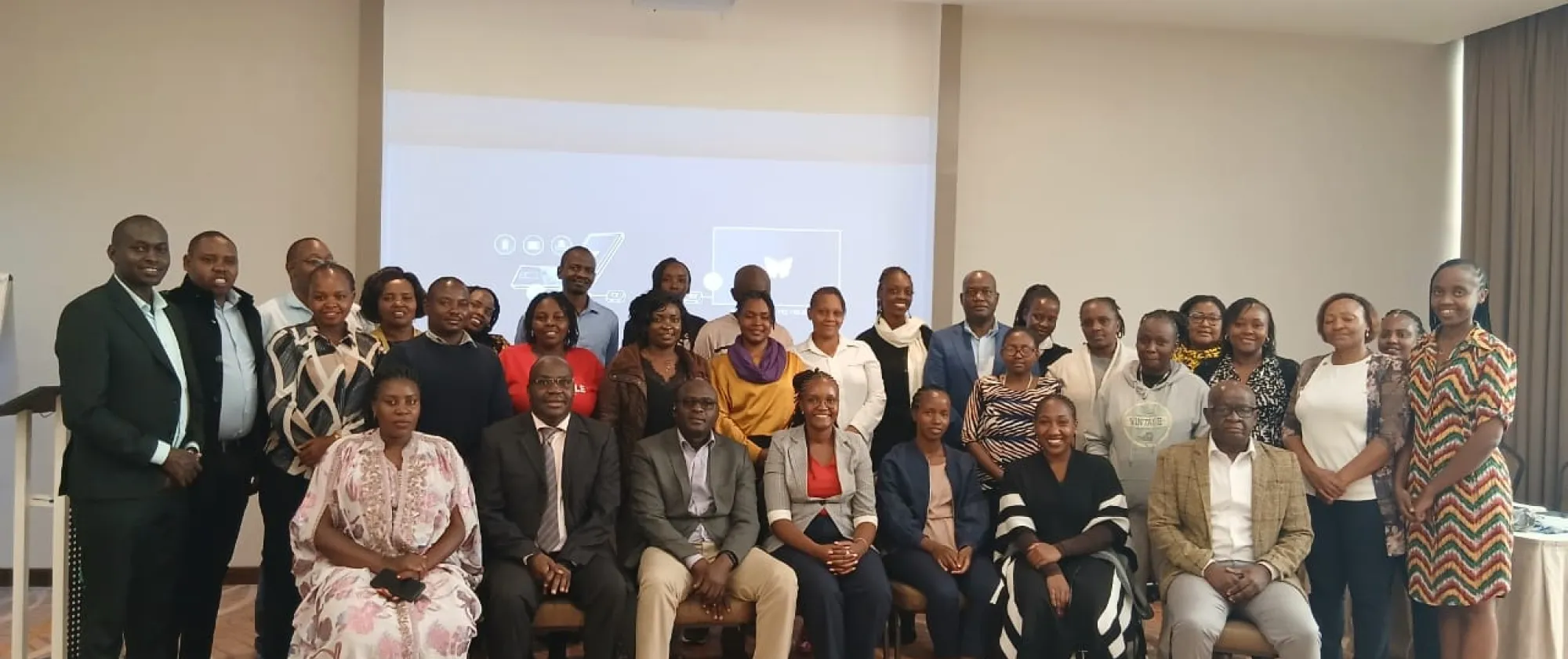
On 28 May 2026, the Ministry of Labour and Social Protection (MOLSP), in partnership with the International Labour Organization (ILO), convened a one-day national validation meeting in Nairobi to review and validate Kenya's draft National Return and Reintegration Strategy for Returning Migrant Workers.
The meeting brought together 36 participants, including 25 women, representing key government institutions, including the MOLSP, the National Employment Authority (NEA), the National Industrial Training Authority (NITA), the State Department of Diaspora Affairs, the Ministry of Health, and the Women Enterprise Fund. Representatives from Social Partners, including COTU-K and FKE, civil society organizations such as Global Justice Kenya and Centre for Domestic Workers Training and Development (CDTD), as well as other agencies working in labour migration, employment, skills development, and social protection, also participated. A highlight of the workshop was the participation of 11 returned migrant workers, 10 of whom were women. Their lived experiences and practical insights enriched the discussions, ensuring that the draft strategy reflects the realities, needs, and aspirations of returning migrant workers while promoting a more responsive and inclusive reintegration framework.
Kenya is one of East Africa's leading labour-sending countries, with tens of thousands of Kenyan migrant workers seeking employment opportunities abroad each year, predominantly to Gulf Cooperation Council countries. While labour migration has created valuable employment opportunities and generated substantial remittances, many returning migrant workers encounter considerable challenges upon their return. These include limited access to sustainable livelihoods, financial constraints, psychosocial distress, and inadequate access to essential services. To date, Kenya's approach to return and reintegration has lacked a structured, coordinated national framework. Therefore, the draft National Return and Reintegration Strategy, informed by an extensive consultative and evidence-based process, will provide Kenya with a coordinated and comprehensive framework to support the sustainable economic and social reintegration of returning migrant workers.
Kenya already has many of the foundations for return and reintegration in place. What has been missing is one coordinated national strategy that follows the migrant journey from pre-departure to return, tracks migrants, provides proper reception and case management, recognises skills gained abroad, offers psychosocial and financial support, and helps returnees move into sustainable livelihoods.
Mr. Peter Nyariwo, Director of Labour Migration
The meeting adopted a structured, issue-focused review methodology, allowing participants to engage substantively on the strategy's key sections rather than a line-by-line editing exercise. Participants reviewed the strategy's strategic direction and context, institutional framework and coordination arrangements, case management system, reintegration service packages and pathways, and gender-responsive and inclusive approaches. Sessions also addressed financing, monitoring and evaluation, sustainability, and implementation phasing.
The validation workshop concluded with a shared commitment to finalize and advance the national Return and reintegration Strategy as a practical framework for supporting returning migrant workers. Participants endorsed the strategy's comprehensive and coordinated approach, emphasizing strong institutional collaboration, sustainable financing, effective monitoring, and inclusive implementation. A key outcome of the workshop was the validation of four tailored reintegration pathways to address the diverse needs of returnees: labour market re-entry, skills recognition and transition, enterprise and self-employment, and distress and protection-sensitive support. Together, these pathways provide a holistic package of services to help returning migrant workers rebuild their lives and successfully reintegrate into their communities.
Relevant projects

East and Horn of Africa
Better Regional Migration Management