


Spotlight Interviews with Co-operators
Interview with Sang-Youn Lee, Professor of Sungkonghoe University
“Spotlight Interviews with Co-operators” is a series of interviews with co-operators from around the world with whom ILO officials have crossed paths during the course of their work on cooperatives and the wider social and solidarity economy (SSE). On this occasion, the ILO interviewed Sang-Youn Lee, Professor of Sungkonghoe University, Seoul, Republic of Korea.
30 April 2025
1. Could you tell us about yourself and how you became interested in cooperatives and the wider social and solidarity economy (SSE)?
I’m a professor of business at Sungkonghoe University in Seoul, Republic of Korea, specializing in cooperative management and social entrepreneurship. Before academia, I worked for a decade in strategic planning at KT, one of Korea’s largest telecom companies—an experience that gave me deep insight into how economic growth often outpaces social cohesion and equity.
My interest in cooperatives has both personal and academic roots. My maternal grandfather led a local agricultural cooperative (Nonghyup), and my elder brother worked for a livestock cooperative (Chukhyeop), giving me early exposure to the values and functions of cooperative systems.
During my PhD studies, I often wondered whether a more democratic form of corporate governance—such as having CEOs elected directly by employees—might be possible. After a stint at the State University of New York, I joined Sungkonghoe University in 2016, where I found strong institutional support and an intellectually vibrant environment for cooperative studies. Since then, I have deepened my commitment to cooperatives and the broader SSE through research and by developing educational programmes that engage and empower students as changemakers in the field.
2. Sungkonghoe University has recently launched the Impact Business Program which is related to the SSE. As a leading figure of this initiative, could you share its vision and main objectives?
The Impact Business Programme aims to connect social values with sustainable business strategies. Rooted in SSE principles, it equips students to design and manage enterprises that are financially viable, socially inclusive, and democratically governed.
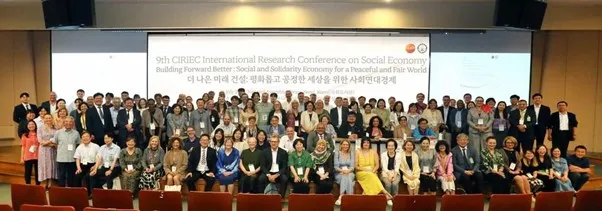
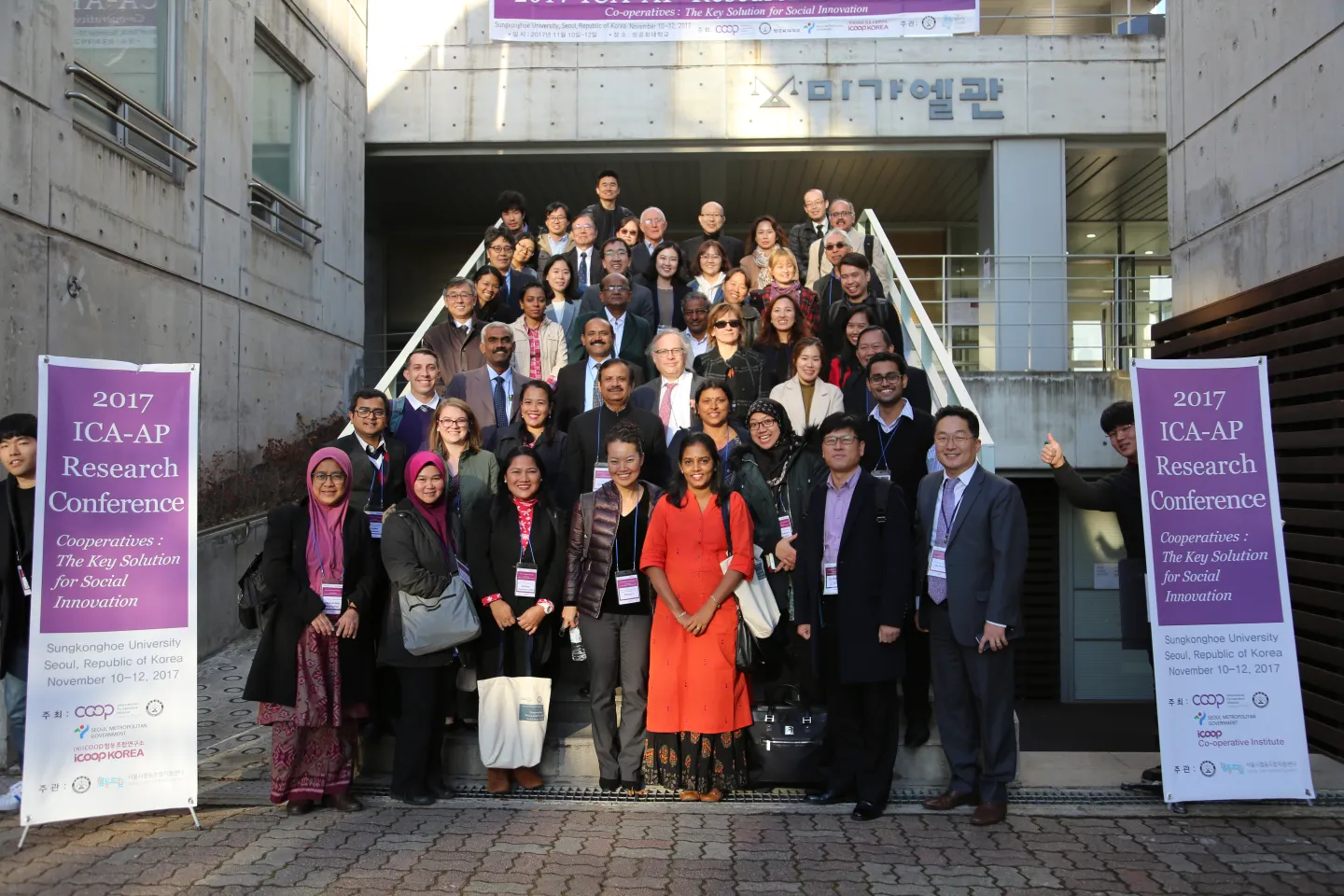
As an SSE education pioneer in the Republic of Korea, Sungkonghoe University was the first Korean university to launch a Cooperative Management MBA programme, and Master’s and PhD tracks on cooperative studies. We have hosted major international events, including the 2017 ICA Asia-Pacific Research Conference and the 2023 9th CIRIEC International Social Economy Conference in Seoul.
Building on this foundation, in 2025 we launched the Graduate School of Impact Business. Its long-term vision is to create a vibrant and collaborative impact network over the next decade, bringing together cooperatives, social ventures, impact investors, and corporate social responsibility units of mainstream corporations. By fostering synergies among these diverse actors, we aim to build a more sustainable SSE ecosystem and generate greater collective impact.
At the Sungkonghoe University we hope to serve as a central hub in this network. We also look forward to international partnerships, including collaboration with the ILO, to expand this vision globally and contribute to the institutional strengthening of the SSE around the world.
3. From your perspective as an educator, what aspects of cooperatives and the wider SSE do students find most compelling? How can these models address today’s challenges facing individuals and society?
Students are often drawn to the democratic governance and social mission of cooperatives and other SSE entities. Many young people today are concerned about precarious work, inequality, and climate change. In cooperatives and the other SSE entities, they see models that value participation, community well-being, and sustainability over pure profit.
Cooperatives are not just business models; they are democratic institutions. They empower members to make decisions collectively and distribute profits equitably, offering a viable alternative to the concentration of economic power. Unlike capitalist firms that distribute wealth according to capital shares, cooperatives allocate value based on contribution and solidarity. They are one of the few legal entities capable of addressing economic inequality in a structural way.
The Republic of Korea’s economy remains heavily reliant on export-led conglomerates, a model increasingly challenged by rapid global change. In this context, promoting cooperatives, enterprises that embed democracy and equity in their governance and operations, presents a powerful path forward. They offer a means not only to build fairer workplaces, but also to strengthen our democratic culture from the ground up.
4. How have cooperatives and the wider SSE evolved in the Republic of Korea, what role do they play now, and what challenges lie ahead for advancing the SSE in the country?
Historically, the Republic of Korea's cooperative sector has its roots in government-led initiatives dating back to the 1960s, when cooperatives were established under sector-specific laws. These early cooperatives were often controlled by public authorities, but since the democratic transition in the late 1980s, many of them have begun electing their own leadership and asserting greater autonomy.
Over the past decade, SSE entities in the Republic of Korea have grown significantly since the 2012 Framework Act on Cooperatives, with public policies in place supporting social enterprises and community initiatives. However, many of them face challenges related to sustainability, governance, and market access. They are often viewed as welfare tools rather than legitimate economic actors. Strengthening ecosystems that support the SSE through financing, impact assessment, and education is crucial.
An enduring structural challenge in the Republic of Korea is the volatility of SSE-related policy, which tends to shift depending on the changing government priorities. To address this instability, it is essential to establish a legal and institutional framework, such as a Framework Act on the SSE, that transcends short-term political agendas. While there are concerns that institutionalization might lead to isomorphism and stifle innovation, legal recognition is a necessary first step to making the sector visible and credible.
Equally important is the need for SSE organizations to deliver tangible, high-quality services and products that citizens can directly benefit from. Public awareness campaigns and stronger communication strategies are crucial for building public trust and support. Only when the broader public experiences the real value of the SSE in their daily lives can this movement achieve lasting legitimacy and impact.
5. Which sectors in Korea have shown increased interest in cooperatives and the wider SSE? Could you highlight some notable achievements or good practices for us?
The interest in cooperatives is growing, especially in care, education, and food services. Worker cooperatives have been active in providing elderly care services in urban areas, responding to the needs of an aging society. Parent-run cooperatives have played an innovative role in reshaping after-school programs and alternative learning environments. In the food sector, rising public interest in health and sustainability has driven the rapid growth of consumer cooperatives focused on organic and eco-friendly products since the early 2000s. A notable example is iCOOP Korea, which has expanded beyond its organic food business to become a medical social cooperative. It now offers not only healthy food for the elderly but also integrated care and community-based health services—reflecting a more holistic approach to well-being in an aging society.
Since the enactment of the Framework Act on Cooperatives in 2012, social cooperatives have rapidly expanded, becoming influential actors in areas including care, social welfare, job creation for marginalized populations, and local community revitalization. They have shown that they can effectively address unmet social needs while reinforcing solidarity and inclusion at the community level.
I also want to highlight the Seongdong District’s cooperative ecosystem in Seoul, where local government, residents, and businesses co-create initiatives through a participatory governance model. Another noteworthy development is the rise of impact investing and social venture accelerators that focus on SSE enterprises, linking capital with social innovation.
These developments illustrate how cooperatives and the SSE are evolving to meet the complex challenges of Korean society, and how they are positioning themselves as critical actors in building a more just and sustainable economy.
See also

Spotlight Interviews with Cooperators
Consumer cooperative in the Republic of Korea

Phase two of ILO’s SSE Knowledge Base Project Launched
ILO strengthens cooperation with Korean partners on cooperatives and the wider social and solidarity economy
ILO visited iCOOP’s Natural Dream Park in Korea
Improved statistics will strengthen global cooperative movement

Key ILO reports on the SSE translated into Korean by the Korea Social Enterprise Promotion Agency
Spotlight Interviews with Co-operators
Sung Ho Kim, International Cooperation Department, KFCC
Spotlight Interviews with Co-operators
Interview with Hyun-Gon Jung, President of KoSEA (Korea Social Enterprise Promotion Agency)
Financial mechanisms for innovative social and solidarity economy ecosystems: The case of the Republic of Korea
The relationship between cooperatives and the wider SSE was explored during two events around the World Cooperative Congress