


Spotlight Interviews with Co-operators
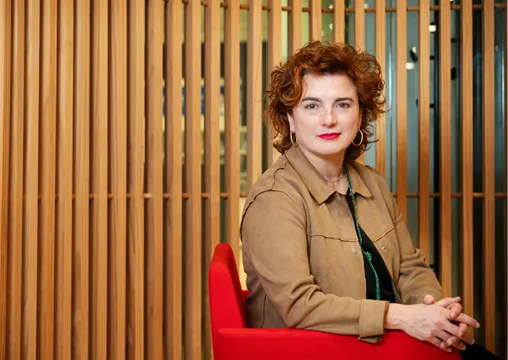
Interview with Rosa Lavín Ibarra, President of KONFEKOOP
“Spotlight Interviews with Co-operators” is a series of interviews with co-operators from around the world with whom ILO officials have crossed paths during the course of their work on cooperatives and the wider Social and Solidarity Economy (SSE). On this occasion, the ILO interviewed Ms. Rosa Lavín Ibarra, President of KONFEKOOP – Confederation of Cooperative Enterprises of the Basque Country in Spain.
28 January 2025
Could you tell us about your first contact with the cooperative movement? What inspired you to get involved? Could you tell us how you got to where you are today?
My introduction to the cooperative world happened quite by chance, but it fascinated me so much that I decided at that very moment to focus my entire professional career on this economic model. I was so convinced of its great potential. After graduating in Economics and Business Administration from the University of the Basque Country, I came across a postgraduate course in social economy, cooperatives and worker-owned enterprises and it really caught my attention, as I had barely explored this alternative economic model during my five years of studies. This postgraduate course was the turning point in my career, as it opened the doors to a world that I have been deeply passionate about ever since. I have been working at Grupo Servicios Sociales Integrados (Grupo SSI) for more than 25 years. Grupo SSI is a cooperative dedicated to fully meeting the social and educational needs of people in situations of vulnerability and dependency in the Basque Country. At present, I am the chief financial officer (CFO), board member and deputy chairperson of the cooperative company. Since 2015, I have also had the honour of chairing the Confederation of Cooperative Enterprises of the Basque Country (KONFECOOP), one of the main business organizations of the Basque employers' association. For me, it is a real privilege to represent and promote such a unique and singular model, the Basque cooperative movement.

What does KONFEKOOP do?
The Basque Country has a strong cooperative business fabric with more than 3,700 cooperative enterprises throughout its three territories. More than half of them are federated in KONFEKOOP, which is the most important cooperative business association in the Basque Country. The Confederation brings together cooperative enterprises from all business sectors: from industry to commerce, including education, care, agriculture, food, distribution, energy, culture, technological consultancy, enterprises with a high level of digitalisation, credit, transport, etc. We generate 8 per cent of the Basque Country's Gross Domestic Product (GDP), which, in the case of industrial enterprises is 11 per cent. This density and diversity of cooperative enterprises and the multisectoral nature of the organization make KONFEKOOP a singular and unique business group not only in the Basque Country, but also in Spain and internationally.
The prominence of industrial cooperative enterprises, the high degree of internationalization of worker cooperatives and their presence in all sectors of the economy make our socio-entrepreneurial model an international benchmark. As a result, this model is gaining more and more relevance and consideration in the design of public policies around the world. Public authorities are increasingly aware that, due to their knowledge of the environment in which they operate, cooperative enterprises are a necessary and essential partner in the governance of public affairs. The cooperative enterprise model is the mirror for those who speak about business democracy and promote other models where the commitment to the environment is a priority and where workers participate in decision-making.
As the first woman to head KONFEKOOP, could you share with us the challenges you have faced and how you turned them into opportunities?
Equality is in the DNA of cooperativism. It is one of the values on which we build a democratic, supportive and equitable business model. But cooperatives are a part of society and, unfortunately, inequality exists. We are not strangers to a reality in which there are still differences between men and women in the distribution of tasks, in salaries, in care, and in positions of responsibility. We are part of a society in which, even though progress is being made, we have not yet achieved true equality. Obviously, the main objective is to achieve this true equality, and cooperative enterprises are in a privileged position to reach this goal. More than half of the staff supporting our enterprises are women. Women are the driving force behind many cooperative enterprises and, because of the way we operate and our values, we are also the ideal business model for developing women's participation in the management of cooperative enterprises.
Traditionally, most decision-making positions have been filled by men, but the democratic and egalitarian management of the cooperative movement must continue to push women to the highest positions in our organizations. So, in this regard, cooperatives are also pioneers: at present, the number of women in management positions and positions of responsibility in cooperative enterprises in the Basque Country is greater than in other business models, but our work is certainly not finished. Every day we continue to promote actions that contribute to a more egalitarian and fairer business model. We are convinced that more and better cooperativism means more equality. Our motto for every 8M (March 8, International Women's Day) sums it up well: more cooperativism, more equality.
Could you share with us your experiences on how the regulatory environment can support or impede cooperative development?
It is essential to have legislation that is in line with the idiosyncrasies of the cooperative model so that cooperative enterprises can be competitive and contribute even more to the economic and social development of our societies and to the great transformations we are experiencing. The fact that in 2022 the ILO and in 2023 the United Nations General Assembly considered cooperatives to be enterprises or employers and encouraged our role as interlocutors in the socio-political sphere, on an equal footing with other forms of enterprise, has been extremely important in this respect. Even the European Union’s Social Economy Action Plan and the European Council’s Recommendation on developing social economy framework conditions(C/2023/1344) warn that the world of work is undergoing a radical transformation. We must evolve, changing what has become obsolete, and incorporate cooperative enterprises into decision-making processes. All the recognition at the international and regional level has undoubtedly shaped and opened the way for cooperative enterprises to be considered as first-rate economic and social actors and to gain relevance.We need more statements along these lines.
In the Basque Country, the Basque Employment Act has also been a milestone in this regard, as it recognises the right of cooperative enterprises to participate in the definition of active employment policies, guaranteeing their presence on the Board of Directors of the Basque Employment Service. This fact represents a new era for defining the spaces for consultation and social dialogue, where commercial enterprises no longer hold the monopoly of business representation and share the space with the cooperative model.
Under its leadership, cooperatives in the Basque Country have made a significant contribution to the region's economy. How do you envisage the future role of cooperatives in the local economy?
Beyond their contribution to the GDP of the Basque Country, cooperative enterprises are spearheading major transformations, but we also face several major challenges. One of the main challenges is to remain competitive in an increasingly globalized and digitalized business environment, where Artificial Intelligence has already made significant inroads. This will require significant investments in technology and training the workforce to ensure that we remain at the forefront of innovation and are ready to meet the challenges of the twenty-first century. The Basque Country leads among Spain's autonomous communities in Research and Development (R&D) and is also among the high innovation leaders in the EU. However, to maintain this momentum, a threefold transition is required along these axes: technological-digital, energy-climate, and social-health. This involves profound and transformative changes that affect not only the economy, but also our way of life and well-being. Collective entrepreneurship, youth, talent loyalty, working on interculturality in our enterprises foreseeing and anticipating socio-cultural changes and immigration, etc. We face many challenges, but we see these transformations as opportunities rather than threats, and we must respond to them through areas such as science, technology, education, care and innovation. And the Basque cooperative movement is committed to this.