


Spotlight Interviews with Co-operators
Interview with Guido Schwarzendahl, CEO of Bauverein Halle & Leuna eG, and President of Cooperative Housing International
“Spotlight Interviews with Co-operators” is a series of interviews with co-operators from around the world with whom ILO officials have crossed paths during the course of their work on cooperatives and the wider Social and Solidarity Economy (SSE). On this occasion, the ILO interviewed Guido Schwarzendahl, CEO of Bauverein Halle & Leuna eG, and President of Cooperative Housing International, Germany.
24 February 2025
Could you tell us about yourself and how you got involved working in cooperatives and in the social and solidarity economy in general?
I studied geography, political science, and sociology, with a strong focus on social segregation and housing policy. This naturally led me to work in the housing sector after graduation. I chose a large housing cooperative because I recognized the vital role cooperatives play in providing socially responsible and affordable housing.
After gaining experience and further training, I became a board member of a housing cooperative operating in the former East Germany—a region facing significant population decline. One of our biggest challenges was managing housing demolition in a socially responsible manner while ensuring stable housing for our remaining members. Through clear communication, consistent action, and strong support for affected members, our cooperative successfully retained over 80 per cent of displaced tenants and remained a trusted housing provider, despite losing over 2,000 apartments.
Through my experience, I have seen that cooperative values are truly put to test in times of crisis. Maintaining clear and open communication, along with a firm commitment to our statutory objective—ensuring secure, appropriate, and socially responsible housing—is essential.
What does GdW do and how does it practice the cooperative values and principles?
GdW is the Federal German Housing and Real Estate Organization, representing all German housing cooperatives, municipal and public housing associations, and private housing companies. As Germany’s largest nationwide umbrella organization for housing, it operates through a three-tier structure, where regional federations represent housing organizations at the national level.
GdW and its regional federations work together to provide advocacy, legal and financial advisory services, technical guidance, research, training, and communication support for housing cooperatives across Germany.
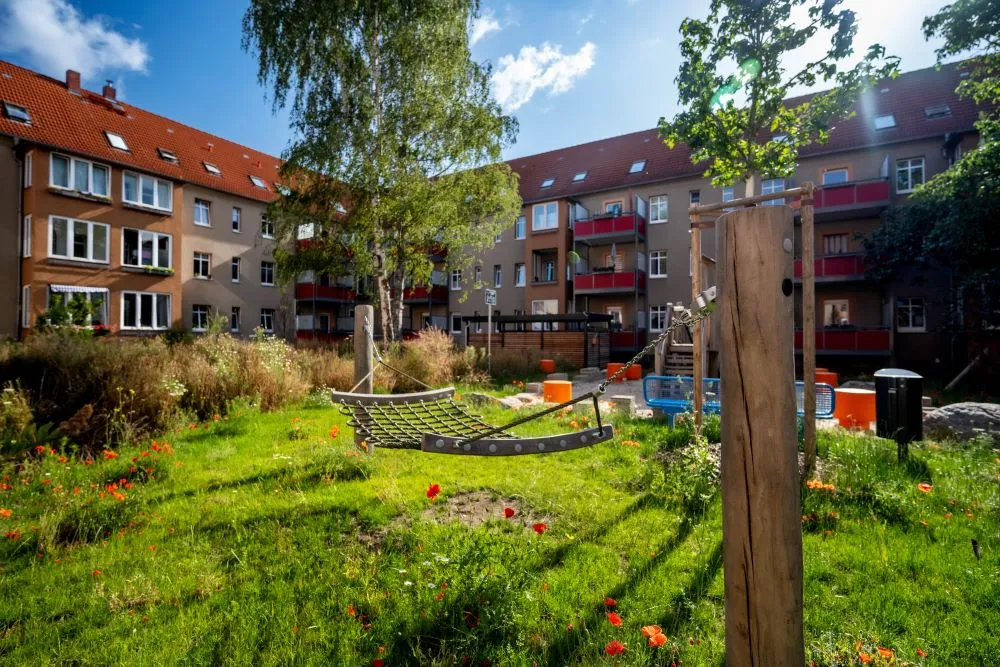
What are the biggest challenges you face in developing sustainable cooperative housing solutions, and how do housing cooperatives contribute to addressing Germany's housing challenges?
Housing cooperatives are inherently sustainable because they operate based on the needs and demands of their members rather than external market forces. Unlike private investors, cooperatives focus on long-term housing security rather than short-term profits.
However, major challenges remain. Rising construction costs, inflation, and increased housing demand—especially from refugees with limited budgets—pose significant difficulties. Additionally, the availability of buildable land is shrinking, particularly in high-demand urban areas. Modernization of living spaces is also a pressing issue. As our resident population ages, there is an increasing need for accessible housing, but financial constraints and limited government funding make large-scale upgrades challenging. Under these conditions, key improvements such as elevator installations and balcony extensions in apartment buildings become difficult to implement.
The cooperative's own funds, which are reinvested to enhance apartments, must also support broader improvements in living quality—such as balcony and elevator extensions—while modernizing energy efficiency and addressing climate adaptation to decarbonize the housing stock.
While all these goals are crucial for sustainability, they place significant demands on housing cooperatives, which must also ensure the long-term affordability of rents for their members.
How are housing cooperatives in Germany like Bauverein Halle & Leuna eG adapting to meet the evolving needs of residents, such as demographic shifts, urbanization, and climate change?
As mentioned previously, one of the most pressing concerns is improving accessibility as our population ages. While not every unit needs to be fully step-free, we must ensure a sufficient number of accessible homes to meet residents' needs. Currently, only about 10 per cent of our housing stock is barrier-free, which is inadequate given that over a third of our residents are of retirement age.
Climate change is another major factor shaping our long-term strategy. Our cooperative aims to achieve near-total decarbonization by 2045. Currently, over 62 per cent of our housing units are connected to district heating, with an additional 13 per cent supplied by our own local heating networks. These systems can be transitioned to CO2-free energy in the near future. For the remaining 25 per cent, we plan to expand district heating, install local heating networks, and replace gas heating systems with electric heat pumps and solar solutions.
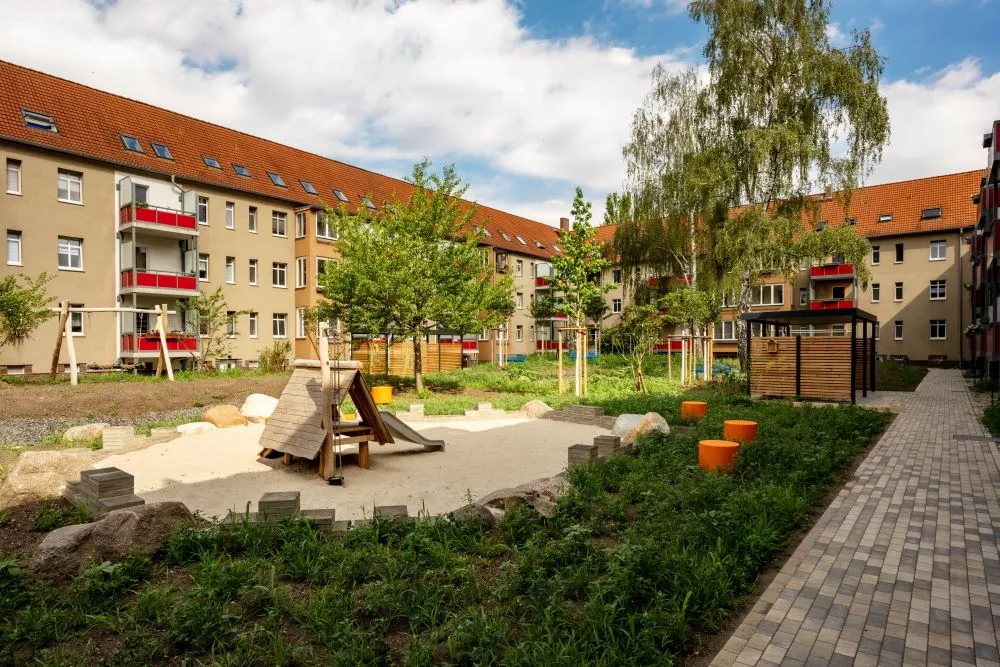
How do you integrate sustainability and innovation into its building and management processes?
Sustainability is not just a goal—it is probably the most effective strategy for addressing the challenges of our time. And I would say that it will be the most important management tool of the future. Tackling climate change, conserving resources, and ensuring fair access to housing must be at the core of our decisions.
While research will continue to provide new solutions, the key is adopting a forward-thinking approach today. We must integrate sustainability into every aspect of housing management, from energy efficiency upgrades to long-term affordability planning. By prioritizing sustainability now, we can build resilient communities for future generations.
What roles do government policies and regulations play in supporting housing cooperatives in Germany?
Government policies generally recognize the positive role of housing cooperatives, particularly in providing affordable housing. However, financial support is often focused on newly founded cooperatives rather than established ones.
For example, new cooperatives can receive subsidies to help members acquire shares—an essential step before obtaining a housing unit. However, established cooperatives, which already house large resident communities, do not benefit from these programs. While cooperatives can access general state subsidy programs like other housing providers, there are no special incentives tailored to their legal structure.
As the President of Cooperative Housing International, could you tell us about what it does and how it works?
Co-operative Housing International is the sector organization of the International Cooperative Alliance. It unites, represents, promotes and leads the international movement for cooperative and mutual self-help housing by helping members win the legal and financial supports they need for success, and it speaks out about the movement’s success in creating socially, economically and environmentally sustainable housing.
Co-operative Housing International promotes, encourages and helps in the establishment of housing cooperatives in transitional economies and in developing and developed countries. It strengthens and encourages good governance principles and foster an inclusive cooperative culture, and joins in the broader cooperative movement to promote cooperatives as the people-centred form of business. serve our members by providing a forum where they can pool their experience. Co-operative Housing International also holds education and training events for the sharing of best practices in cooperative housing, and encourages partnership initiatives among members and with other cooperatives to access financial capital so they can invest in the sustainable development, regeneration and expansion of their housing co-operatives.