


Institutionalising Overseas Employment Training at Assela TVET College
Strengthening overseas employment training in Ethiopia by enhancing Assela TVET College’s capacity, improving access for migrant workers, especially women, and demonstrating how institutional investment and income generation can support sustainable skills development and employment outcomes.
10 June 2026
Executive Summary
Assela Technical and Vocational Education and Training (TVET) College, located in Arsi Zone, Oromia region, Ethiopia, was established in 2001 G.C within a shared high school compound before becoming an independent institution. With equipment and Capacity-building support from the ILO under the Better Regional Migration Management (BRMM) Programme funded by the UK Foreign, Commonwealth, and Development Office (FCDO), the college enhanced its training capacity and expanded its service delivery. In parallel, a policy reform allowing TVET colleges to generate and retain their own income enabled the college to develop a commercially oriented revenue model that now exceeds its government budget. In the last financial year, the college generated 14 million Birr in internal revenue, surpassing its government budget of 11 million Birr.
Since short-term overseas employment training began in 2021, the college has trained 17,952 trainees, of whom 17,733 are women. The college has also emerged as a regional centre for trainer development, with five other TVET colleges sending instructors to Assela for capacity development. According to the available college records, 4,517 have been confirmed as having secured overseas employment.
Context and Problem Statement
Arsi Zone in the Oromia region has long experienced high levels of labour migration, particularly among individuals seeking employment in the domestic work sector abroad. Demand for overseas employment training existed well before formal institutional systems were put in place to address it. However, there was limited access to structured, accessible and adequately equipped public training institutions capable of meeting this demand. At the same time, private colleges in the area charged fees significantly above the government-approved rate per trainee, placing formal overseas employment training beyond the reach of many potential migrants, particularly those from rural communities.
When overseas employment training began at Assela TVET, the college faced infrastructure and equipment gaps that limited its ability to deliver quality training at scale. Potential migrants with limited familiarity with the online registration process were at times charged by informal intermediaries for services that should have been accessible without cost. The structural gap between training and confirmed deployment outcomes was significant and remains only partially resolved.
Intervention Design and Approach
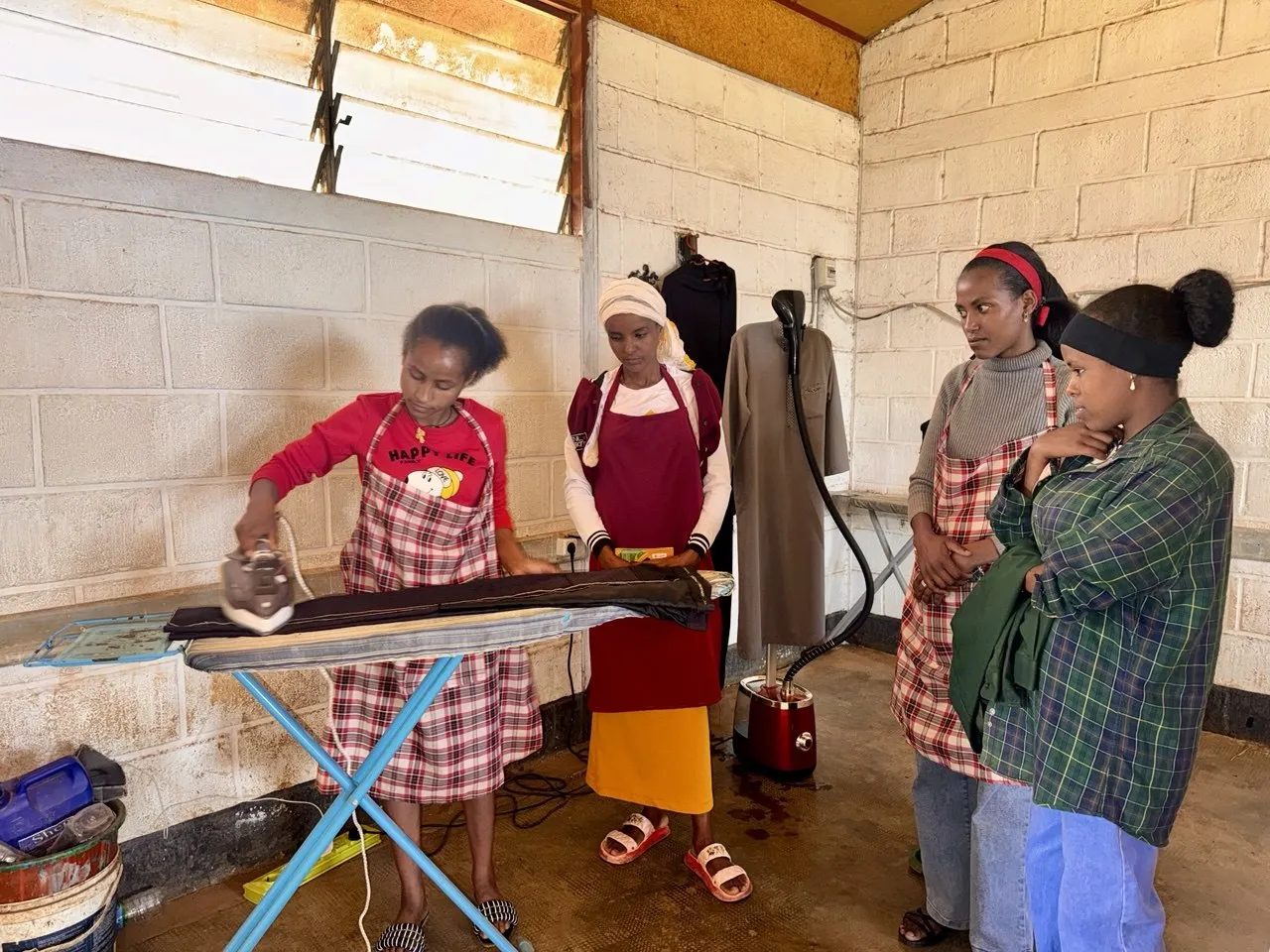
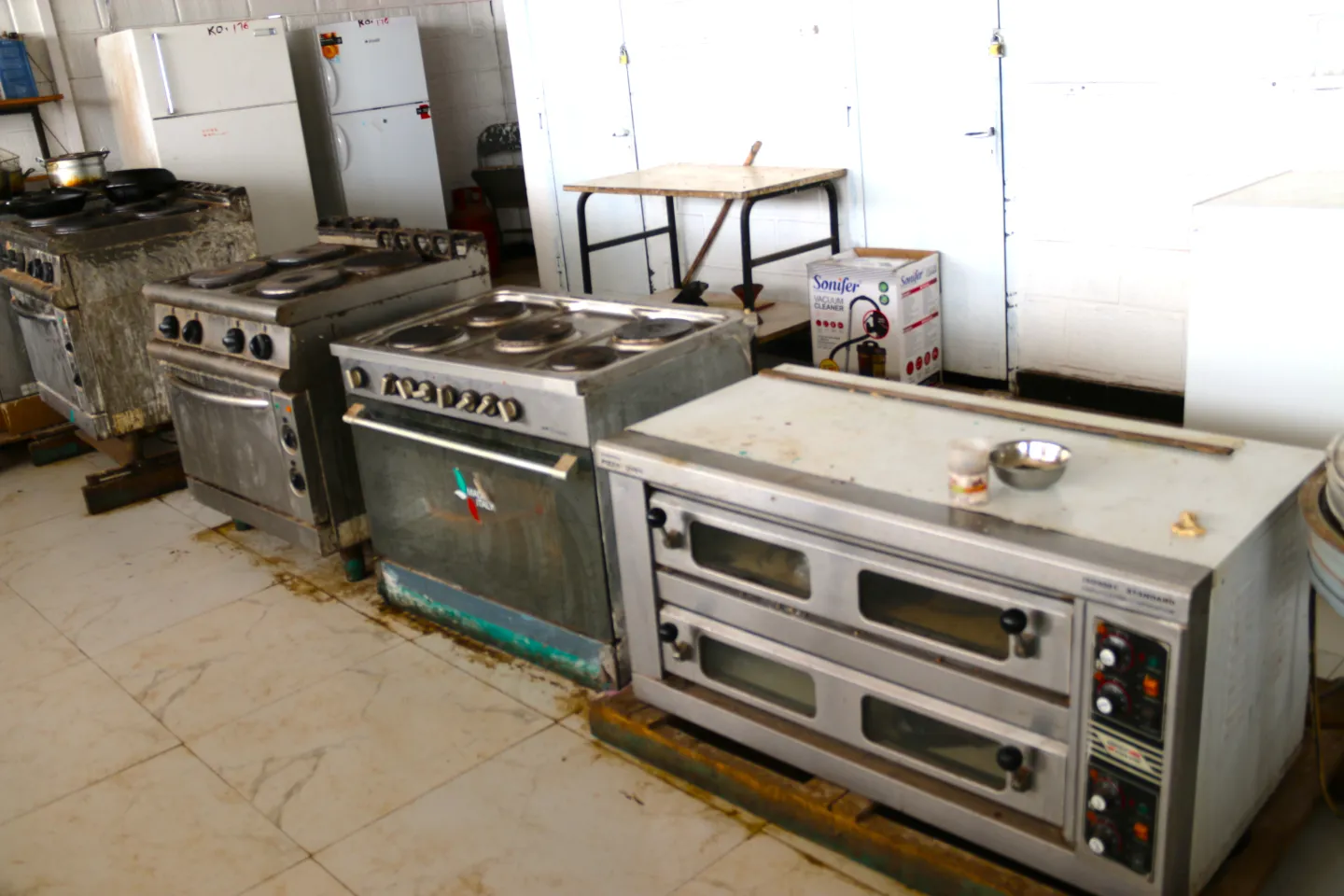
In 2019, the ILO provided Assela TVET College with diverse teaching equipment, as part of a broader round of support that also reached colleges in Wolkite, W/ro Sehin, and Ataye. This support included specialised equipment for domestic work training, including Arabian majlis furniture, vacuum cleaners, shower fittings, refrigerators, ovens, and bread-making machines.
Alongside this equipment, the ILO supported capacity building for trainers and introduced a curriculum design that shifted the college from interest-based toward suitability-based trainee selection, assessing whether potential migrant workers would benefit from the training rather than simply enrolling those who applied.
The ILO also supported the college in becoming a leading institution for trainer capacity building in the region. With better equipment, enhanced training facilities, and improved training quality, Assela TVET College emerged as a primary destination for other TVET colleges sending their instructors for capacity development, thereby extending the programme's impact beyond the college's direct trainees.
Key Reforms and Outputs
Assela TVET College has graduated approximately 25,000 trainees through its regular programme and 10,000 through short-term training.
The college currently operates six primary departments: Garment, Food Preparation and Service, Kitchen Operation, Hairdressing, IT/Secretary, and Accounting. However, the latter two are gradually being phased out in response to the growing demand for Domestic Work training. Despite the demand, Training fees remain aligned with government-approved rates, with a total cost of 2,250 Birr, including examination.
The college has also transformed training investments into income-generating initiatives. The bread-making machine provided through ILO support evolved from a practical training tool into a commercial operation that now produces 7,000 loaves daily for 12 schools under the city administration's school feeding programme, creating 12 direct jobs: 6 bakers, 5 drivers for distribution, and 1 shop worker.
Assela TVET College has also expanded its outreach beyond conventional training settings. In collaboration with Arsi Zone's prison system, it provides hairdressing and food preparation training to female inmates, reaching 22 trainees last year and 19 this year. Similarly, the college also served as a capacity-building centre for trainers from other ILO-supported TVET colleges, namely Wolkite, Dedo Sheki, Gelemso, Ataye, and W/ro Sehen. Finally, following a national quality inspection that led to the closure of all private colleges operating in Arsi Zone, Assela TVET College was the only institution to meet the required standards.
Results and Institutional Change
The college’s bread production initiative has evolved into a significant income-generating activity, producing over 2 million Birr in monthly revenue per month through the city administration's school feeding programme and generating a net monthly profit of 600,000 to 700,000 Birr. The college has already secured 8 million Birr toward its annual revenue of 15 million Birr.
To strengthen training quality, the college reduced its monthly trainee intake from 300 to 120 in agreement with the Regional Bureau, shifting from a quantity-driven to a quality-focused approach. Graduates from the hairdressing, hotel, and tourism departments are now employed or operating their own businesses, while trainers originally trained at Assela currently work in 16 private colleges across the region. Assela TVET also remains the only institution in Arsi Zone currently providing overseas employment training in the domestic work sector at scale.
According to the LMIS data, out of 17,952 domestic work trainees, 4,517 have been confirmed as employed overseas. However, tracking graduate outcomes remains a challenge, as many trainees use local phone numbers that later become unreachable, and private employment agencies do not share overseas employment data with the college. This gap between training competition and confirmed employment is a limitation that the college acknowledges and has been unable to address independently.
Institutional Significance
Assela TVET College demonstrates how targeted equipment investment in public TVET institutions, combined with supportive policy reforms and strong institutional leadership, can generate impact beyond training delivery alone. The college's income generating model is rare in public TVET systems and provides a valuable example for other institutions operating in similar contexts.
The college also plays a significant equity role by providing training opportunities for predominantly rural women, many of whom would otherwise systematically be excluded from private training institutions due to high fees.
Sustainability and Institutional Ownership
A policy reform introduced four years ago, allowing TVET colleges to generate and retain their own income, created the foundation for Assela TVET college’s financial model. Without it, the bread-making equipment would have remained a training tool. The Dean recognised the opportunity and proposed a school feeding contract to the city administration. When the programme started, the college was producing 5,400 loaves a day. Production has since grown, with plans to expand into community retail through shops in various locations.
The equipment support in 2019 has been fully integrated into the institution's operational infrastructure, simultaneously generating income and supporting practical training. Similarly, staff capacity development has become self-sustaining, as trainers who received ILO-supported training now provide capacity building support to other instructors within the college and across Arsi Zone's broader TVET system.
Lessons Learned
Assela TVET College's experience shows that the value of institutional investment depends less on the scale of the support provided than on the conditions surrounding it. The same equipment, placed in an institution without an enabling income-generation policy or leadership willing to act on opportunity, would have remained a training tool. At the same time, the college's achievements expose the limits of what a single institution can do. Its most persistent challenges, from tracking graduate outcomes to protecting potential migrant workers from informal intermediaries, sit in the space between institutions, where no training provider, agency, or government office holds full responsibility. The college's experience highlights several key lessons:
Assela TVET College’s experience highlights several key lessons:
Training investments can generate long-term value beyond external support when institutions are able to transform equipment and infrastructure into sustainable income-generating initiatives.
Training quality and trainee preparedness should be prioritized within governance and performance frameworks, rather than focusing primarily on numerical training targets.
Weak coordination and limited data sharing among training institutions, private employment agencies, and destination countries constrain the ability to effectively track overseas employment outcomes.
Potential migrants, particularly those with limited familiarity with online registration systems, remain vulnerable to exploitation by informal intermediaries, underscoring the need for stronger information provision, oversight, and institutional support mechanisms.
Methodological Note
This case study was developed by Yonas Berhane, Communications Officer, on behalf of the International Labour Organization (ILO) under the UK FCDO-funded Better Regional Migration Management (BRMM) Programme. It draws on a key informant interview conducted with Mr. Yohannes Eshetu, Dean of Assela TVET College, in [March/2026], as well as programme documents and institutional records. Ethiopian calendar dates referenced in the interview have been converted to the Gregorian calendar throughout.
Relevant projects

East and Horn of Africa
Better Regional Migration Management