

PROSPECTS Impact
Inclusive finance strengthens decent work in Kenya
Through the PROSPECTS Partnership, the ILO is supporting access to finance for refugees and host communities in Kakuma by strengthening local financial institutions and expanding opportunities for enterprise growth, employment aligned with decent work and more resilient local economies.
16 March 2026
Kakuma, KENYA (ILO News) - In Kenya’s refugee-hosting counties, small enterprises are a key source of income generation for refugees and host communities alike. Markets in and around Kakuma refugee camp are filled with grocery stalls, tailoring shops, fish traders, salons and retail businesses. What has long been missing, however, is access to market-based financial services that allow these enterprises to grow in line with ILO’s Decent Work Agenda.
Without capital, businesses remain small, vulnerable to shocks and unable to generate stable employment aligned with decent work – including fair remuneration, safe and healthy working conditions, non-discrimination and respect for rights at work. Through the Partnership for improving prospects for forcibly displaced persons and host communities (PROSPECTS), funded by the Netherlands, the International Labour Organization (ILO) is addressing these constraints by strengthening financial institutions rather than relying on short-term grants.
“Access to finance is central to PROSPECTS’ strategy to connect small and medium-sized enterprises with business development services and support the transition from informality to formality. The approach is guided by the Employment and Decent Work for Peace and Resilience Recommendation, 2017 (No. 205), and contributes to more inclusive labour markets grounded in social dialogue and cooperation between local authorities, employers and worker,” explains Lilyanne Ndinda, ILO PROSPECTS National Project Coordinator in Kenya.
Strengthening systems for sustainable impact
For many years, support to refugee entrepreneurs focused mainly on training. While essential, training alone cannot unlock growth or ensure that enterprises operate in line with international labour standards. Many financial institutions do not yet fully recognize refugee IDs within banking know-your-customer procedures
Under PROSPECTS, the ILO works with local financial institutions to responsibly extend services to forcibly displaced and host populations on an equal basis.
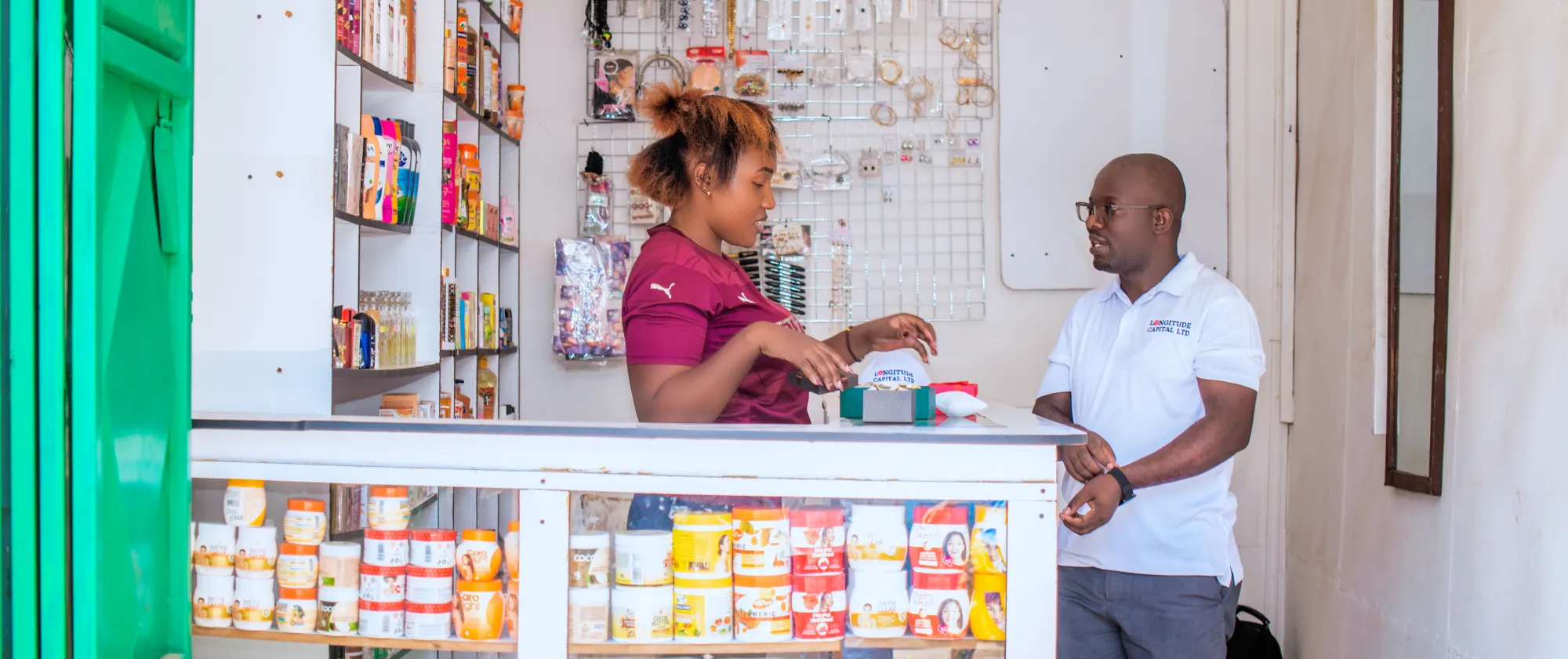
In Kenya, this has included collaboration with Longitude Finance Ltd to assess demand, design accessible financial products and strengthen internal systems, including client assessment and outreach to camp-based and peri-urban markets.
At the end of 2025, 453 refugee and host community entrepreneurs in Kakuma received business and financial training. Host community members typically present national identification, proof of income and, in some cases, collateral, while refugees may use a Refugee ID, Alien Card or Proof of Registration (manifest) where accepted by financial institutions, and demonstrate repayment capacity through business records (such as at least six months of financial history or mobile money statements), rather than collateral.
The initiative seeks to ensure that women and men benefit equitably from access to finance and enterprise development support, consistent with principles of equal opportunity and non-discrimination.
Michael Monari, Chief Executive Officer of Longitude Finance, explains: “When Longitude Finance began serving refugee and host community clients, what changed most was our perspective. We moved from seeing risk to seeing resilience, entrepreneurship and untapped potential.” He adds that the partnership has shown that “inclusive finance for displaced populations is not charity but sustainable business with impact.”
Unlocking capital for enterprise growth
To date, 218 entrepreneurs in Kakuma have accessed loans totaling approximately US$150,000. The capital has enabled enterprises to restock goods, purchase equipment and expand product lines – increasing productivity and supporting more stable wage employment and self-employment aligned with decent work principles.
Loan performance has been strong, with a repayment rate of 98 per cent among refugee borrowers. This builds on an earlier pilot phase in which 50 loans were disbursed to test financial products and outreach strategies.
Mapendo Riziki, a refugee entrepreneur who has run small businesses in Kakuma for over a decade, says access to finance has transformed her operations. “Before the loan, my business would stop whenever I ran out of stock,” she explains. “I used the money to bring back dried fish and increase my supply. Now I can sell more consistently and support my children. I am planning how to grow.”
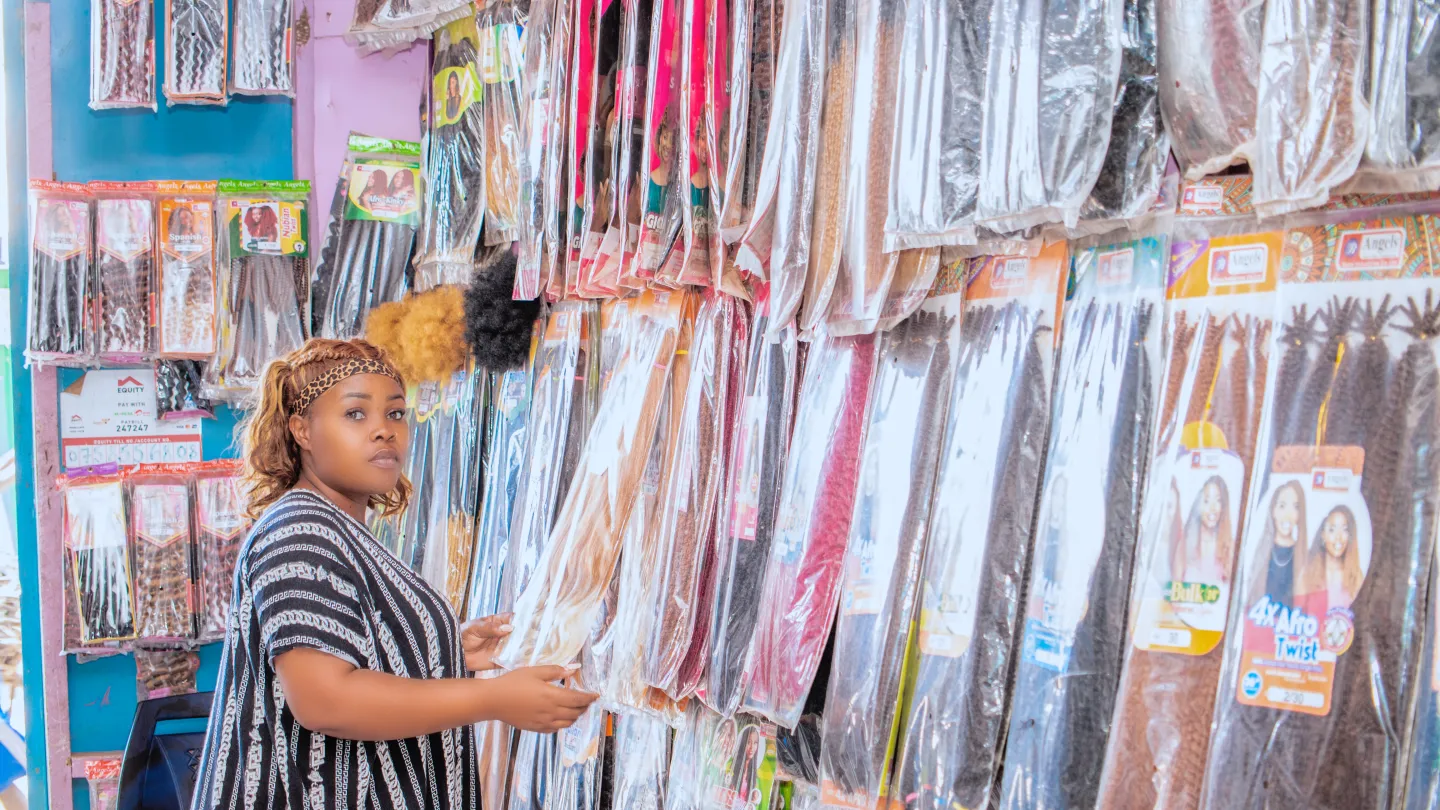
Bahati Birego, another entrepreneur in Kakuma, invested her loan in expanding her hair and beauty business. “When I received the loan, I invested in expanding my business and buying the equipment I needed,” she says. “Before, I employed only three people. Now, twelve refugees are working with me. Their families also benefit.”
Approximately 50 per cent of loans supported investment in productive assets, strengthening long-term enterprise sustainability and helping businesses move towards formal, more resilient operations.
Investing in productive assets
Some entrepreneurs have used loans to invest in equipment that improves productivity, increases efficiency and reduces operating costs.
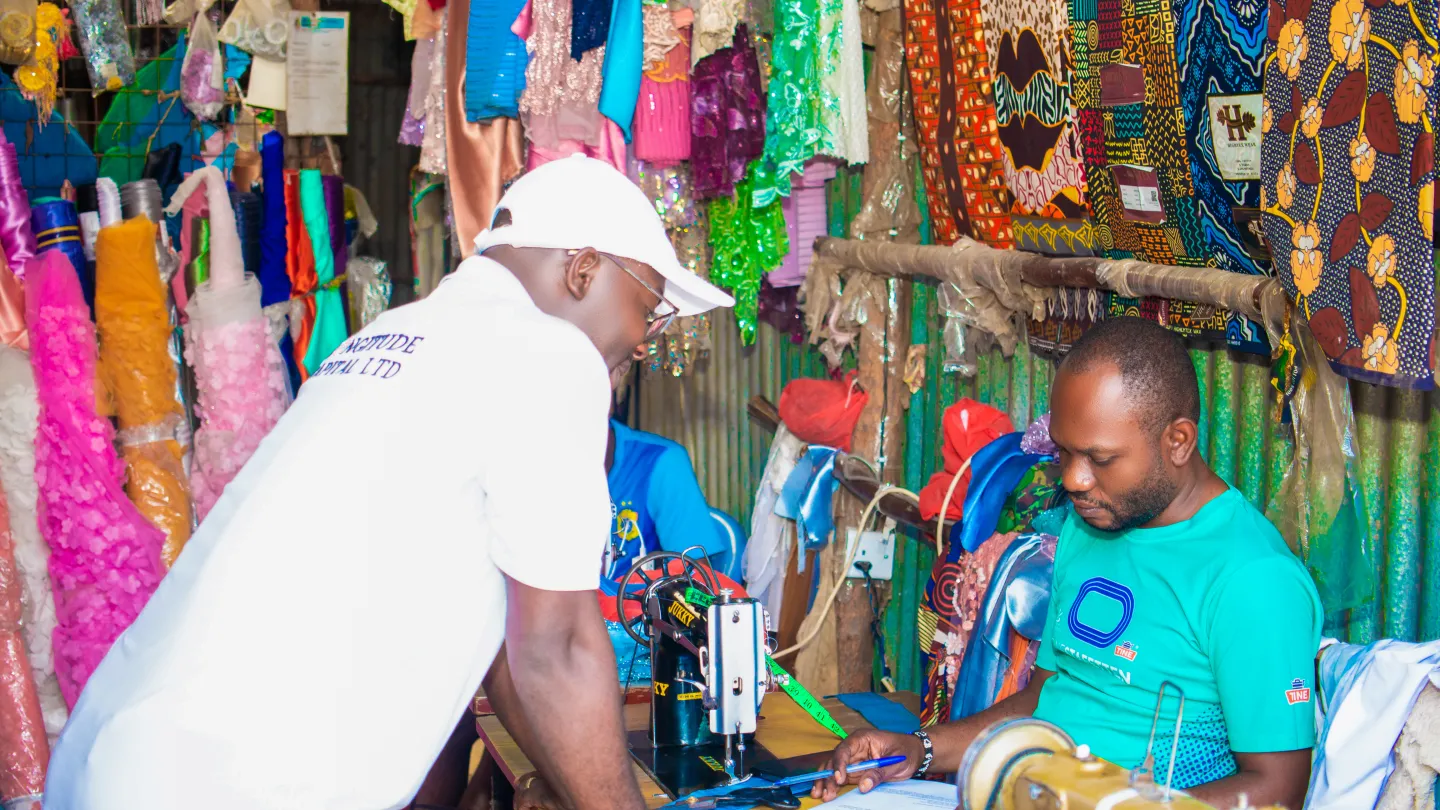
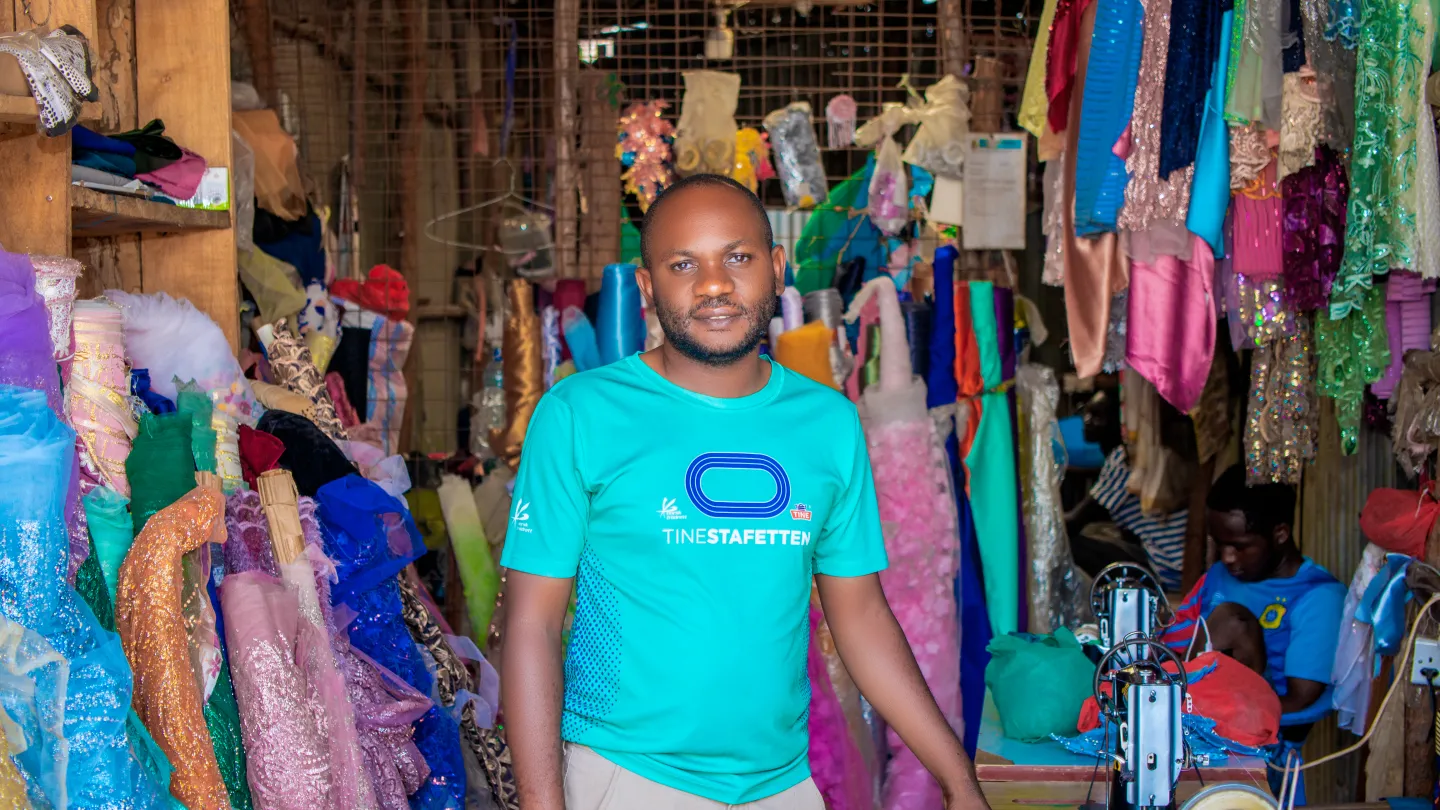
Saidi Hota, a small business owner, runs a growing fashion enterprise in Kakuma and had long identified the lack of motorized sewing equipment as the key barrier to increasing production. Limited capital had previously prevented him from investing.
“With the loan, I bought equipment that makes my work faster and more efficient. Before, I struggled to meet demand. Now I can produce more, earn more and think about expanding even further,” says Saidi Hota.
Approximately 50 per cent of loans supported the acquisition of productive assets, strengthening long-term enterprise sustainability.
Business expansion and diversification
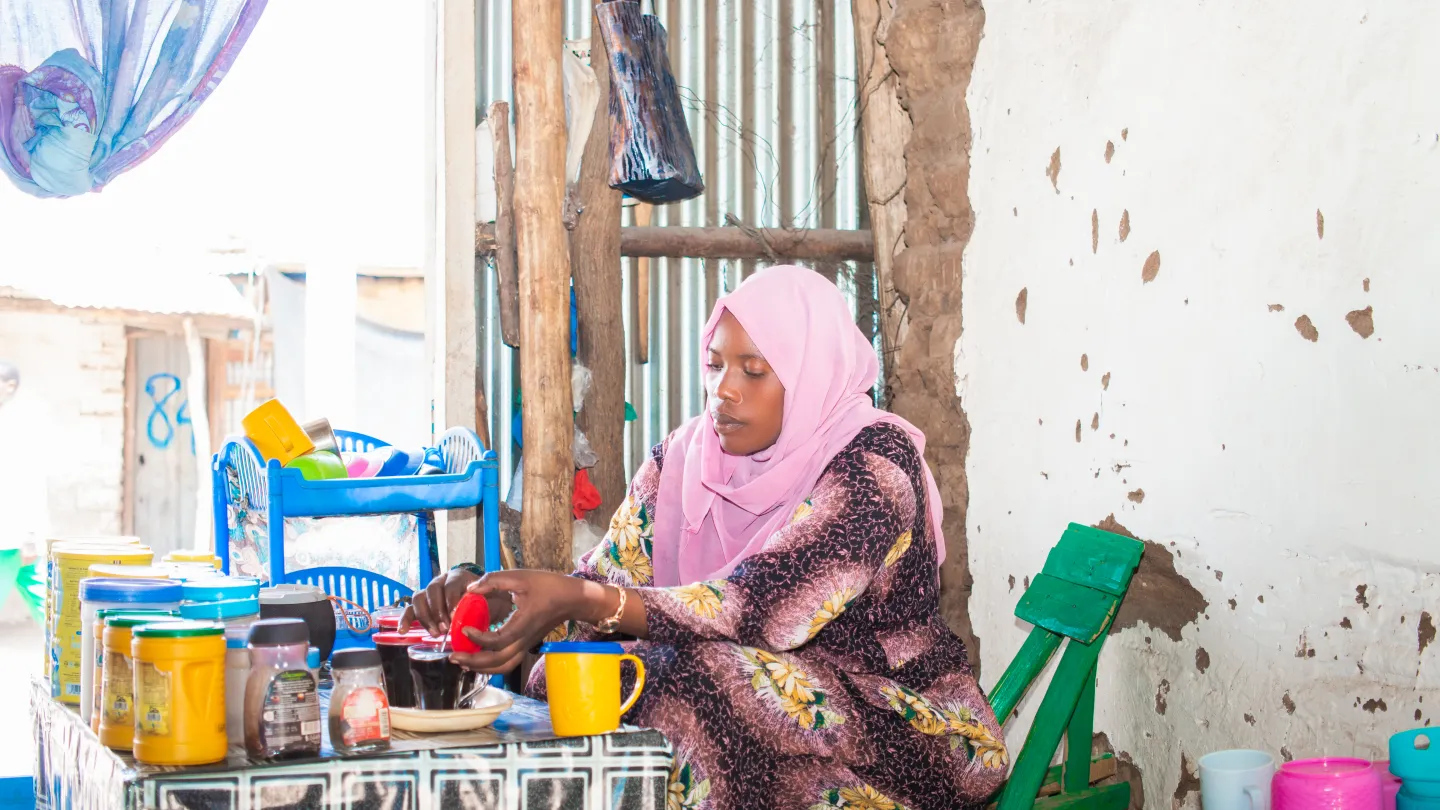
Access to finance has also enabled entrepreneurs to diversify their income sources and strengthen their businesses.
Huda Abarken, a young entrepreneur, started a small coffee business to support herself and her household. Limited savings meant growth opportunities were previously out of reach.
“The loan helped me improve my coffee business and start saving. With those savings, I was able to buy a motorbike, which now brings in additional income. I feel more independent and confident because I can support myself and contribute to my family,” says Huda Abarken.
Promoting equality and economic inclusion
Women play a central role in local markets but often face additional barriers to accessing finance. ILO-supported training, including the Gender and Entrepreneurship Together (GET Ahead) methodology, strengthens business skills while promoting equal opportunity, non-discrimination and equal remuneration for work of equal value.
Derick Malongo, Programmes and Partnerships Coordinator at Longitude Finance and an ILO-trained GET Ahead trainer, notes: “Access to finance does more than support refugees economically. It strengthens their confidence, voice and ability to participate fully in local economic life, especially for women who previously lacked access to financial decision-making.”
Advancing decent work in displacement settings
Experience in Kakuma shows that financial education is most effective when combined with real access to capital and a supportive regulatory environment. By linking entrepreneurs with financial institutions and local authorities, the ILO supports enterprise growth that respects rights at work, promotes safe and healthy working conditions and advances fair remuneration.
Small enterprises gain the capacity to invest and expand. Local markets become more dynamic and inclusive. Communities strengthen their economic resilience.
In displacement-affected areas, inclusive finance is more than a financial intervention – it is a practical pathway to advancing the Decent Work Agenda and supporting employment aligned with decent work for refugees and host communities in Kenya.
Relevant projects

ILO-Netherlands Partnership
Partnership for improving prospects for forcibly displaced persons and host communities (PROSPECTS) in Kenya
Programme
Partnership for improving prospects for forcibly displaced persons and host communities (PROSPECTS)