

Article
Immersive technology brings new opportunities for work skills in Uganda
ILO and its International Training Centre pilot virtual reality in Uganda to build soft skills, strengthen social dialogue, and prepare youth, workers, employers, and government actors for decent work nationwide in future.
10 December 2025
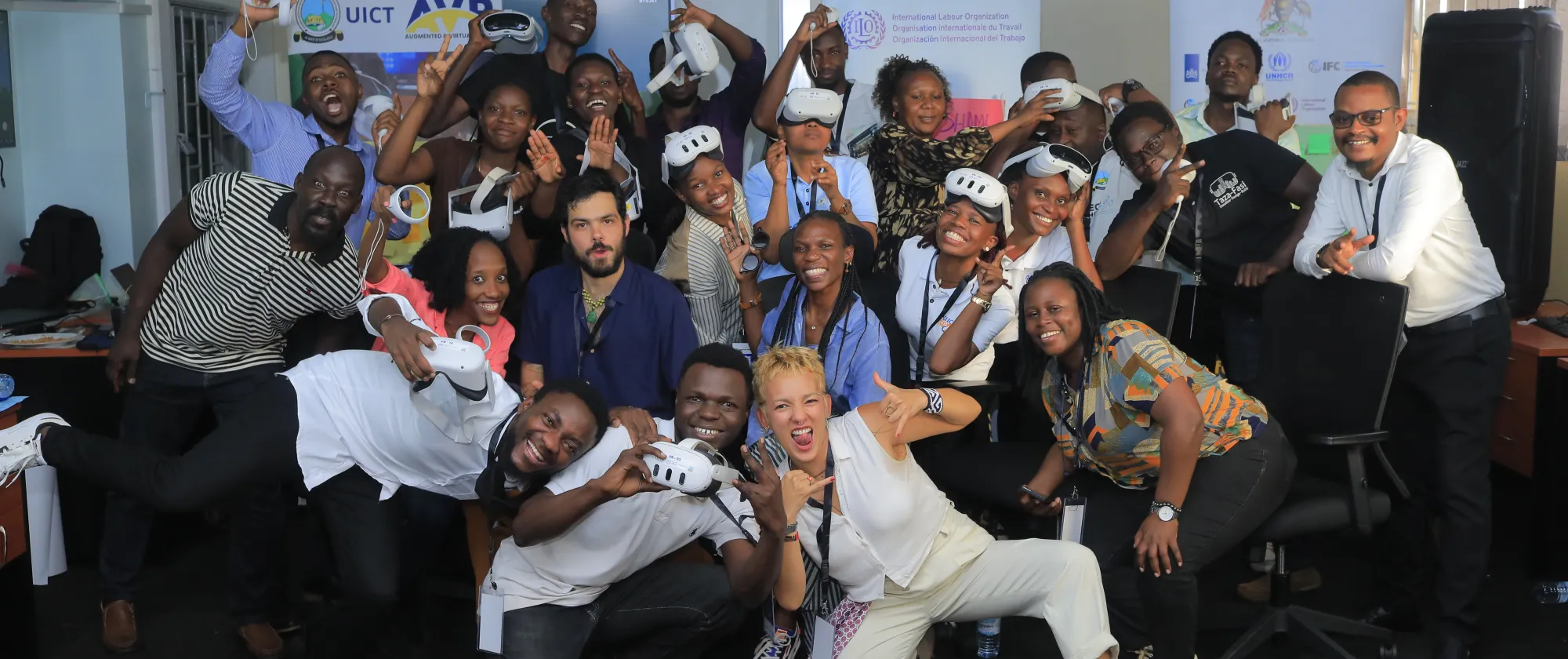
Kampala, UGANDA — The International Labour Organization (ILO), together with the International Training Centre of the ILO (ITCILO), has taken a major step toward integrating immersive learning and virtual reality (VR) into skills development and social dialogue in Uganda. During a joint mission from 3–7 November, consultants from ITCILO and ILO PROSPECTS Uganda carried out a series of activities to test VR tools, build local capacity, and gather contextual inputs that will shape a new VR-based training environment for workers, employers, and government representatives.
The mission is part of the emerging Workverse initiative—an innovation that will bring social dialogue, soft-skills development, and policy engagement into a virtual space accessible to youth, policymakers, and labour market actors across the country.
“We kick-started this work by conducting a needs assessment with stakeholders (including workers and employers organizations), who identified the soft skills needed in the Ugandan jobs market. The same assessment tested their familiarity with Virtual Reality technology. We then identified local VR initiatives that we could partner with, in order to co-design the VR platform and integrate the soft skills training, using the results of the needs assessment. Having completed a successful Training of Trainers, we now plan to train 500 to 1000 stakeholders on using VR to gain soft skills, but also to engage in social dialogue,” said Melissa Kyeyune, National Project Coordinator, Digital Skills and Microwork, ILO PROSPECTS Uganda, and Innovation Scout coordinating this ILO Uganda VR initiative.
Testing VR with Communities and Gathering Local Insights
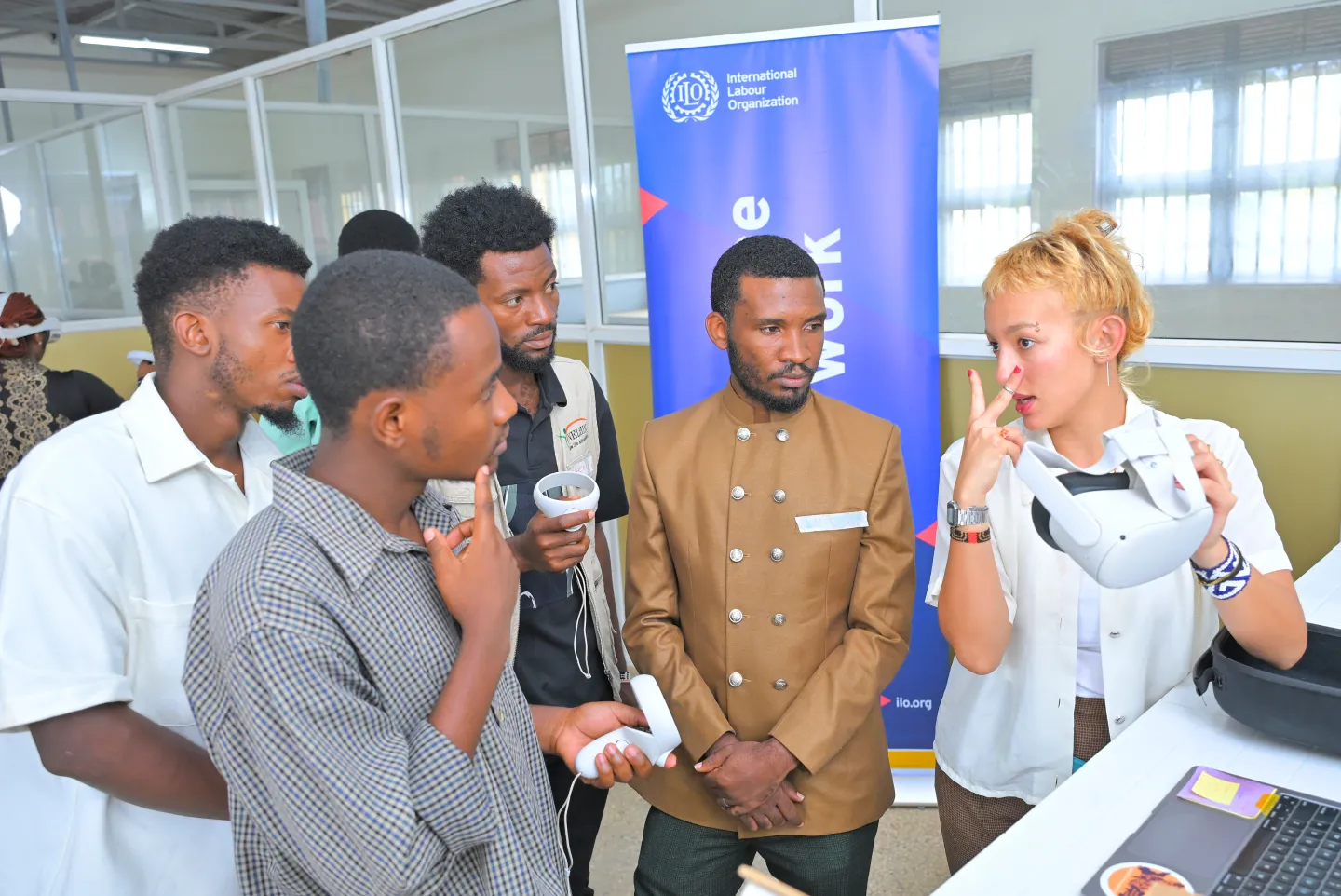
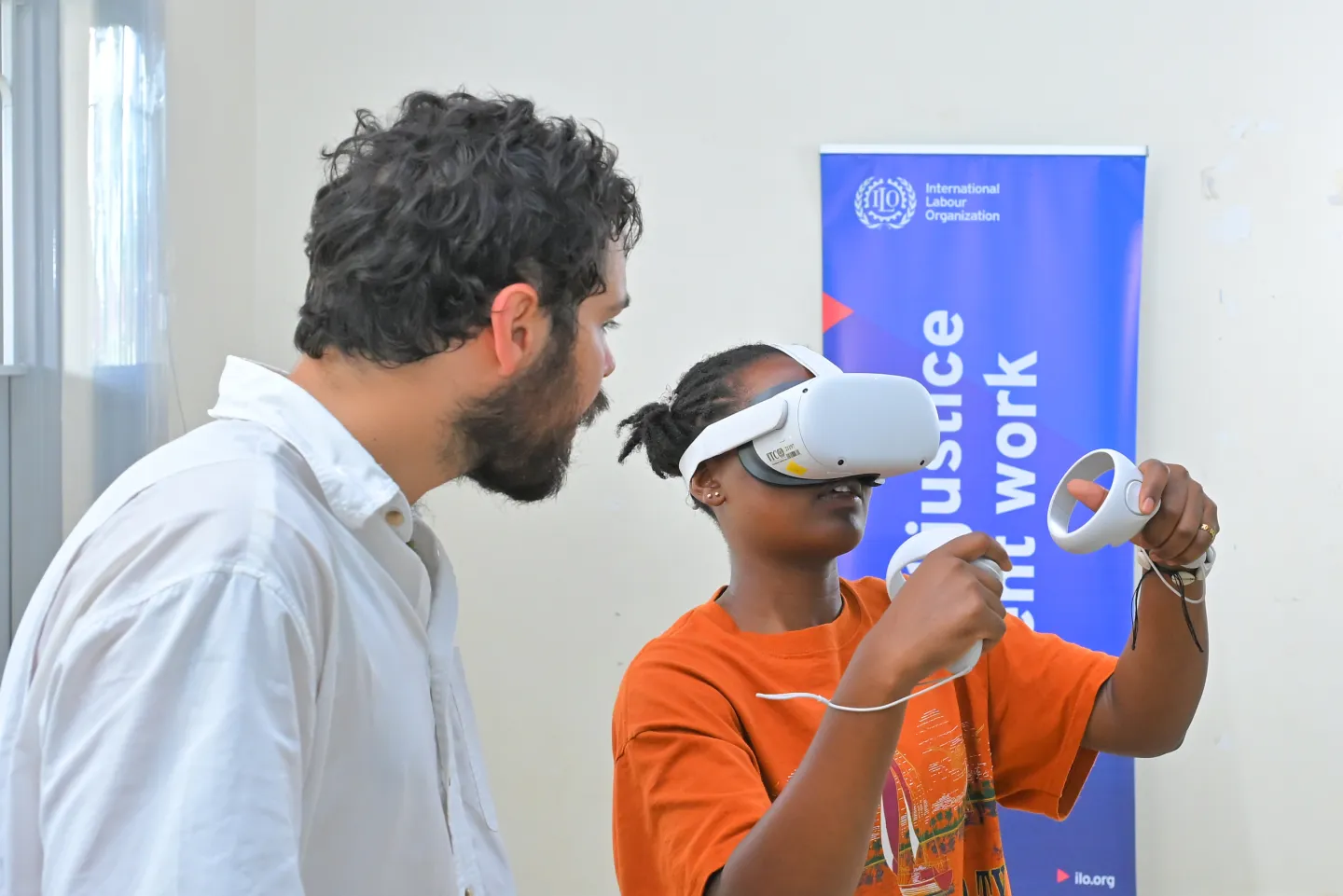
In Nakivale Settlement, one of Uganda’s largest refugee-hosting areas, the mission team tested VR headsets with young people to better understand comfort, ergonomics, and usability in real-life training conditions. Their feedback will directly inform the Training of Trainers (ToT) curriculum as well as adjustments to the hardware deployment plan.
Consultants also captured Ugandan aesthetics, artwork, and local cultural elements—all of which will be integrated into the VR environment to ensure that the Workverse reflects the country’s social, cultural, and professional settings. These contextual insights will support final adjustments ahead of the next ToT session scheduled for early next year.
Establishing Uganda’s First Community of VR Trainers
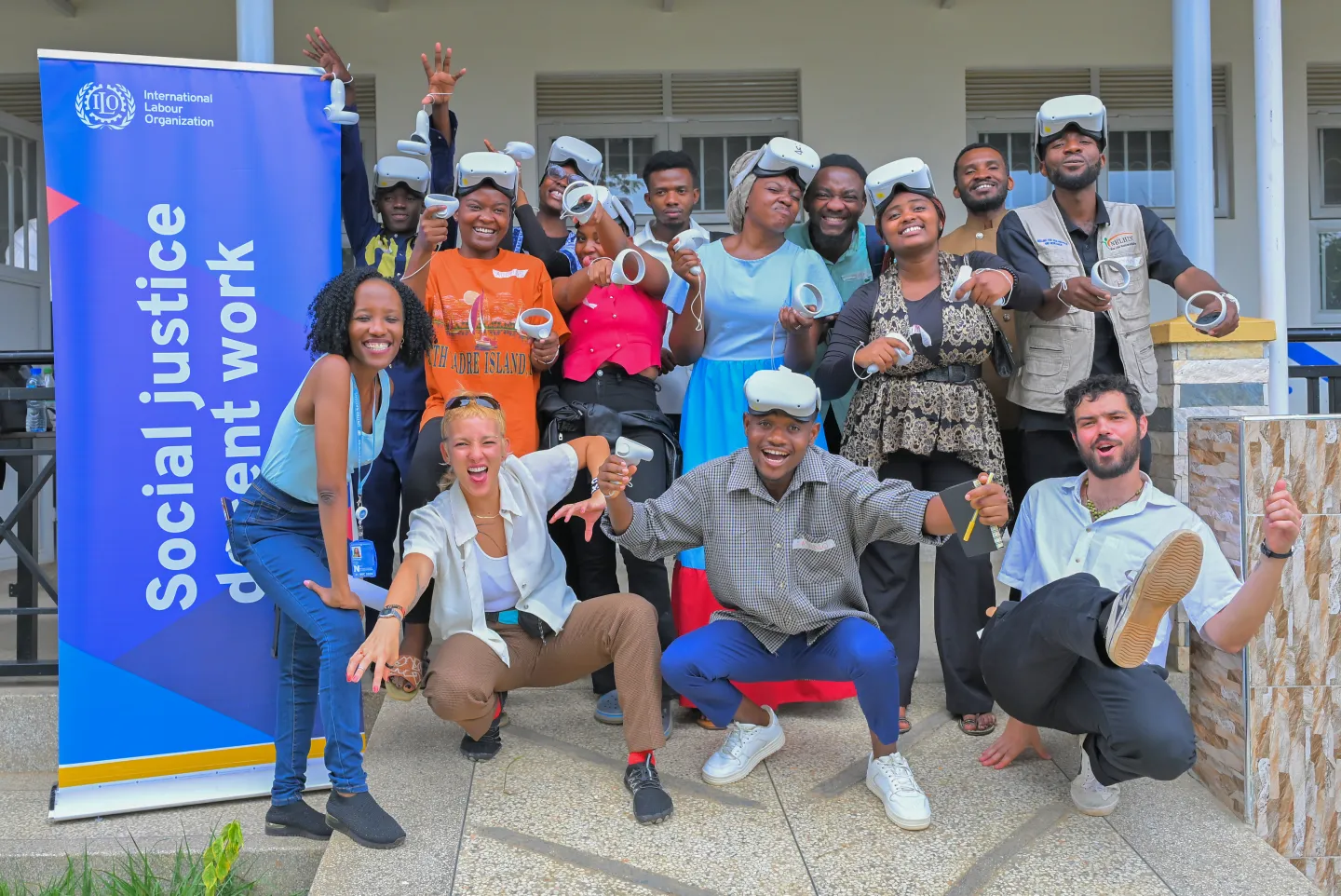
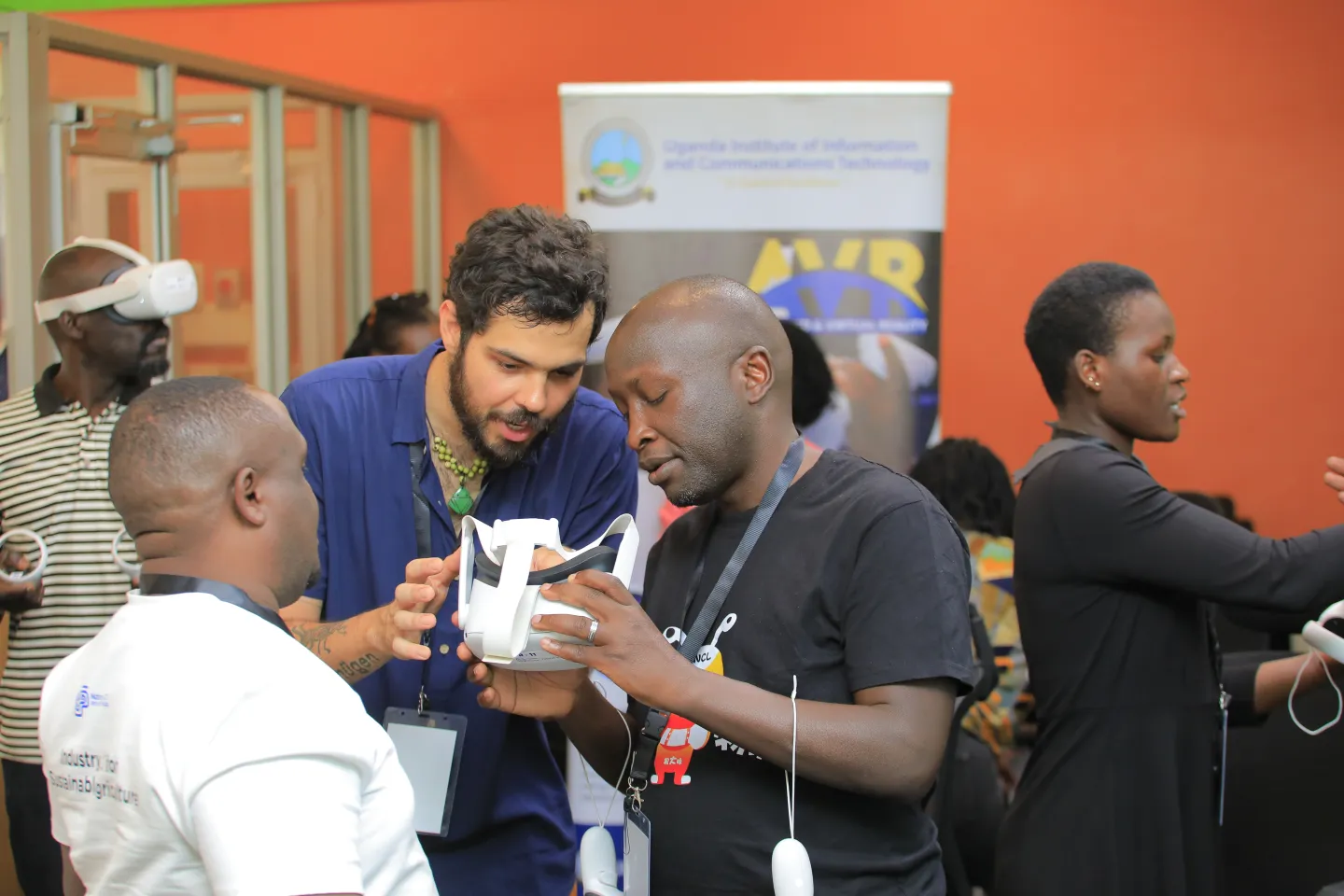
A key highlight of the mission was the initial Training of Trainers, conducted in collaboration with the Uganda Institute of Information and Communication Technology (UICT), which was established under the Ministry of ICT and National Guidance. The training brought together ICT students, ILO-supported digital skills trainers, and local experts already working in immersive technologies.
A total of 18 trainers were successfully trained—forming Uganda’s first coordinated community of VR trainers dedicated to soft-skills development and social dialogue education.
“We’ve been able to train 18 trainers of trainers, including youth collaborators… They have gained skills in communication, empathy, creativity, innovation, and how to use VR to improve soft skills for decent work,” said Flavia Nabbumba, AR/VR Technical Lead at UICT.
For UICT, the collaboration marks an important step toward national scaling of immersive technologies.
“UICT was set up to ensure the whole country benefits from immersive technologies… Now I see how fast we are going to reach all communities,” noted Agnes Lumala, Academic Registrar at UICT.
Building Training Quality and Standard Procedures
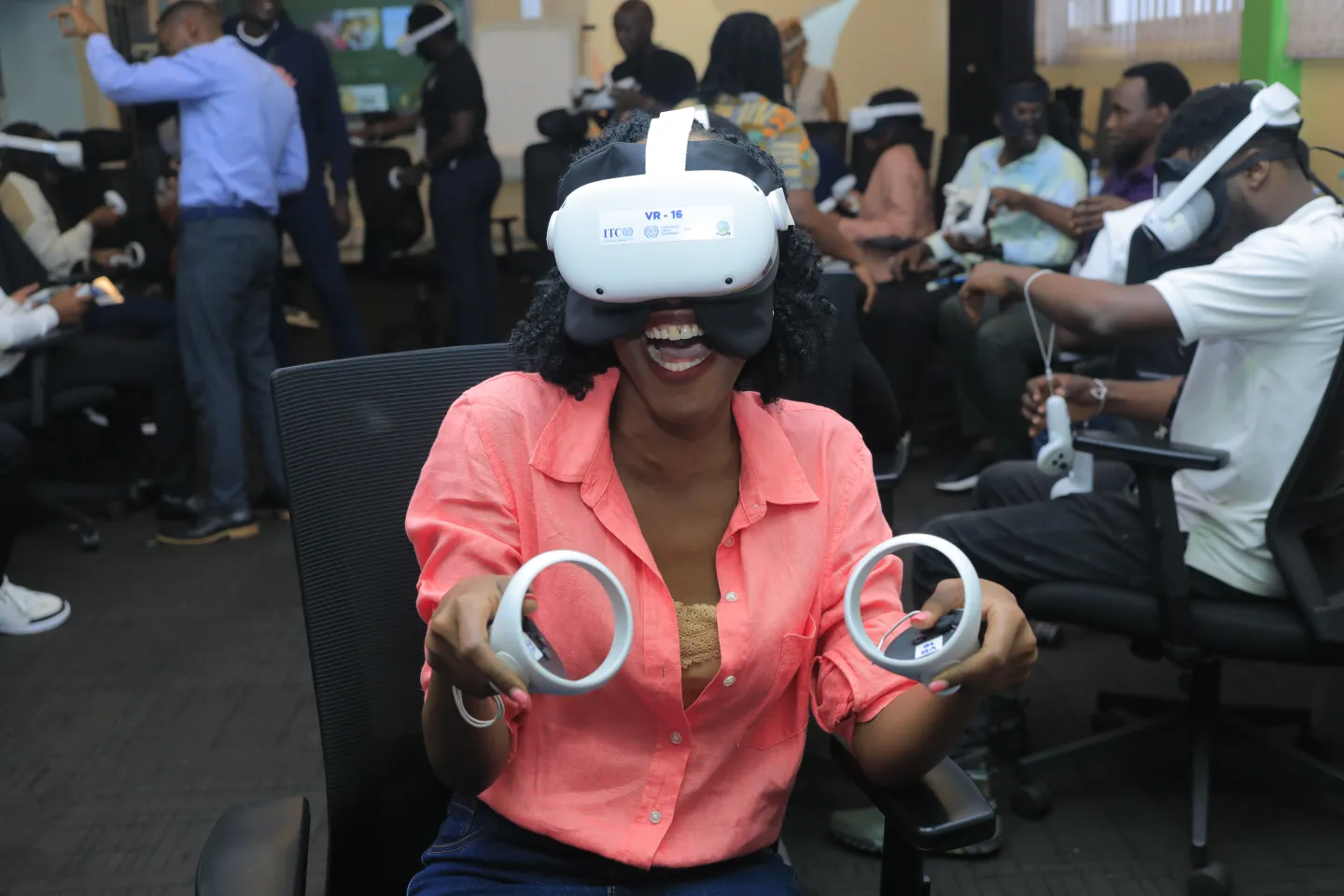
Participants emphasized how the ToT introduced new layers of professionalism and safety to VR facilitation. Trainers learned standardized operating procedures for headset handling, workshop delivery, ethics, and user safety—elements essential for high-quality learning environments.
“Before this, we had no standard procedures. Through this training we learned how to guide people in VR safely and ethically… This was really amazing,” said James Mayanja, a VR trainer from the ACE Virtual Reality Laboratory at Makerere University, Kampala.
Others highlighted the transformative potential of VR for preparing young people for the labour market.
“We realized virtual reality can be used to build so many soft skills—from communication to interview skills… It’s exciting to see how we can use immersive technology to prepare youth for real work environments,” shared Chris Ham Otim, participant, and founder at Taza-Fasi, a virtual reality startup in Kampala.
Several trainers also underscored improved understanding of user safety, consent, and equipment handling.
“We learned the gaps we often overlook—such as consent, safety precautions, and proper handling of the headsets… This training equipped us to support communities better,” said Mariam Nafuna, participant.
Next Steps: Completing the VR Environment and Reaching 500 Users
A fully-developed VR environment—integrating local artwork, dialogue simulations, and soft-skills training modules—will be completed in early 2026. The same 18 trainers will undergo a second ToT using the completed platform, after which they will roll out VR training to approximately 500 users across PROSPECTS target locations. Beneficiaries will include youth, workers, employers, and government officials.
ILO and ITCILO have also secured a number of VR headsets that will be placed in community centres and partner facilities, ensuring broad access to immersive learning tools.
About Uganda pilot
The Uganda pilot supports ILO’s broader vision of integrating VR into workforce development and social dialogue processes. By enabling constituents to step into realistic virtual environments, the Workverse aims to:
- enhance communication, negotiation, and problem-solving skills;
- strengthen engagement among workers, employers, and government;
- support labour market preparedness for youth and vulnerable groups;
- create a scalable model that can be replicated across countries.
The Workverse is co-developed under the PROSPECTS partnership and the ITCILO Innovation Sparks Initiative, reflecting a strong commitment to innovative approaches to decent work and inclusive economic development.
Read more
Programme
Partnership for improving prospects for forcibly displaced persons and host communities (PROSPECTS)
UPSHIFT to elevate youth in Uganda with skills and social entrepreneurship
Promotion, inclusion and protection of refugees and host communities in the digital and gig economy
ILO-Netherlands Partnership
Partnership for improving prospects for forcibly displaced persons and host communities (PROSPECTS) in Uganda
Relevant projects
ILO-Netherlands Partnership
Partnership for improving prospects for forcibly displaced persons and host communities (PROSPECTS) in Uganda
Programme
Partnership for improving prospects for forcibly displaced persons and host communities (PROSPECTS)