

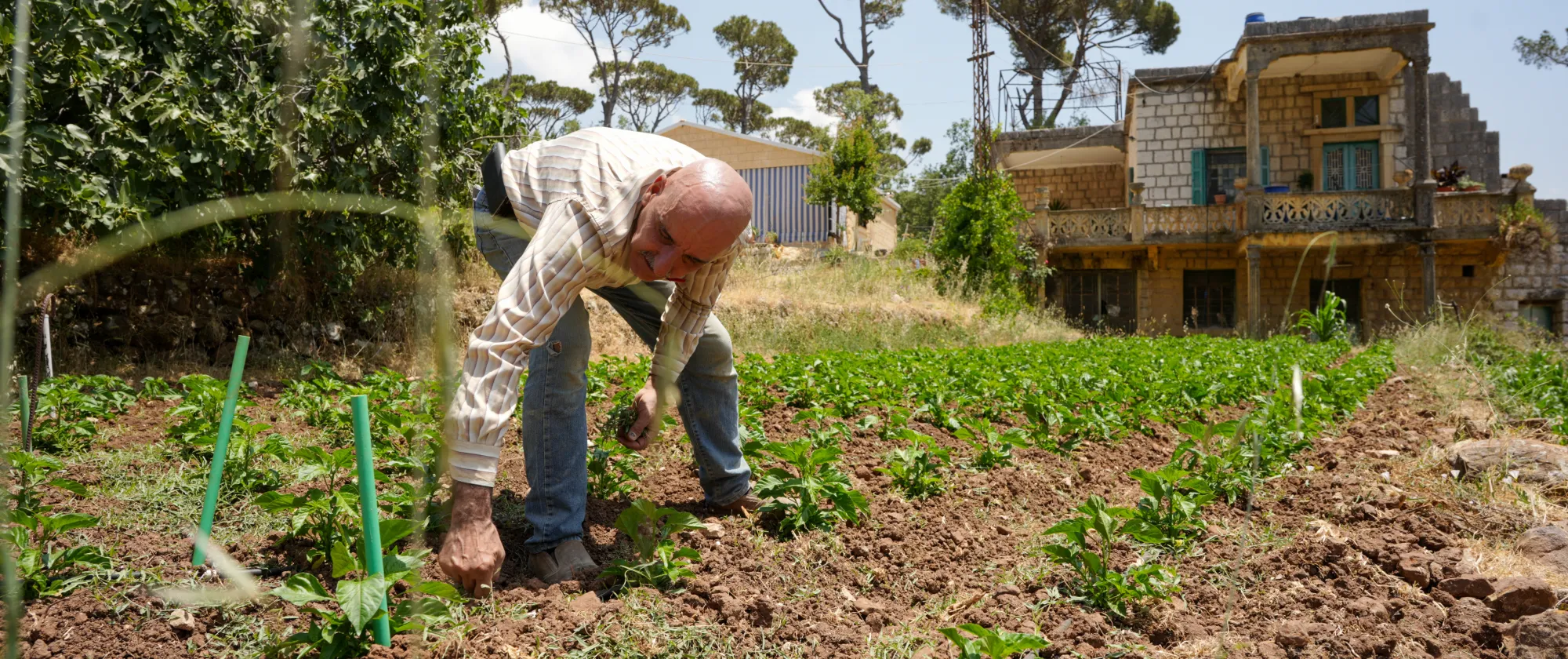
ILO supports stakeholders in Lebanon’s agri-food sector to adopt responsible business conduct
ILO-supported training, with funding from Sweden, equips agri-food enterprises and institutions with tools to advance responsible business conduct and boost export readiness
29 October 2025
BEIRUT (ILO News) - The International Labour Organization (ILO), through the Sweden-funded BOUZOUR Project, concluded a three-day training workshop on Responsible Business Conduct (RBC) and Social Compliance for Export Readiness in the Agri-Food Sector.
The training aimed to equip Lebanese stakeholders in the agriculture and food production (agri-food) sector with the knowledge and tools needed to meet evolving international due-diligence requirements, enhance enterprise competitiveness and secure access to high-value export markets.
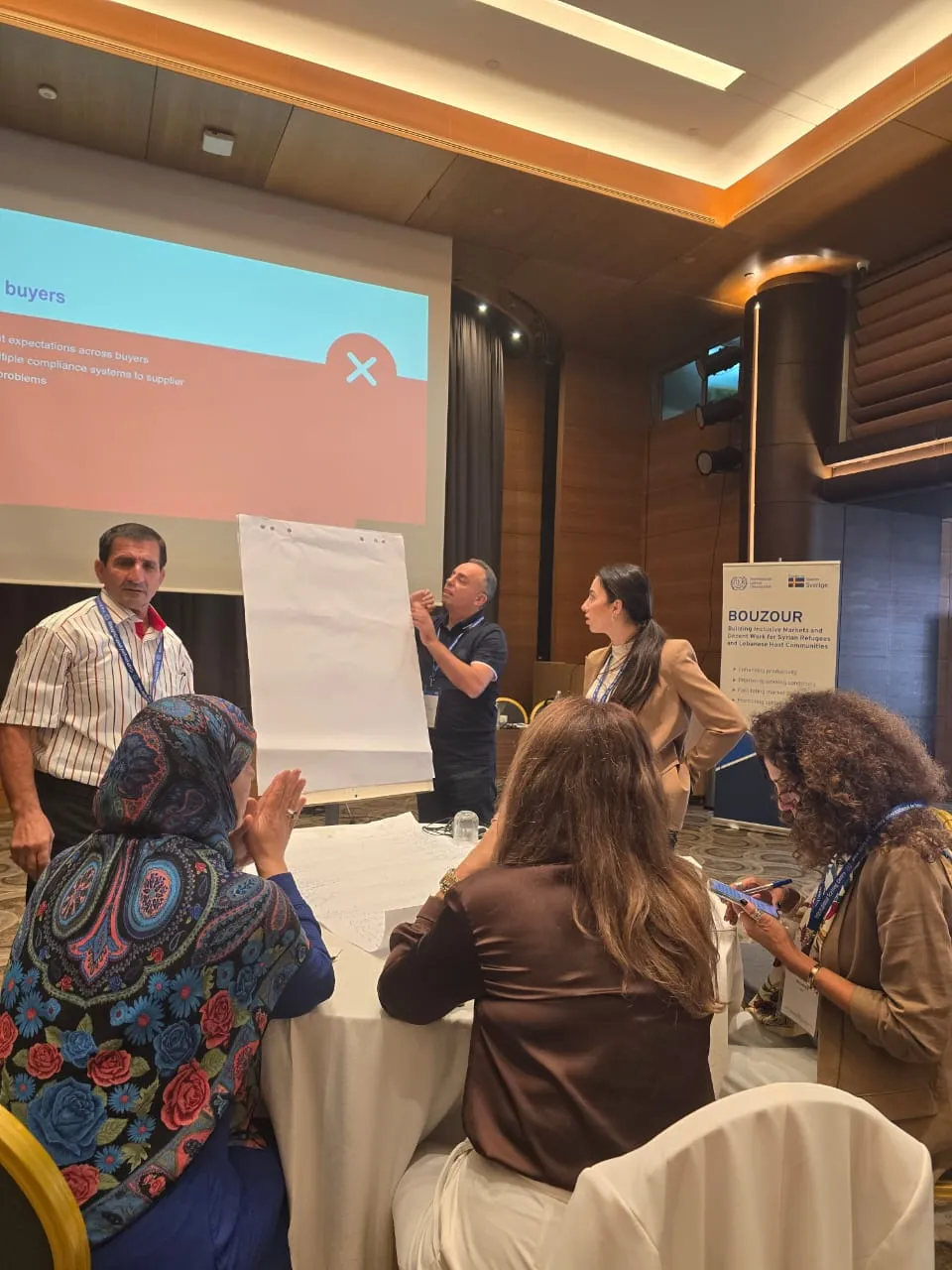
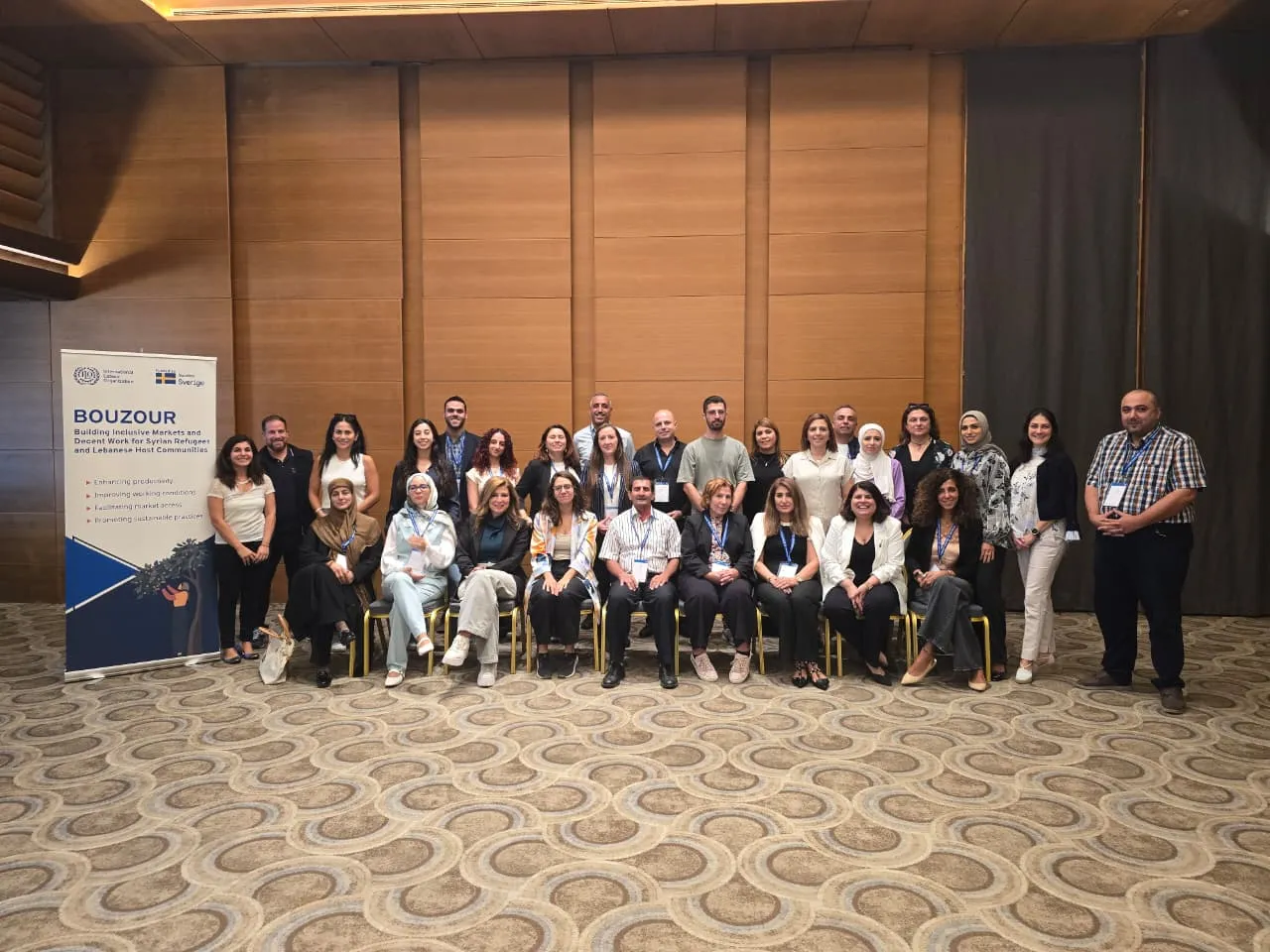
The workshop, organized by the ILO’s International Training Centre (ITCILO), brought together around 30 participants from the private and public sectors, including exporters, business associations, trade unions, and policymakers from across Lebanon to strengthen their knowledge of Responsible Business Conduct (RBC) frameworks and their capacities to undertake Human Rights and Environmental Due Diligence (HREDD).
Participants included representatives from the Ministry of Agriculture, Ministry of Economy and Trade and Ministry of Industry, alongside chambers of commerce and agri-food exporters, reflecting a strong multi-stakeholder commitment to advancing responsible business conduct across Lebanon’s agricultural value chains.
The agri-food sector is a vital source of income and employment for both Lebanese communities hosting Syrian refugees and for the refugees. With global markets increasingly demand proof of ethical, transparent and socially responsible practices – especially in the European Union – Lebanese agricultural small and medium enterprises (SMEs) face growing pressure to comply with international standards.
Over three days, participants engaged in interactive discussions and exercises focused on building systems to manage risks and to monitor and report labour impact at the enterprise and supply chain levels. The training also helped policymakers and institutional actors identify their roles in complying with national legislation, advancing the application of international labour standards, promoting responsible supply chains and supporting Lebanese agri-food exporters to meet evolving market expectations.
Anchored in the ILO’s Decent Work Agenda and tripartite approach, the training underscored the shared responsibility of governments, employers and workers in promoting inclusive and sustainable economic growth highlighting the link between trade, investment and decent work. Participants learned about practical tools to improve compliance with national legislation and international RBC requirements, and monitoring and reporting systems for social compliance at farm level. They reflected on the respective roles of exporters, cooperatives and policymakers in promoting responsible supply chains, and on possible collaborative strategies to strengthen inclusive, resilient and market-ready agri-food exports.
The training drew on the ILO Declaration on Fundamental Principles and Rights at Work, the ILO Tripartite Declaration on Multinational Enterprises and Social Policy (MNE Declaration), the UN Guiding Principles on Business and Human Rights, and the OECD Guidelines on Multinational Enterprises on Responsible Business Conduct.
“This training marks a key step in ILO’s ongoing efforts to enhance enterprise competitiveness, improve working conditions, and facilitate market access in Lebanon’s agri-food sector,” said ILO Enterprise Specialist for Arab States Badra Alawa. “We are particularly encouraged by the active engagement of participating institutions and enterprises, which are driving private-sector development and advancing Lebanon’s sustainability agenda.”
Participants highlighted the importance of practical tools and collaboration in ensuring that social compliance becomes a driver of sustainable export competitiveness rather than a barrier. The ILO will continue to work closely with exporters, cooperatives, and government institutions to strengthen responsible and inclusive market systems in Lebanon’s agricultural sector.
This activity was implemented under the Building Inclusive Markets and Decent Work for Syrian Refugees and Lebanese Host Communities (BOUZOUR) Project, funded by the Swedish International Development Cooperation Agency (Sida). It builds on the ILO’s ongoing efforts to enhance productivity, improve working conditions and strengthen market linkages in Lebanon’s agri-food sector.
Related content
Project
Building Inclusive Markets and Decent Work for Syrian Refugees and Lebanese Host Communities (BOUZOUR)

Country Portal
Lebanon
Relevant projects
Project
Building Inclusive Markets and Decent Work for Syrian Refugees and Lebanese Host Communities (BOUZOUR)