

ILO leads tripartite drive on quality apprenticeship in Egypt
Government, employers' and workers' representatives advance the implementation of ILO Recommendation No. 208.
10 July 2024
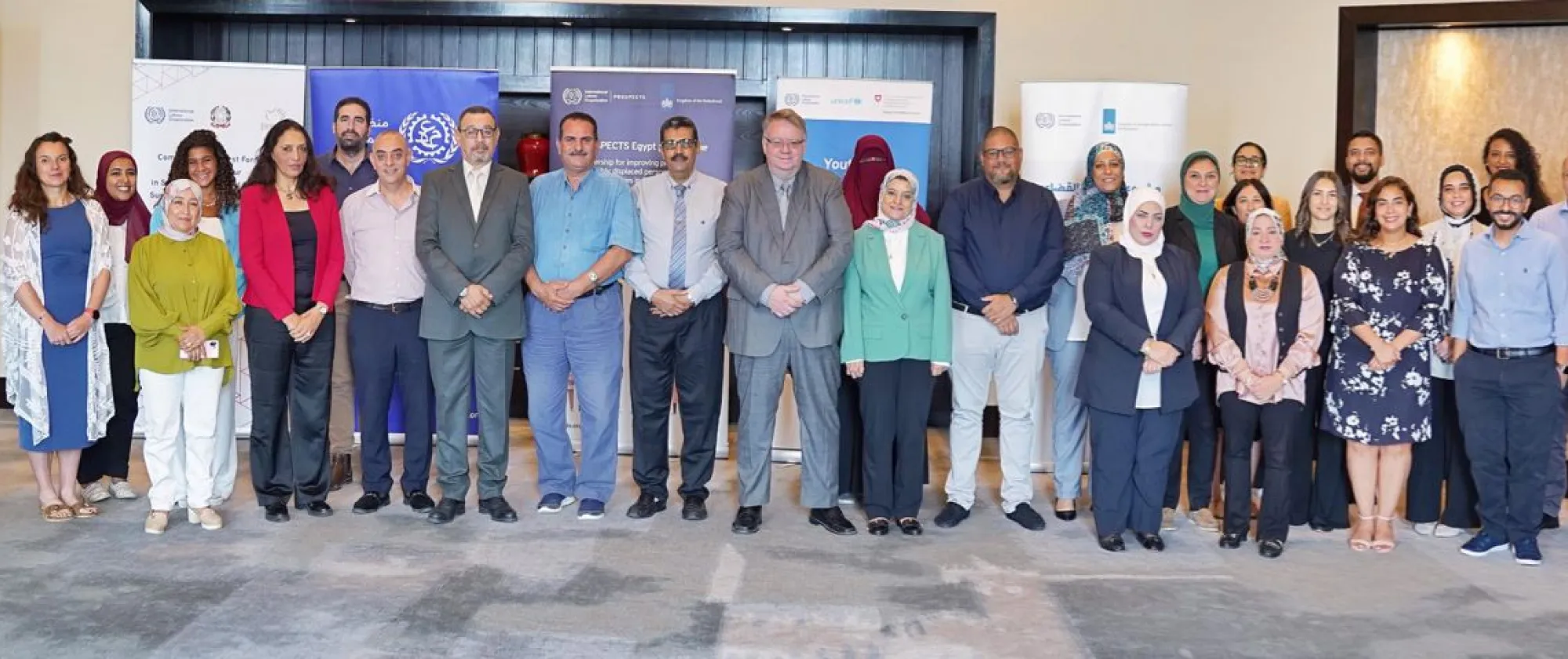
Cairo, Egypt (ILO News)- On 10 July, the International Labour Organization (ILO) in Egypt, including the PROSPECTS programme, hosted a high-level round table in Cairo to advance the implementation of ILO Recommendation No. 208 on the promotion of quality apprenticeship (R208).
The event highlighted the significant potential and opportunities that a robust quality apprenticeship system represents for Egypt and brought together key representatives from government, employers, workers and international organizations to strengthen Egypt's apprenticeship framework and align it with global labour standards.
The meeting included participants from the Egyptian Ministry of Labour (MoL), Ministry of Trade and Industry, Ministry of Social Solidarity, Ministry of Education and Technical Education, Federation of Egyptian Industries, and other influential stakeholders such as Education for Employment Egypt, German Development Cooperation, and the Alexandria Business Association V-Tech.
Other contributors included the International Applied Technology Schools, the Movement for Self-Development, Interchange and Solidarity NGO, the Sekem School, the Network of German Chambers of Commerce Abroad, Catholic Relief Services and the European Union Delegation.
ILO's vision for apprenticeship
Eric Oechslin, Director of the ILO Cairo Office, underscored the transformative potential of quality apprenticeships in fostering economic resilience and reducing inequality. “By investing in skills development and promoting apprenticeships, societies can boost productivity, create resilient workforces, and enhance social justice,” Oechslin said. He called for a unified tripartite approach among governments, employers, and workers to build sustainable apprenticeship programmes.
Oechslin also highlighted the ILO’s tools and resources, including training materials, checklists, and policy guides, designed to support the successful implementation of Recommendation No. 208.
Government initiatives and progress
Rasha Abdel Basset, Head of the International Relations Department at the MoL, highlighted Egypt's progress towards sustainable development through various initiatives. She outlined key programmes, including:
- "Together We Build a Sustainable Future": A programme focused on promoting education.
- "Mahni 2030": An initiative to promote decent work through collaboration with the private sector.
- "Your profession, your future": A partnership with the Italian Salesian Institute Don Bosco to improve vocational training.
Abdel Basset also highlighted ongoing cooperation with the ILO and the European Union, underlining the government's commitment to improving vocational training and labour standards.
Insights from the study visit to Turin
During the event, members of the Egyptian delegation shared their insights and takeaways from their recent study visit to the Skills Fair on Quality Apprenticeships in Turin. These experiences highlighted best practices and global perspectives that can be adapted to the Egyptian context, providing valuable lessons for improving local apprenticeship systems.
Paving the way for quality apprenticeships
Discussions focused on the core elements of R208, highlighting the importance of equitable and inclusive apprenticeships that increase employability and productivity while safeguarding the rights of apprentices. Key issues included:
- Strengthening the legal and regulatory framework for apprenticeship.
- Addressing challenges and opportunities in the implementation of Law 208 in Egypt.
- Strategies for promoting national, regional and international cooperation.
- Promoting the role of stakeholders in the effective implementation of the Recommendation.
Working groups were formed to address specific recommendations under Recommendation 208, such as creating a regulatory framework, ensuring equality and diversity, and harmonising apprenticeship agreements. Their outputs included actionable strategies tailored to the Egyptian context and aimed at bridging the gap between current practices and international standards.
Egypt as a pilot country
Egypt was identified as a potential pilot country for the ILO's plan of action for the implementation of the Quality Apprenticeships Recommendation, 2023 (No. 208). This initiative focuses on advocacy, capacity building and the promotion of partnerships. It aims to establish a network of quality apprenticeship champions in Egypt, paving the way for the wider adoption and sustainable implementation of ILO Recommendation No. 208.
Conclusion
This ground-breaking discussion reinforced the shared commitment of stakeholders to bring Egypt's apprenticeship system up to international standards. By fostering collaboration, addressing challenges, and drawing on global expertise, Egypt is poised to set a benchmark for quality.
Related content

Meeting report: Roundtable on ILO Quality Apprenticeships Recommendation (No. 208) in Egypt