

ADWA' project
ILO leads gender-responsive transition to a greener economy in Egypt
12 December 2024
Cairo, Egypt (ILO News)- In today’s rapidly evolving world, digital, economic, climate and demographic transitions often affect the most vulnerable groups hardest. In Egypt’s labour market, women are particularly affected. While 25.5 million men are employed, only 5.5 million women participate in the workforce, with 57 per cent of them in agriculture (CAPMAS). As climate change accelerates, the Nile Delta ranked among the world’s most vulnerable regions to rising sea levels (IPCC), places these women in increasingly precarious positions.
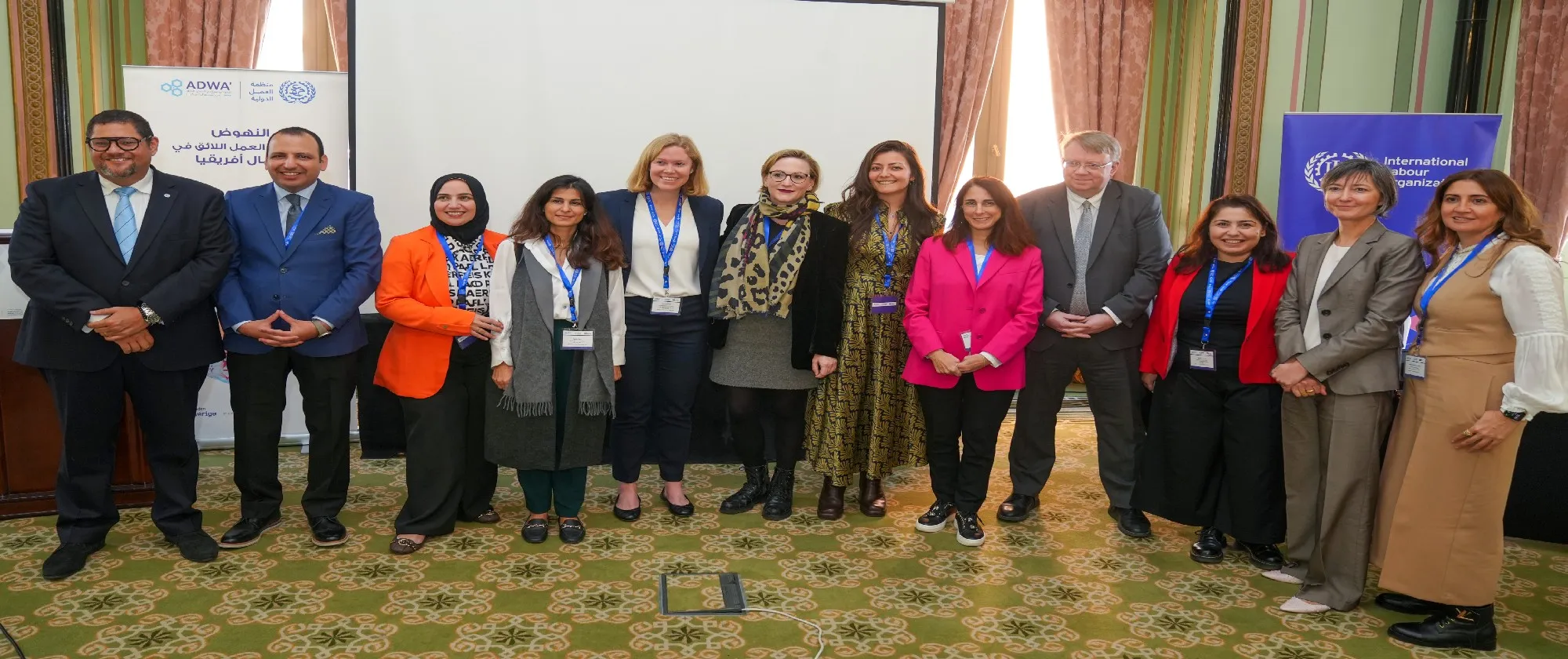
To address these challenges, the ILO’s Advancing the Decent Work Agenda in North Africa (ADWA’) project has been on the ground for five years, focusing on employment and international labour standards (ILS). This week, ADWA’ held key meetings with UN partners, development agencies and its donor, the Swedish International Development Cooperation Agency (Sida).
The project also held a two-day capacity-building workshop on gender-responsive just transition with a focus on women’s entrepreneurship development. These discussions aimed to connect climate action, gender equality, women’s entrepreneurship development and decent work to foster environmentally sustainable economies that leave no one behind.
Empowering women entrepreneurs for just transitions
ADWA’s efforts have prioritized empowering women entrepreneurs, who play a crucial role in advancing just transitions. However, systemic barriers, such as limited access to finance and resources, often hinder their potential. Recognizing this, ADWA’ conducted a Rapid Situational Analysis in 2024, identifying agriculture, renewable energy and waste management as key sectors where women-led enterprises could thrive.
“Women entrepreneurs are central to just transitions, but they need support to overcome existing challenges and unlock their potential,” said Sara Andersson, Technical Officer on Women’s Entrepreneurship Development at ILO Geneva.
She emphasized that while climate change exacerbates gender inequalities, it also presents opportunities for women to lead in green sectors.
“The ILO’s global programme on women’s entrepreneurship takes a threefold approach: addressing policies, social attitudes and regulatory frameworks to ensure an enabling gender-responsiveness environment; institutional capacity building to promote private and public institutions that advocate and support women entrepreneurs; and providing tools and resources to help women thrive in greener, gender-responsive local economies,” Anderson added.
Addressing climate and labour challenges together
Climate change poses significant threats to the global workforce. “More than 71 per cent of the world’s workers are at risk of heat stress, and productivity drops by over 50 per cent when temperatures rise above 34 degrees Celsius,” said Camilla Roman, Senior Technical Specialist for Just Transition at ILO Geneva (ILO).
She highlighted that women are particularly vulnerable due to their concentration in sectors such as agriculture and their limited access to technology and resources. “To ensure that women are not left behind, bold policies are needed to balance work-life responsibilities and promote investment in the care economy,” added Emanuela Pozzan, Senior Gender Specialist at ILO Geneva.
“This includes measures such as maternity protection, accessible childcare and caregivers support- all essential for promoting gender equality,” she said.
ADWA’s wider impact
ADWA’s work goes beyond policy discussions. Valentine Offenloch, ADWA’ Project Manager, explained: “The project has been working in Egypt for five years, focusing on employment and ILS. It was essential for the project to address the intersection of climate change and gender.”
Through partnerships with key ministries, ADWA’ has driven initiatives to build capacity and foster institutional change. For example, nearly 1,700 judges- including Egypt’s largest cohort of female judges- have been trained on international labour standards.
Valentina Verze, Enterprise Development and Job Creation Specialist explained: “the programme is also linked to the formalization aspect, which is key to making a real difference, including providing social protection and empowering women. It transitions economic activities from informal to formal arrangements, providing better coverage and support.”
Towards a greener and more inclusive future
As the ADWA’ project draws to a close, it has outlined key recommendations to guide Egypt’s gender-responsive transition to a greener economy. These recommendations, developed during the recent workshop and broader project activities, emphasize embedding gender equality across enterprises and beyond.
Key suggestions include promoting women-led enterprises in green sectors such as agriculture, renewable energy and waste management by improving access to green finance and resources. The project also highlighted the need for comprehensive policies to support women’s entrepreneurship development, the transition to a greener economy and formalization.
Strengthening institutional capacities- particularly within government agencies and private entities- was another critical focus to sustain ADWA’s achievements. These recommendations provide a guide for Egypt to continue advancing gender equality, decent work and environmental sustainability, ensuring that the transition to a greener economy remains inclusive and leaves no one behind.
Related content
Advancing the Decent Work Agenda in North Africa (ADWA') Phase II
Relevant projects
Advancing the Decent Work Agenda in North Africa (ADWA')
Advancing the Decent Work Agenda in North Africa (ADWA') - Pilot Phase