


The ILO advances safe and healthy workplaces in Ghana’s cocoa supply chain through WIND training
The ILO’s ACCEL Africa project, funded by the Ministry of Foreign Affairs of the Netherlands, trained 30 local actors in Ghana’s cocoa sector on the WIND methodology to promote practical, low-cost occupational safety and health improvements, strengthen safer cocoa supply chains, and support efforts to address child labour.
2 May 2026
BIBIANI (ILO News) - In Ghana’s cocoa-growing communities, a quiet but meaningful transformation is taking place. The ILO, with funding from the Ministry of Foreign Affairs of the Kingdom of the Netherlands, is equipping local actors with practical tools to make farms safer and more productive through its ACCEL Africa project.
From 27–30 April 2026, the project convened 30 participants (22 men and 8 women) drawn from government institutions, multinational cocoa companies, cooperatives, and workers’ and employers’ organizations for a Training of Trainers (ToT) on the Work Improvement in Neighbourhood Development (WIND) methodology. WIND is an ILO participatory, action‑oriented training programme that promotes simple, low‑cost occupational safety and health (OSH) improvements using locally available solutions. The training focused on practical measures that can be readily applied in farming communities to improve working and living conditions.
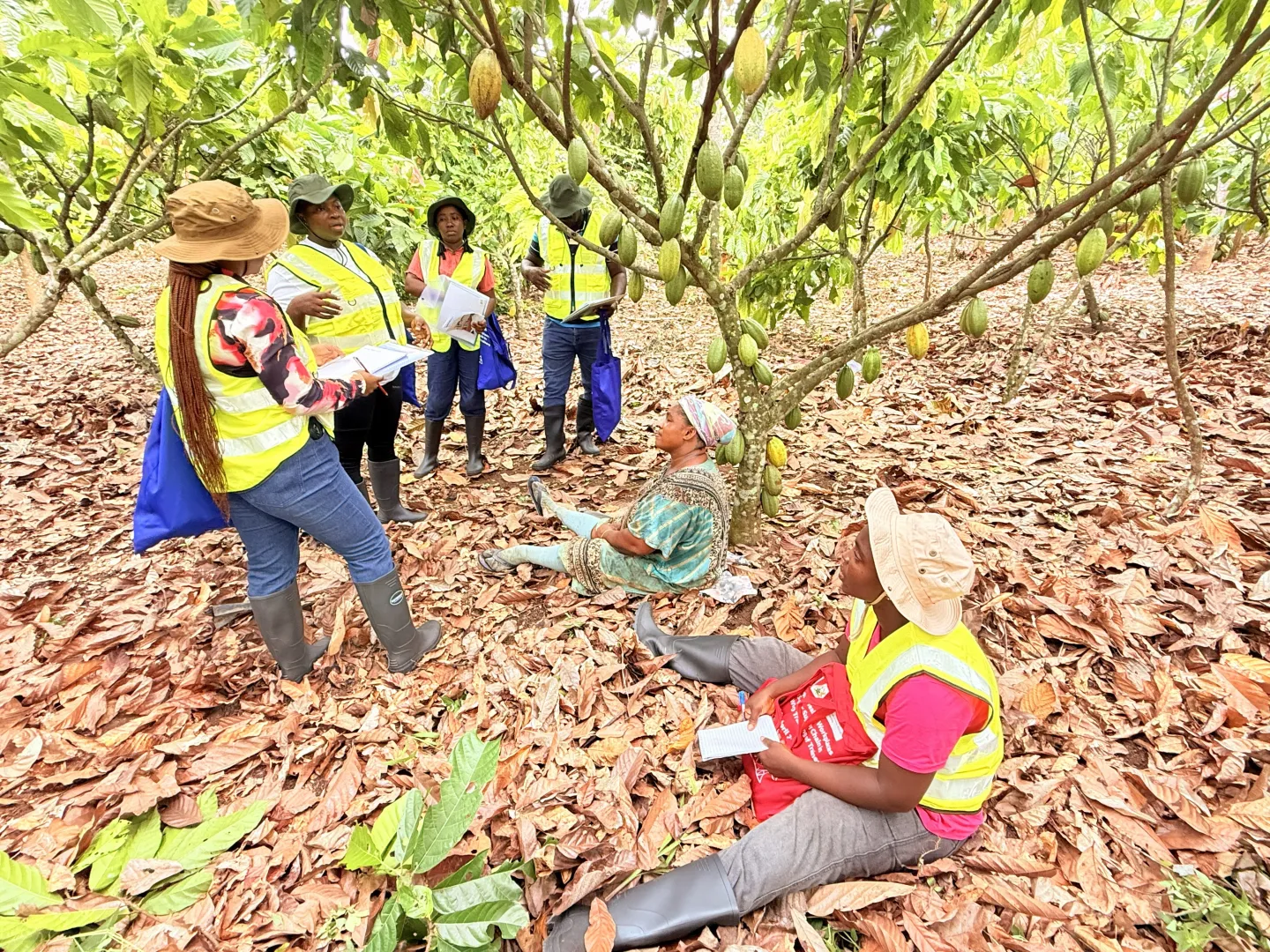
The initiative comes at a critical moment for Ghana’s cocoa sector. Like most of the informal economy, cocoa farming faces significant OSH challenges, many of which are closely linked to child labour, health and safety. Unsafe working conditions not only place farmers and workers at risk but also contribute to vulnerabilities that can push households to rely on child labour. Addressing OSH is therefore essential to protecting children, strengthening household resilience, and improving productivity.
Building on Ghana’s ongoing OSH reforms and ACCEL Africa’s system‑level approach to tackling child labour and improve working conditions for cooperatives, the ToT was a timely intervention. It supported farm‑level improvements while reinforcing national commitments to OSH and advancing OSH as a Fundamental Principle and Right at Work. The ToT combined classroom presentations, group work exercise, experience sharing, field visits, micro teaching and feedback to help participants appreciate the training content and methodology.
Using the participatory WIND approach, the training combined group work, hands‑on exercises, and field visits to cocoa farms. Participants identified common workplace hazards and developed realistic, locally adaptable solutions to improve safety, health, and over all well‑being in their communities.
What makes WIND powerful is that it shows us how to improve safety using what we already have in our communities. I am confident that I can train farmers to make small changes that will protect their health, keep children safe, and improve productivity.
Roland Owusu, Cocoa Health and Extension Division
Speaking on behalf of the ILO Country Director for Nigeria, Ghana, Liberia and Sierra Leone, Bismark Quartey, National Project Coordinator of the ACCEL Africa Project in Ghana, underscored the broader significance of the initiative: “Improving OSH in the cocoa sector goes beyond compliance; it is about protecting lives, strengthening communities, and tackling the root causes of child labour. Through the WIND methodology, we are empowering local actors to take practical action and drive sustainable change from within. We are also excited to be the first country to receive training on WIND methodology since its revision 2 months ago by the ILO technical unit for OSH and Labour Inspection.”
The impact of the training was immediate. Participants strengthened their understanding of workplace risks, acquired hands‑on skills to implement practical safety measures, and developed action plans to drive change in their respective institutions and communities. The process helped foster a stronger culture of safety, encouraging farmers and stakeholders to prioritize workplace safety.
By building local capacity and promoting practical, action‑oriented solutions, the ILO and its social partners are contributing to safer cocoa supply chains in Ghana; protecting workers, supporting families, and advancing the fight against child labour.
Relevant projects
Accelerating action for the elimination of child labour in supply chains in Africa (ACCEL Africa)