


Article
From ideas to impact: How ILO training series is transforming the businesses of entrepreneurs in Jordan
Shireen, Hanin, and Linka share how a business and entrepreneurship course helped them turn their visions into successful ventures.
19 January 2026
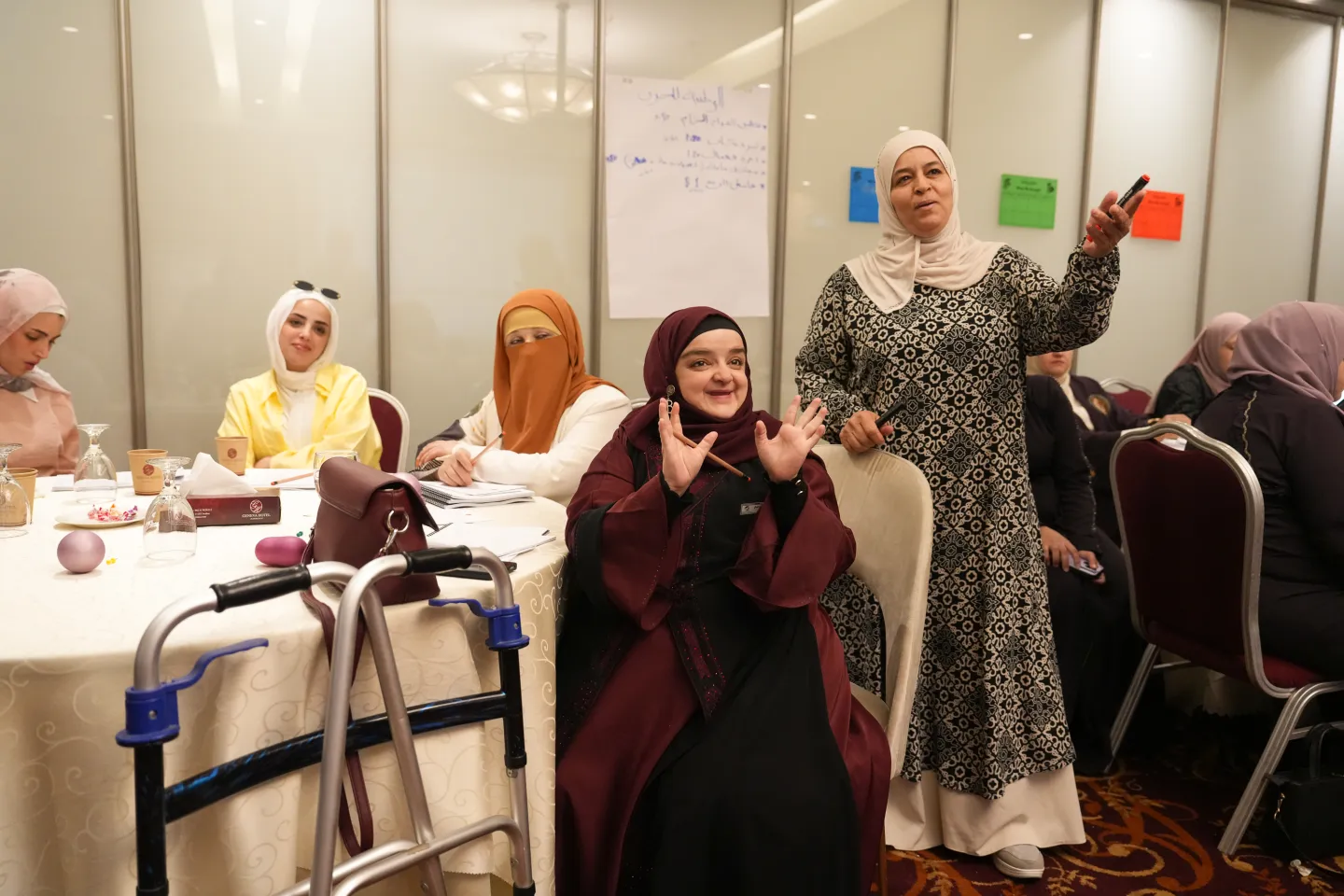
Zarqa, Amman, Al Salt, Jordan– In 2025, nearly two hundred entrepreneurs and aspiring business owners participated in a series of ILO PROSPECTS trainings under the Start and Improve Your Business (SIYB) programme. This initiative offered a set of interconnected training packages designed to support micro and small enterprises at every stage of business development, from creation to growth and expansion.
The courses included Generate Your Business Idea (GYB), a programme for those looking to develop a feasible business idea, and Improve Your Business (IYB), which focuses on helping entrepreneurs enhance their business management processes.
Participants included women, men, and people with disabilities, with particularly high participation from women—an encouraging outcome in a country where women face some of the highest unemployment rates in the region.
According to Jordan’s Department of Statistics, among all residents—Jordanians and non-Jordanians—the female unemployment rate reached 27% in 2025, compared to roughly 14% among men. Female labour force participation, which stood at about 17%, remains a key factor behind these gaps.
Here are three stories from participants who attended the course and, through its coaching, have managed to bring their business to the next level.
The ILO ran the courses under the PROSPECTS Partnership, with support from the Kingdom of the Netherlands.

Hanin Al-Tarteer, 30, is an agricultural engineer, married with two children, living in Jordan’s capital, Amman. Thanks to the ILO Start and Improve Your Business training programme, she’s now running a successful hydroponic farming business. “I started small, with one greenhouse,” she said, “Now I have two, and I hope to expand further.” Hanin produces microgreens and high-value crops like broccoli sprouts and fenugreek, which she grows to meet both therapeutic and nutritional needs.
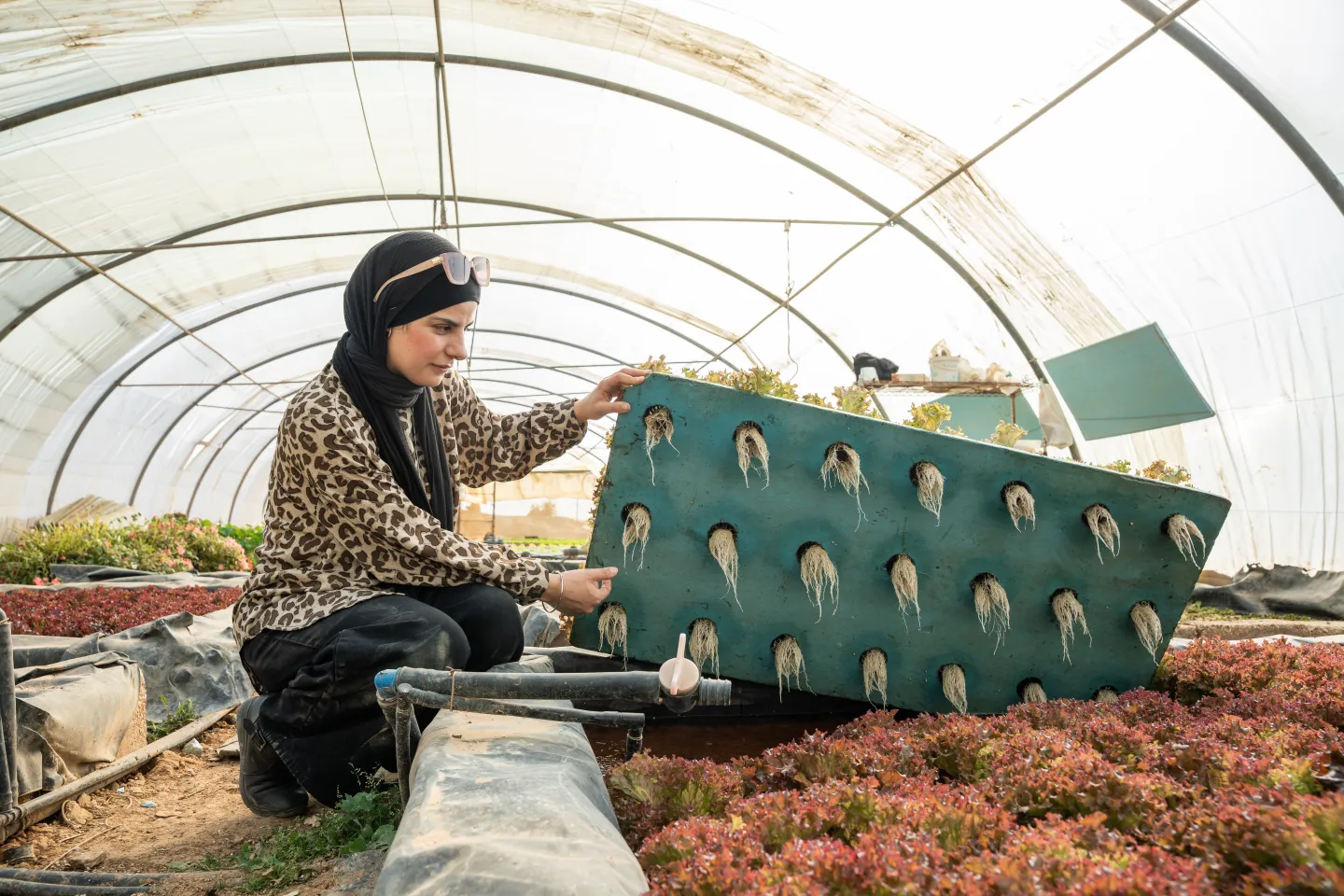
Hanin had an idea for this project long before she attended the ILO training programme, but the skills she learned have been a game changer. She remembers discovering the course through social media. “It helped me turn my idea into a practical business plan,” she said. “I learned how to monitor cash flow, calculate costs, and identify market needs. Everything is now organized, from inputs and outputs to profit margins.”
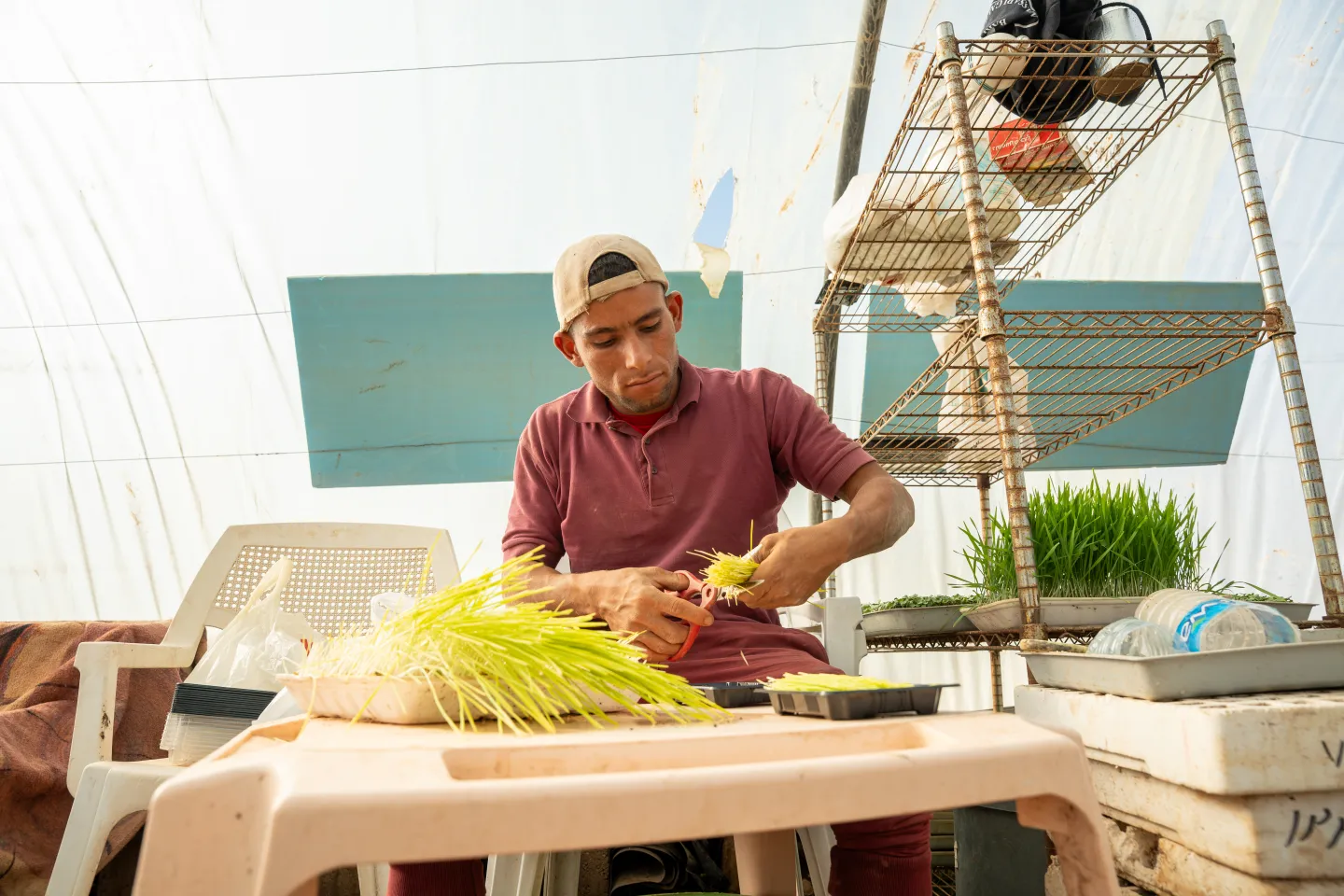
Hanin hopes to have four greenhouses within a year, hire additional workers, and eventually export her products abroad.
But the journey wasn’t easy.
“Limited capital and market competition are always challenges,” Hanin explained. “I am a small project competing with bigger farms, but I must keep expanding.” Despite these hurdles, she said that her products now reach major supermarkets in Jordan, and that she has officially registered her brand, GardenJo. “This project has fulfilled my dream of owning a business and given me financial independence,” she said.
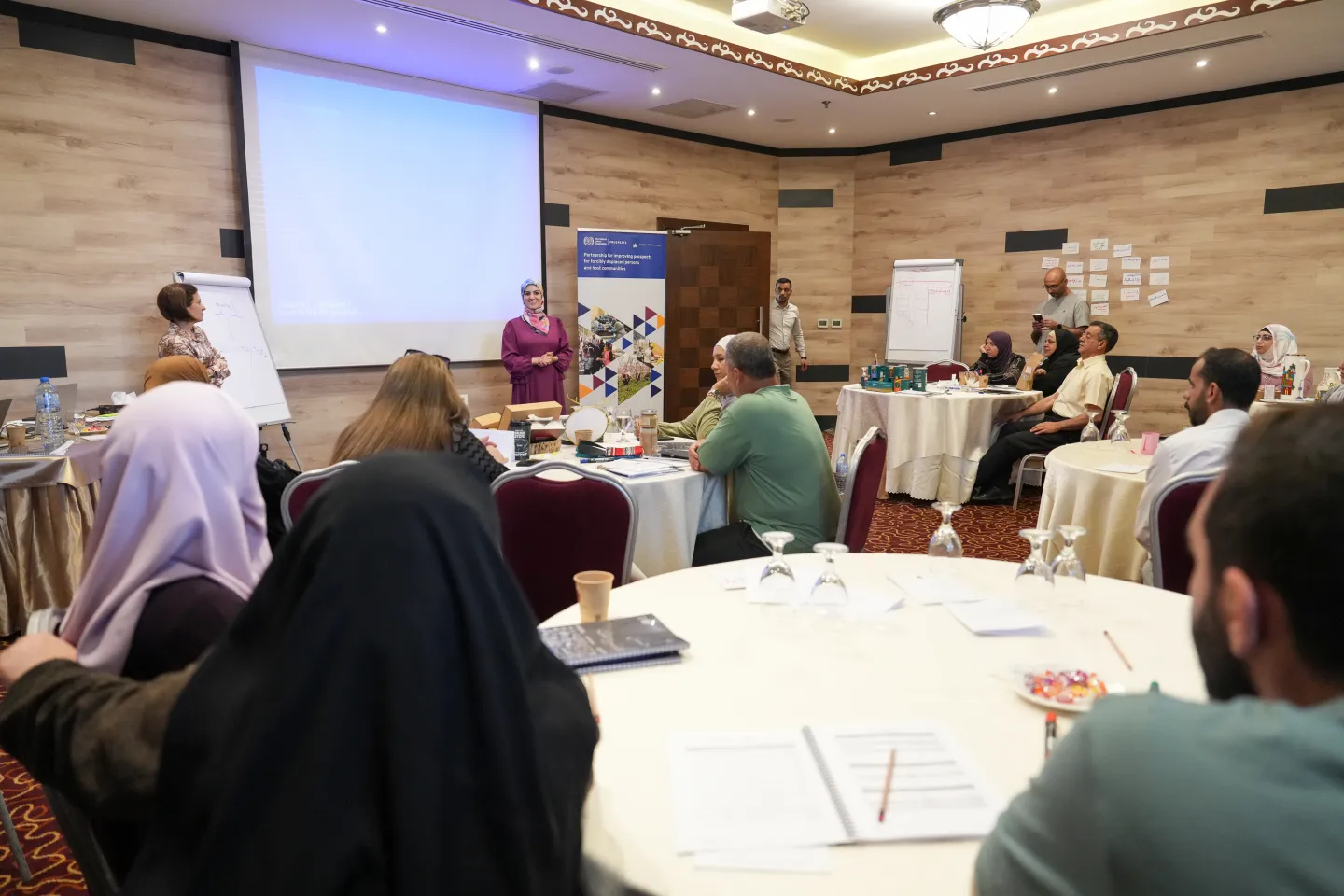
Participants from all over Jordan attended the ILO PROSPECTS training course in Amman, honing their entrepreneurial skills to start, develop, and invest in their business ideas and dreams. Trainers were all ILO-certified coaches, specialized in the different training modules through previous long-term training.
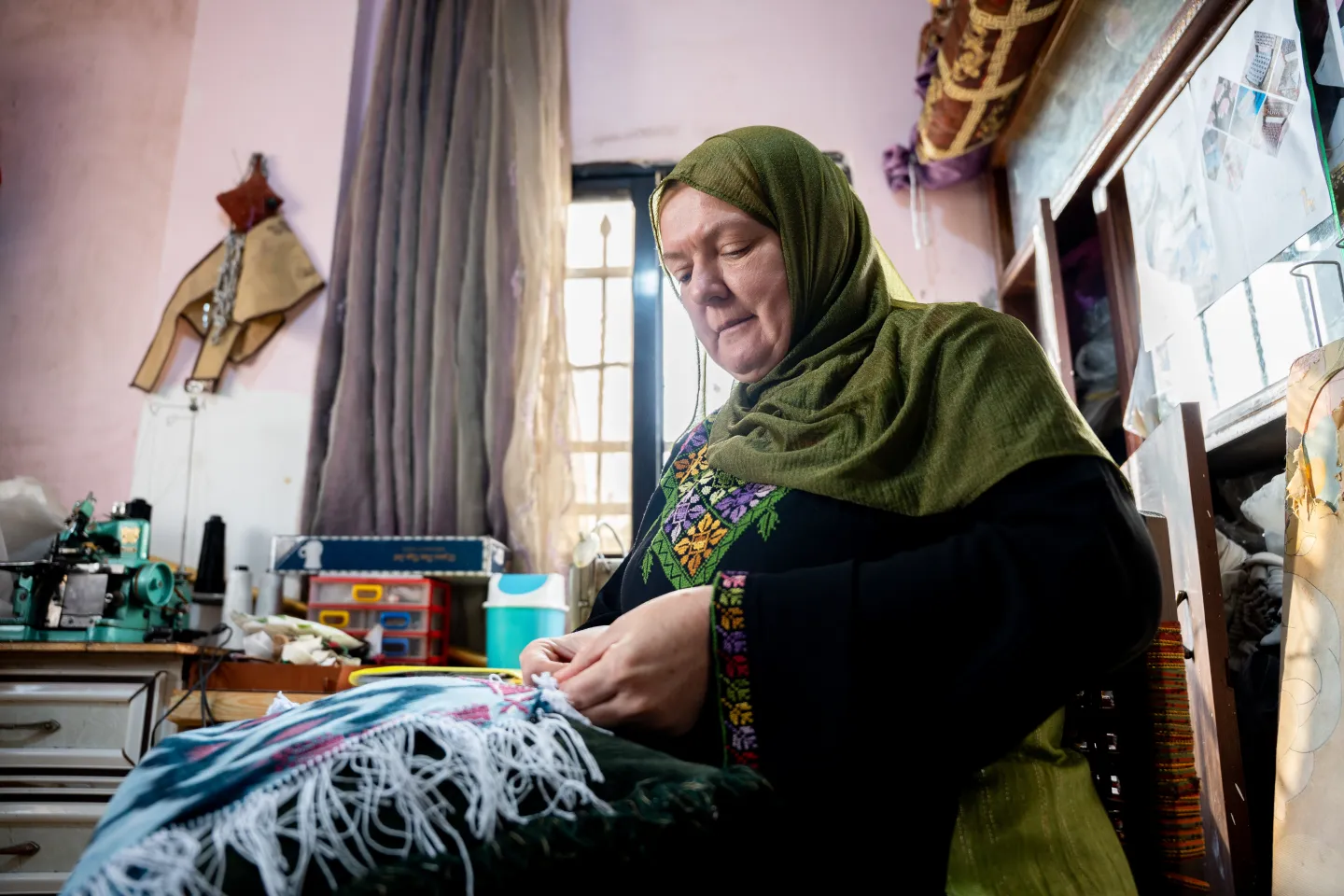
Linka Adoubi, 52, has followed a path blending heritage and entrepreneurship. A laboratory technician by training, she worked in her field in Hungary before moving to Jordan, where she married a local man from Al Salt, a historic city renowned for its Ottoman-era architecture and rich cultural heritage.
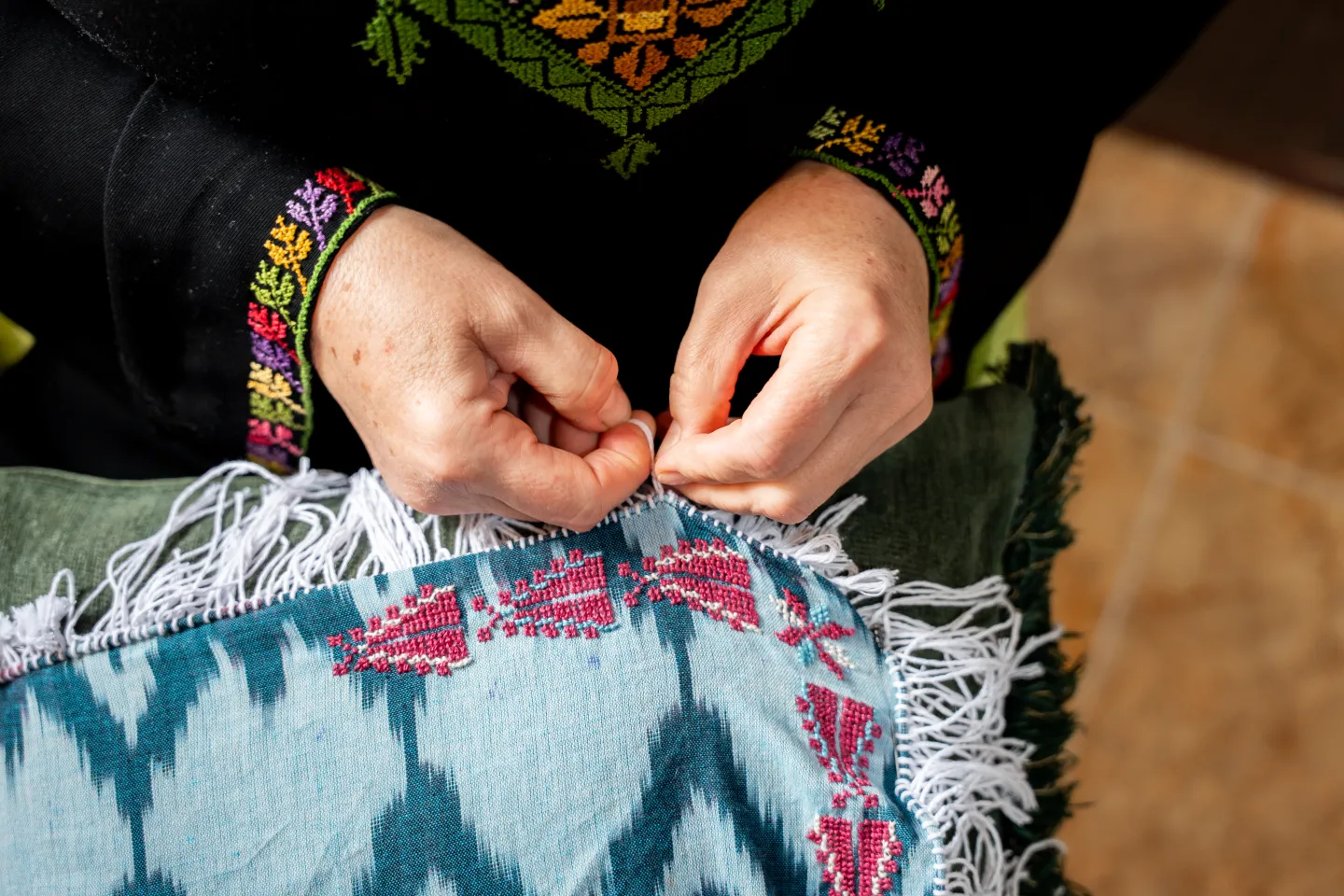
Immersed in this traditional atmosphere, she learned taḥdīb, the art of Jordanian hand-embroidery finishing, from her mother-in-law. “I loved it immediately,” she said. “The details reminded me of the traditions I grew up with in Hungary, and I enjoy combining Hungarian embroidery with Jordanian designs.”
Linka began her project ten years ago, focusing on keffiyehs, traditional dresses, and heritage embroidery. “I didn’t have the materials at first,” she said, “and financial challenges were the hardest part, but I overcame them with women-focused loans.”
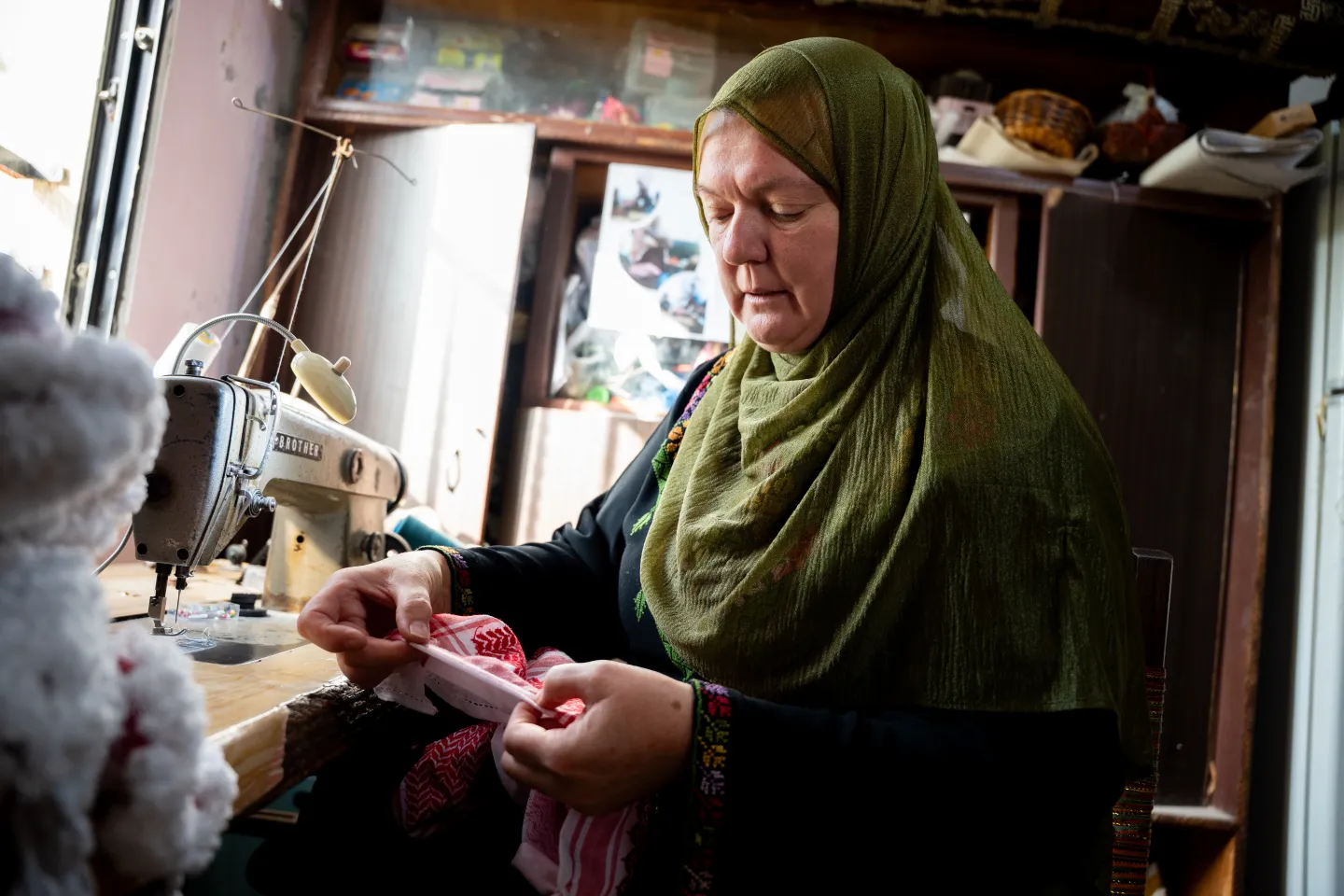
After attending the ILO’s Generate Your Business Idea and Start Your Business training modules, she learned how to calculate costs and profits, and manage a business professionally. “The day after the training, I bought my materials and started my project. Many people doubted I could do it, but I trained and learned and proved them wrong,” she said.
Today, Linka employs up to five women at times and continues to receive support from the programme. “I want to open a shop specializing in Jordanian heritage,” she said. “A place where people from all over can come to see and buy our products. This work has become more than just a source of income: it is my cherished personal passion.”

Shireen Nader Shishani sits at her worktable, surrounded by colorful threads, beads, and partially finished crochet dolls. “When I started, my husband wasn’t working,” she said. “I was the main provider for my family of six and sometimes it was really hard. I even borrowed money from my mother for materials.”
Shireen, 42, lives in the Jordanian city of Zarqa. She studied fashion design and worked in clothing factories, managing a production line, before pursuing her own creative path. “I started with regular crochet, then moved on to bead crochet. Later, I joined courses to improve my skills, and today I train other women in these techniques.”
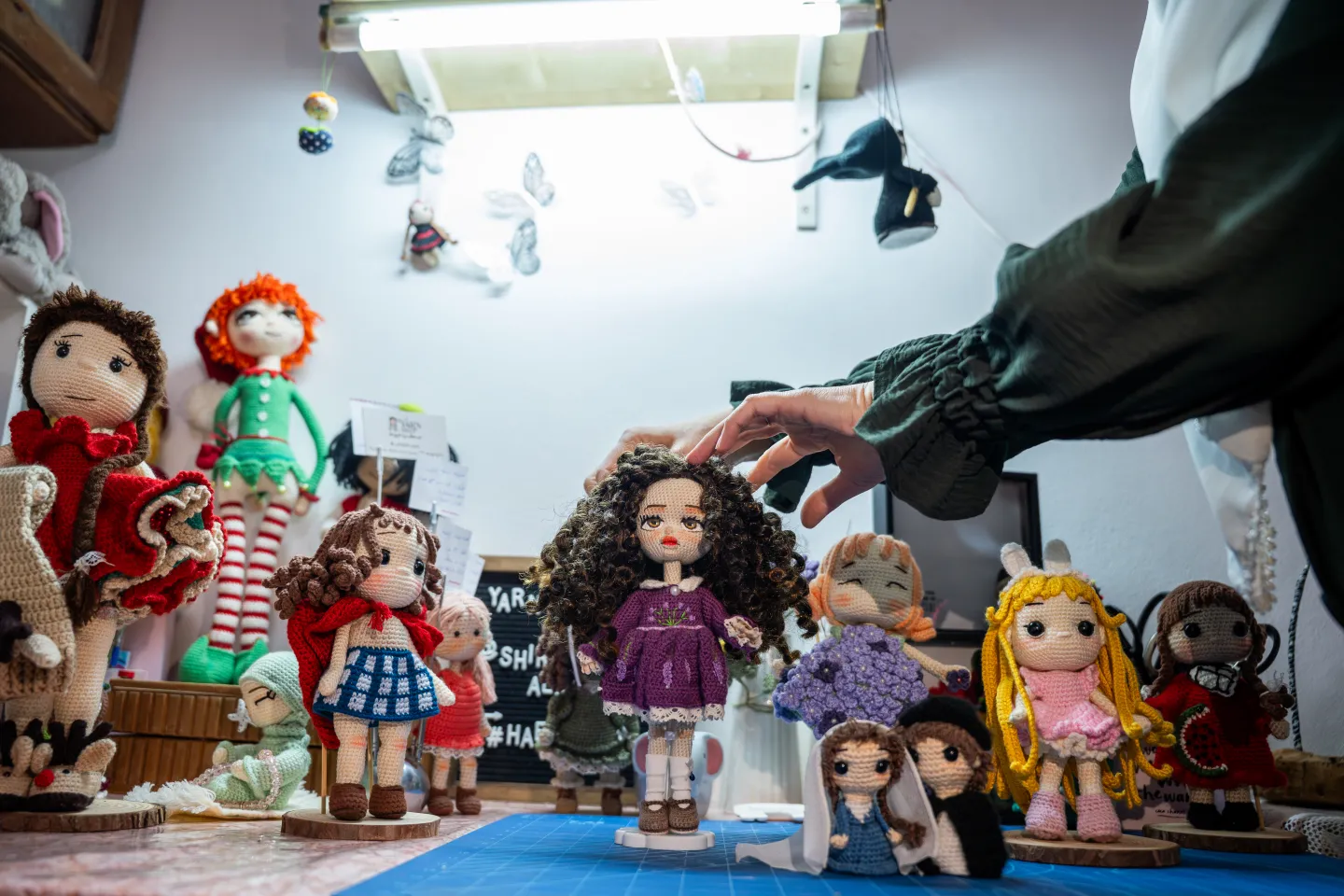
Shireen explained that participating in bazaars helped her see the project’s potential. “I began receiving orders, and many people appreciated my work. I even have a woman working with me now.”
She joined the ILO’s Improve Your Business training in May. “The training changed my professional life,” she said. “I learned project management, marketing, and accounting. Now I can calculate costs, set prices, and manage my finances.” She laughed, “I wish I had learned this earlier; it would have saved me years.”
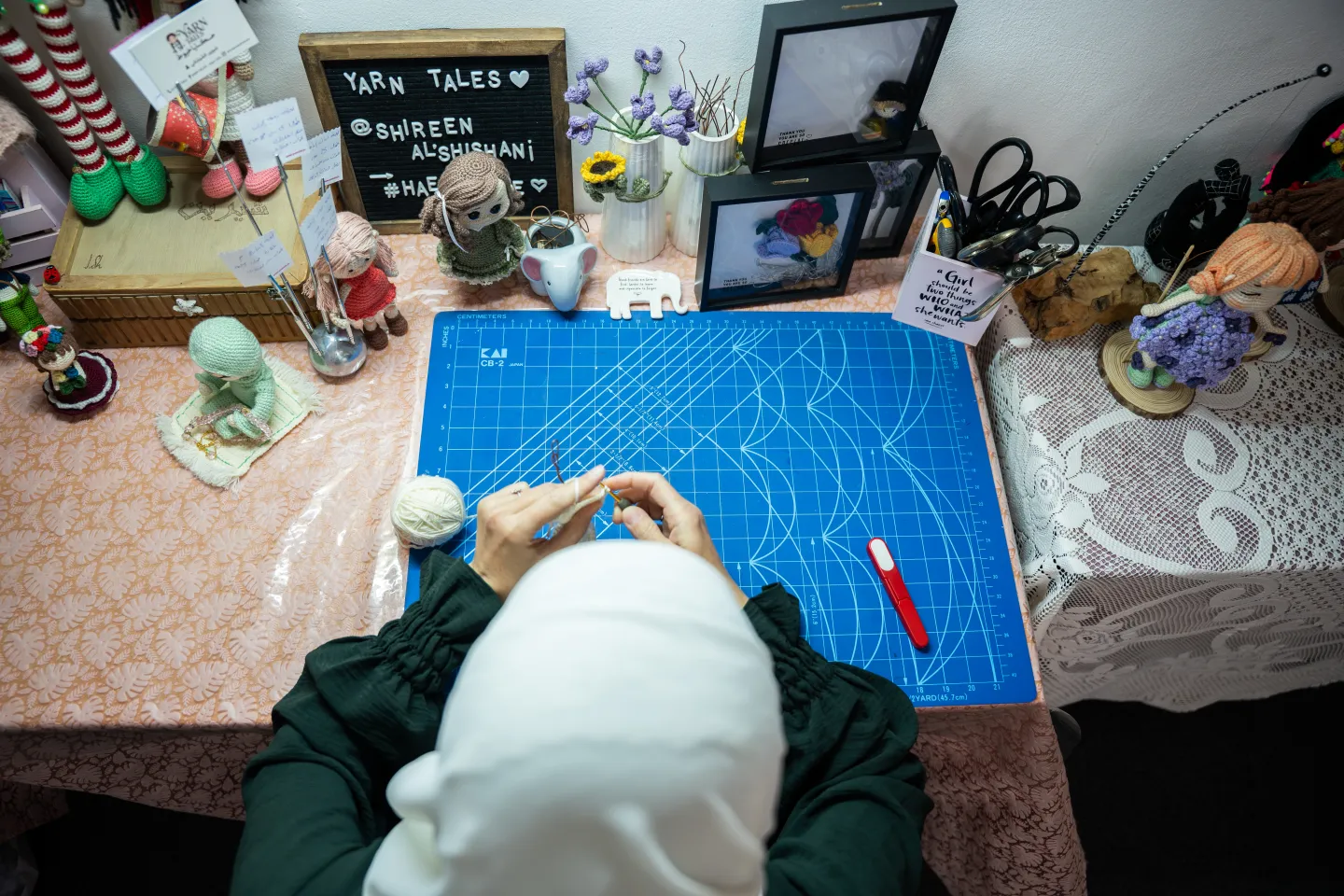
Shireen now earns a steady income and dreams of opening a large store with a café where women can come to work on crochet while enjoying pleasant chats. “I want to reach as many customers as I can,” she said. “The training I attended truly changed my life, giving me financial support and confidence.”
Related content

ILO-Netherlands Partnership
Partnership for improving prospects for forcibly displaced persons and host communities (PROSPECTS) in Jordan
PROSPECTS podcast - Refugees at Work
Refugee inclusion in practice: Experiences, outcomes, and impacts

Entrepreneurship promotion
Relevant projects
ILO-Netherlands Partnership
Partnership for improving prospects for forcibly displaced persons and host communities (PROSPECTS) in Jordan
Programme
Partnership for improving prospects for forcibly displaced persons and host communities (PROSPECTS)