


Financial literacy
How the ILO is strengthening financial education in Indonesia
Through the Desa Berdaya Programme, the ILO is building local capacity in Indonesia's West Nusa Tenggara for financial education, enabling facilitators to equip communities with the financial knowledge and skills needed to strengthen their livelihoods and economic resilience.
6 August 2026
East Lombok, Indonesia (ILO News) – Fifty financial facilitators under the Desa Berdaya Programme in West Nusa Tenggara (NTB) Province have delivered four batches of Training of Beneficiaries (ToB) to 100 community members in Tetebatu Village, East Lombok. One of the training sessions, conducted from 29 to 31 July, was attended by 22 participants.
These facilitators were trained by the ILO's Promoting SME Enterprises through Improved Entrepreneurs' Access to Financial Services Phase 2 (Promise II Impact) project, which aims to improve community well-being through stronger financial literacy, greater access to financial services and economic empowerment. Held in the provincial capital of Lombok, Mataram, in June 2026, the Training of Facilitators (ToF) was conducted in collaboration with the Provincial Government of NTB, the Financial Services Authority (OJK), Bank NTB Syariah and other financial institutions.
Using participatory and inclusive learning methods, the facilitators were equipped with the knowledge and practical skills needed to deliver financial education and strengthen financial literacy within local communities. Following the training, they were assigned to support communities across Lombok. One of their assignments was in Tetebatu Village, East Lombok, located approximately 40 kilometres from Mataram.
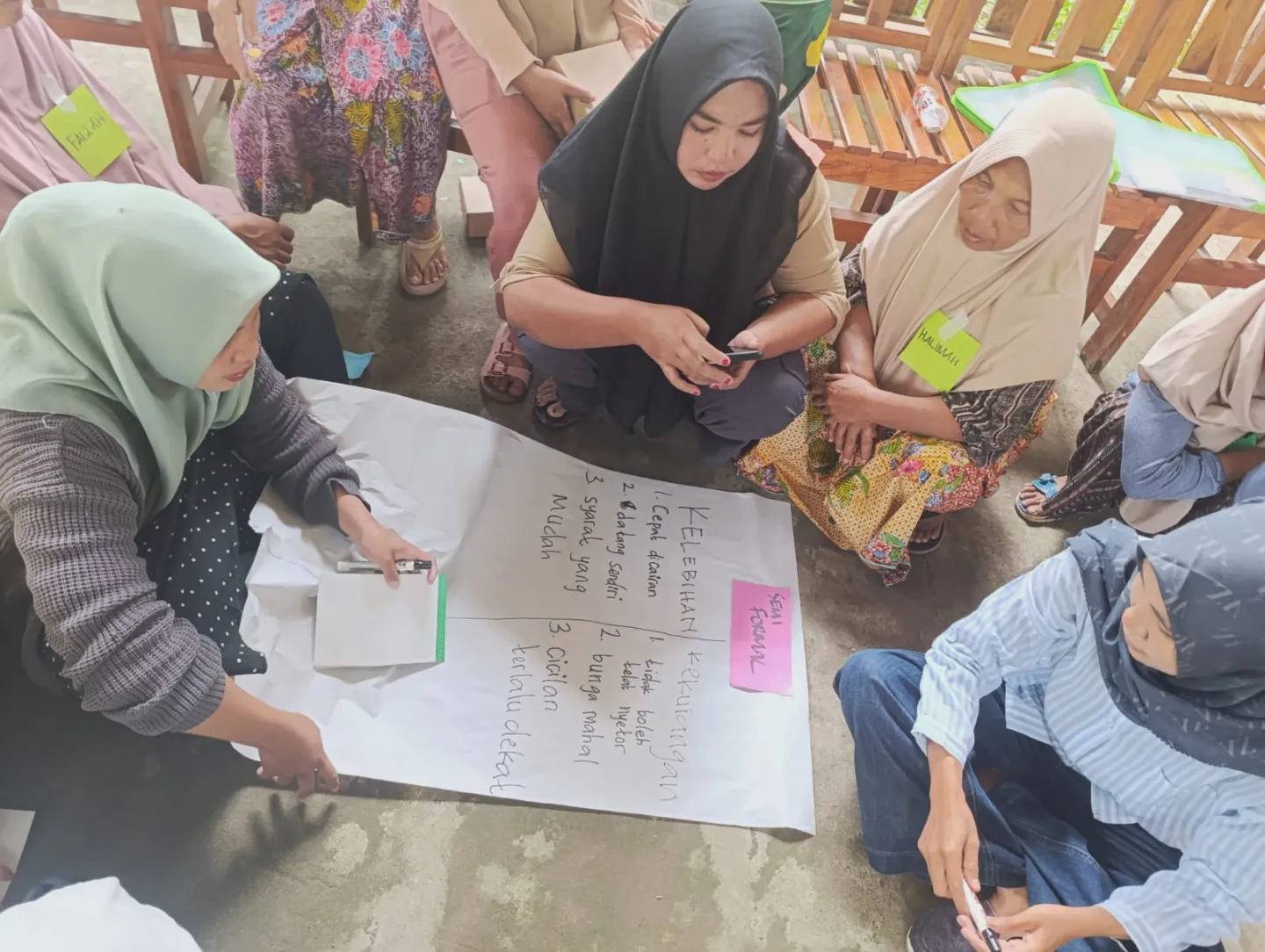
Most participants, who were livestock farmers and agricultural labourers, learned practical skills in managing household and business finances, preparing budgets, developing saving habits, prioritising expenses and understanding financial products and services. The learning activities were designed around everyday situations, enabling participants to immediately apply what they learned to their daily lives and livelihoods.
Delivering financial education also required facilitators to adapt their approach to participants' different learning needs. "Some participants had limited literacy skills, so we needed to rethink how we delivered the materials and make the sessions simpler and easier to understand," said Shivatul Asmanita, one of the facilitators. "We hope participants will apply what they have learned, especially as they begin developing their businesses through the Desa Berdaya Programme."
For facilitator Miladia Fadilasari, the participants' enthusiasm demonstrated that meaningful learning depends not only on educational background but also on creating an inclusive learning environment. "Their willingness to learn and actively participate throughout the training was remarkable. Their enthusiasm encouraged us to continue delivering the sessions in ways that were engaging and relevant to their everyday experiences," she said.
Beyond strengthening financial knowledge, the training has encouraged participants to think differently about their financial future and the opportunities ahead.
"Now I better understand how to manage my finances and prioritise my needs," said Wildan, one of the programme beneficiaries and a farmer. "After this training, I want to manage my personal finances better and eventually start my own business."
For Hatiti, a housewife, the practical and relatable approach to learning made the training particularly valuable. "We learned how to prepare a budget, save regularly, and choose loans that suit our family and business needs. The exercises were realistic and easy to understand," she said.
By investing in local facilitators before reaching beneficiaries, ILO’s Promise II Impact programme helps establish a sustainable model for community financial education.
“Rather than delivering one-off training activities, this approach strengthens local capacity so that knowledge continues to be shared within communities long after the project concludes,” stated Djauhari Sitorus, ILO’s Project Manager of Promise II Impact.
“Financial capability is an essential foundation for decent work, inclusive economic development and resilient livelihoods in West Nusa Tenggara.”
Related content
Promise II Impact
Promoting SME Enterprises through Improved Entrepreneurs’ Access to Financial Services

Topic portal
Social finance
Relevant projects
Promise II Impact
Promoting SME Enterprises through Improved Entrepreneurs’ Access to Financial Services