

Our impact, their voices
Growing coffee, building safer futures in Lampung, Indonesia
With support from the ILO and Nestlé Indonesia, two coffee farmers in Lampung, Indonesia, are learning how safer working practices and better awareness of labour rights can help them build a better future for their farms and families.
2 October 2026
TANGGAMUS REGENCY, Lampung, Indonesia (ILO News) - The engine of a modified motorcycle roars up the steep, muddy slopes of Ulubelu Subdistrict in Tanggamus Regency, Lampung, stirring the scent of wet earth and damp coffee leaves. It is a familiar morning sound in this coffee-growing community – the sound of farmers heading to work.
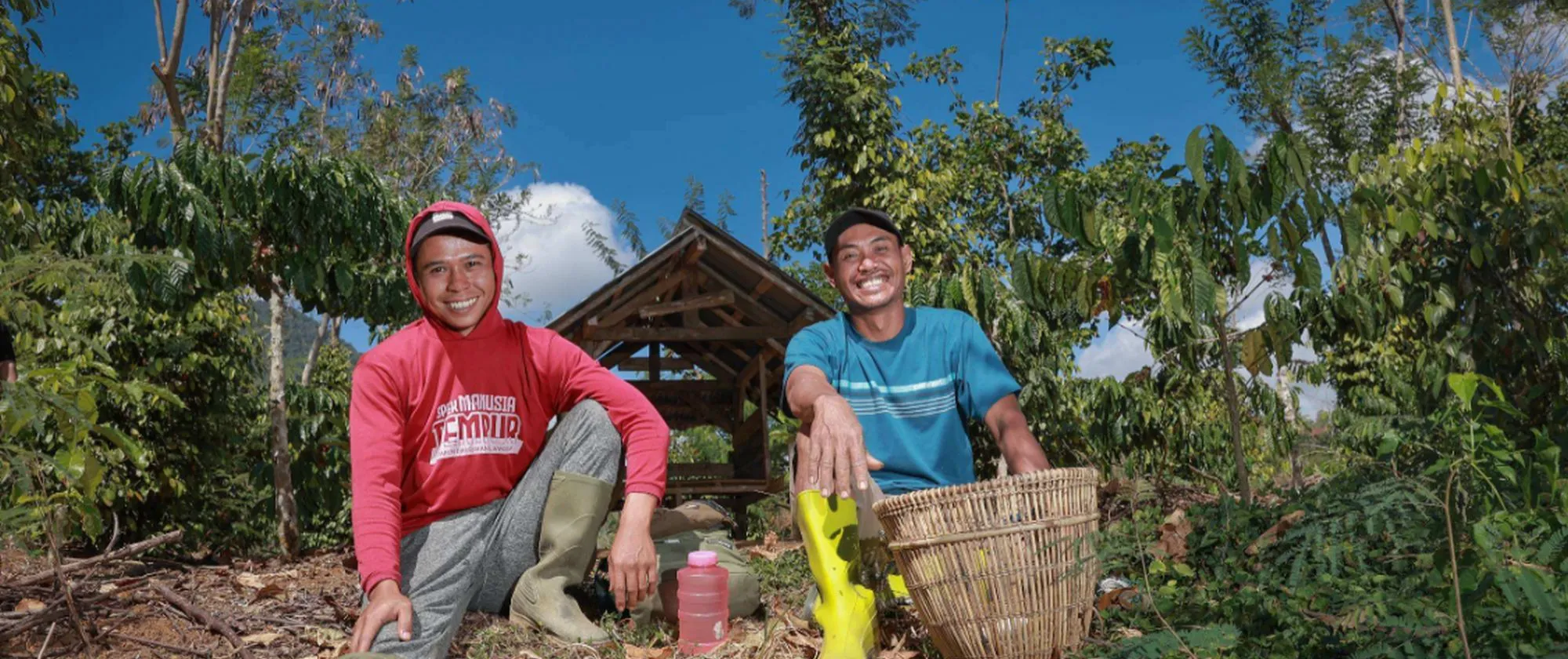
Among them are Agus Setiawan, 40, and Ahmad Khairudin, 30, two coffee farmers whose lives have long been intertwined with the land.
By 7:30 a.m., Agus is already among the coffee trees, tending the plants and clearing weeds across his three hectares of coffee farm. He works until around 11:30 a.m., takes a break, and returns for a second shift from 1:30 to 4 p.m. Meanwhile, Ahmad begins his day in much the same way, tending his one-hectare coffee farm. His afternoons, however, are reserved for other work and helping his parents.
Before the training, I didn’t understand how important OSH was... Now I feel safer and more protected when working on my farm and I feel more productive.
Agus Setiawan, a coffee farmer
Despite the differences in the size of their farms and their daily routines, Agus and Ahmad share much in common. Both are third-generation coffee farmers who grew up learning coffee cultivation from their families. Both also ventured into other kinds of work before eventually returning to farming and realizing that coffee was where they wanted to build their futures.
Their paths have also come together through Sumber Rejeki Farmers Group. Agus was recently appointed leader of the 18-member group, which includes Ahmad.
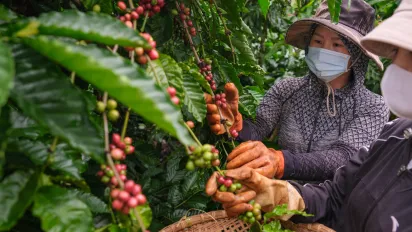
On the farm, woven rattan baskets are strapped to their backs as they move between rows of coffee trees. Hats shield them from the sun, while boots and gloves protect them as they navigate muddy slopes, sharp tools, insects and other hazards.
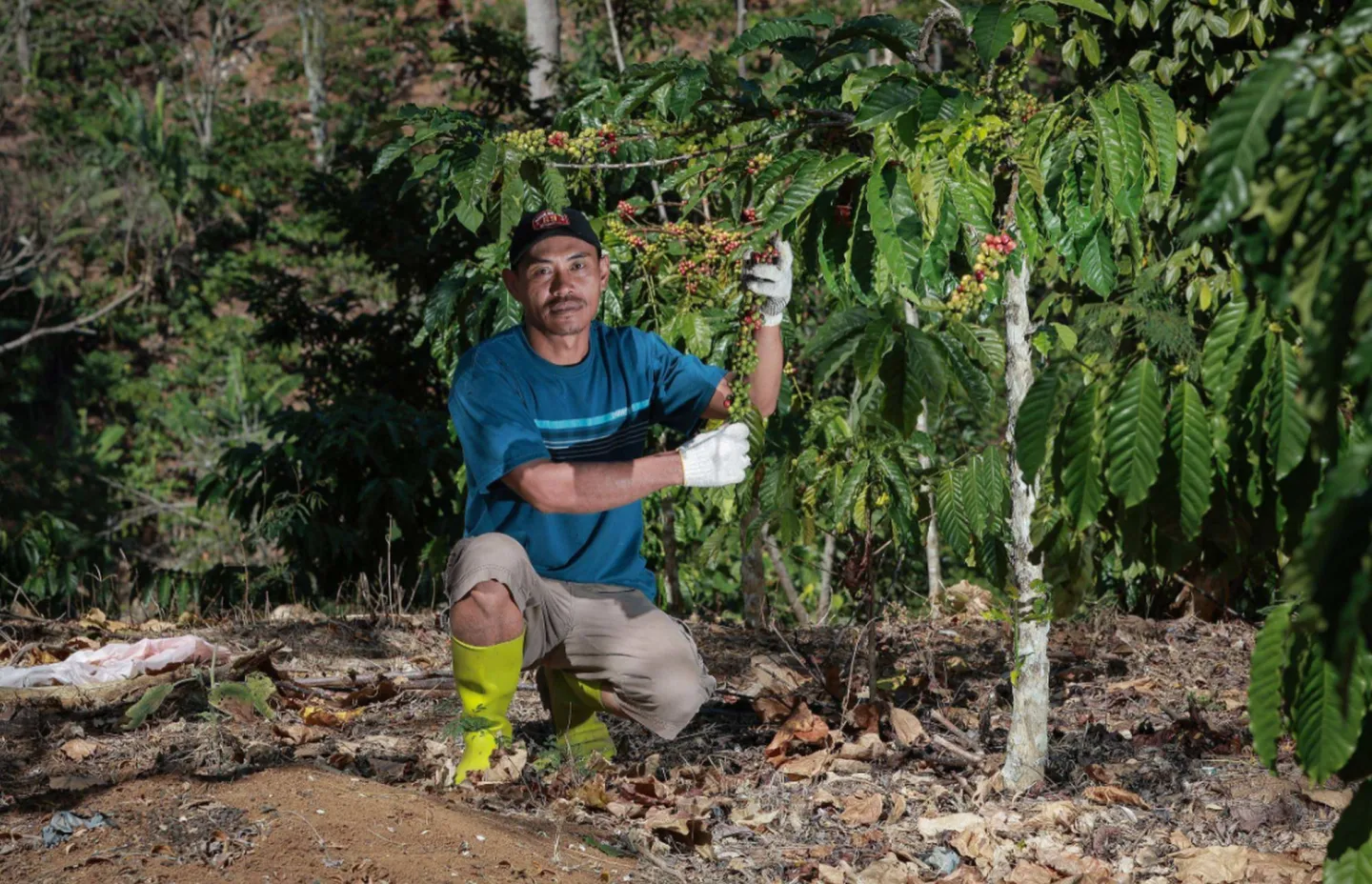
Yet not long ago, neither farmer paid much attention to personal protective equipment. Boots and gloves, in particular, seemed unnecessary for work they had been doing for much of their lives.
That changed after they took part in an occupational safety and health (OSH) training programme early this year, supported by the ILO and Nestlé Indonesia through the Vision Zero Fund (VZF) project. The training was organized through an OSH Farmers’ Field School and delivered by 10 local farmer-trainers who had completed the ILO’s Work Improvement in Neighbourhood Development (WIND) programme.
WIND is a practical, participatory action-oriented training approach designed to help farmers and rural workers improve safety, health and working conditions through simple, low-cost solutions using locally available resources.
As part of the training, farmers use ILO OSH checklists to assess conditions on their own farms. The checklists cover key areas such as safe materials handling, housekeeping, hazard and risk control, health and welfare and work organization. Rather than treating safety as an abstract concept, the approach encourages farmers to look closely at their everyday working environment and identify improvements they can make themselves.
I was once stung by a wasp and had to stop working early. Now I have more knowledge and know how to work more safely and comfortably.
Ahmad Khairudin, a coffee farmer
For Agus and Ahmad, the exercise changed the way they saw risks they had long accepted as part of farming. They learned that something as simple as wearing the right protective equipment could reduce their exposure to hazards ranging from slippery mud and sharp machetes and hoes to extreme heat, agricultural chemicals, venomous snakes and insect bites.
“Before the training, I didn’t understand how important OSH was,” Agus says. “Encountering snakes and getting hit on the foot by a machete or hoe were something that could easily happen because I worked without boots. Now I feel safer and more protected when working on my farm and I feel more productive.”
Ahmad had experienced the consequences of another common farm hazard firsthand. “I was once stung by a wasp and had to stop working early,” he recalls. “Now I have more knowledge and know how to work more safely and comfortably.”
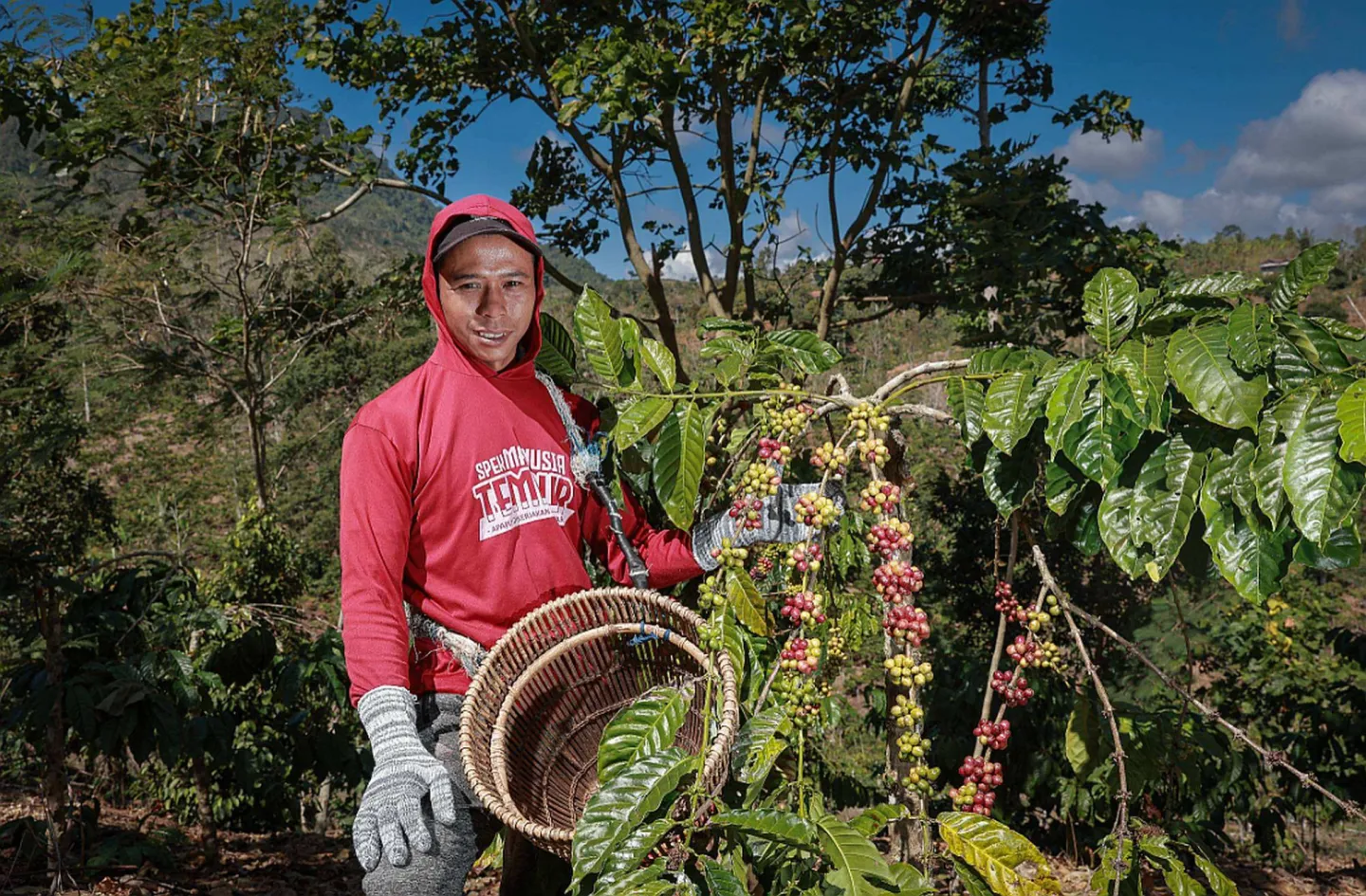
Following the OSH training, Agus and Ahmad were invited to continue their learning by exploring another important aspect of working conditions on coffee farms: basic labour rights. Held in June, the training broadened their understanding beyond workplace safety to include the rights and responsibilities of both farmers and workers.
They learned about workplace rights and responsibilities, different types of employment arrangements and the importance of clear agreements between farm owners and workers. They were also introduced to practical written employment contract templates, particularly relevant to coffee farming, where additional workers are often needed during the harvest season and employment arrangements have traditionally been based on verbal agreements.
For both farmers, written employment agreements were a new concept. “We thought written agreements were only for big companies,” Ahmad says. Agus agrees: “A written agreement benefits both farmers as employers and coffee pickers as workers, especially during the harvest season.”
The training programmes have given Agus and Ahmad practical knowledge they can carry with them as they continue working on their farms and building a better future for their families.
For Agus, a father of three, that future means making his three-hectare farm more productive. He hopes coffee prices will remain stable and aims to produce more than two tonnes of coffee per hectare, providing a more secure livelihood for his family.
Ahmad, a father of one daughter, is also looking ahead. Within the next two years, he hopes to expand his one-hectare farm and cultivate more productive land, creating better opportunities for his family.
Each morning, they return to the coffee trees with the same hopes for a good harvest and a better life for their families. But now, they also bring a greater awareness that a productive farm should be a safe and fair place to work, not only for themselves but also for the workers who join them during the harvest season.
Related content
Vision Zero Fund
Improving OSH and social conditions for women and men in coffee farmer communities in Indonesia
Relevant projects
Vision Zero Fund
Improving OSH and social conditions for women and men in coffee farmer communities in Indonesia

Occupational Safety and Health
Improving OSH and social conditions for women and men in coffee farmer communities in Viet Nam – a Vision Zero Fund project
Occupational Safety and Health
Improving Safety and Health in the Coffee Supply Chain in Viet Nam - a Vision Zero Fund Project