

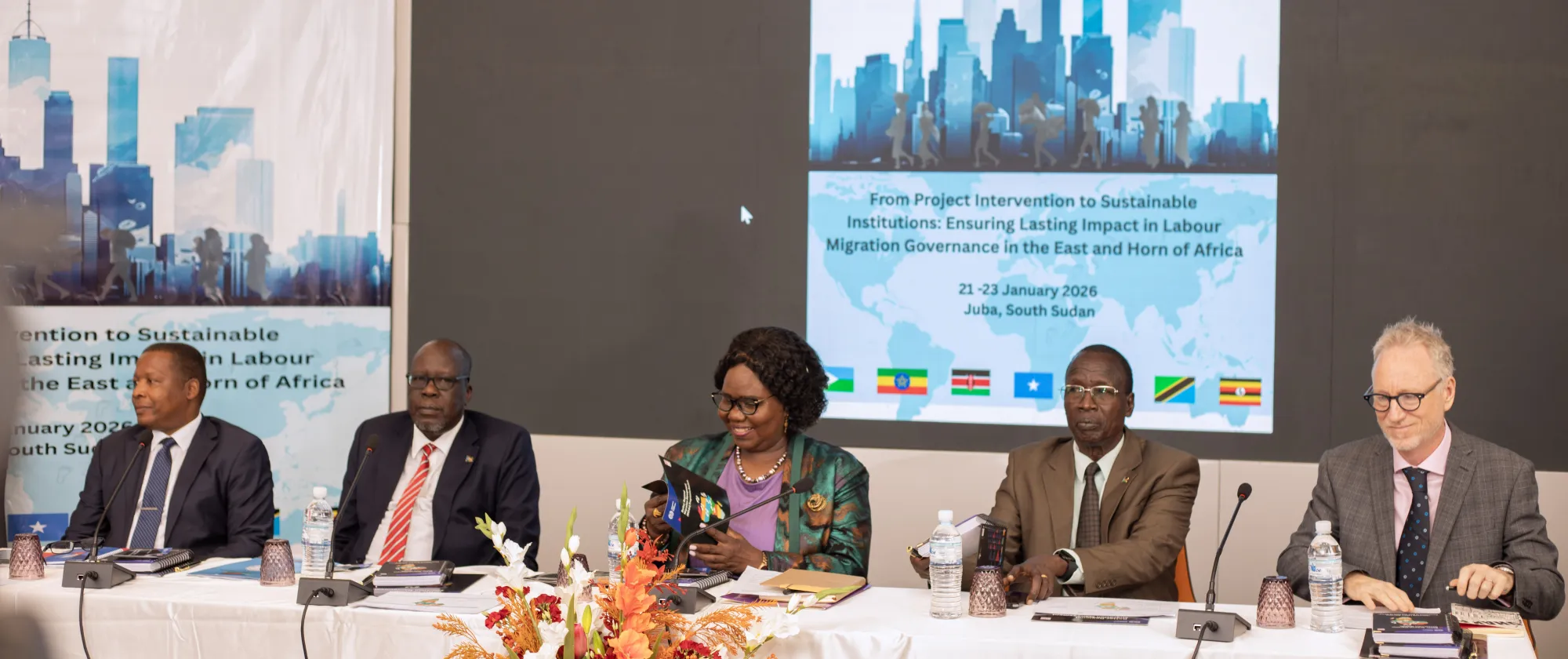
Fourth Labour Migration Advisory Group meeting reinforces sustainable Labour Migration Governance in East and Horn of Africa
Shifting toward long-term ownership, institutional integration, and the development of a clear sustainability roadmap for labour migration governance in the region.
26 January 2026
From 21 to 23 January 2026, senior officials from across the East and Horn of Africa convened in Juba, South Sudan, for the Fourth Labour Migration Advisory Group (LMAG) meeting under the Better Regional Migration Management (BRMM) Programme, funded by the UK Foreign, Commonwealth and Development Office (FCDO). The forum marked a pivotal transition from project-based interventions toward a sustainable institutional approach to labour migration governance across the region. The high-level regional forum brought together more than 60 participants, including representatives from governments, social partners, national statistics offices, and private employment agencies from Djibouti, Ethiopia, Kenya, Somalia, South Sudan, Tanzania, and Uganda. Key regional institutions also participated, including the African Union Commission (AUC), the Intergovernmental Authority on Development (IGAD), the International Organisation of Employers (IOE), and ITUC-Africa.
Since the launch of the Labour Migration Advisory Group (LMAG) in 2023, each annual meeting has progressively strengthened regional labour migration governance in the East and Horn of Africa. The inaugural session in Zanzibar introduced a three-tier governance model for coordinated regional action, while subsequent meetings in Entebbe and Mombasa focused on harmonising bilateral labour agreements and skills development. Building on these achievements, the 2026 LMAG meeting in Juba focused on sustainability, institutional ownership, and regional cooperation. Discussions centred on strengthening Labour Market Information Systems (LMIS), institutionalising skills recognition and social protection systems for migrant workers, and enhancing fair recruitment, bilateral cooperation, and social partner engagement. Countries shared progress on commitments made under previous LMAG meetings, highlighting national initiatives such as Uganda’s Labour Market Information System, Somalia’s labour migration policy and private recruitment regulations, Kenya’s proposed Migrant Workers Welfare Fund, and Ethiopia’s skills recognition and development strategies.
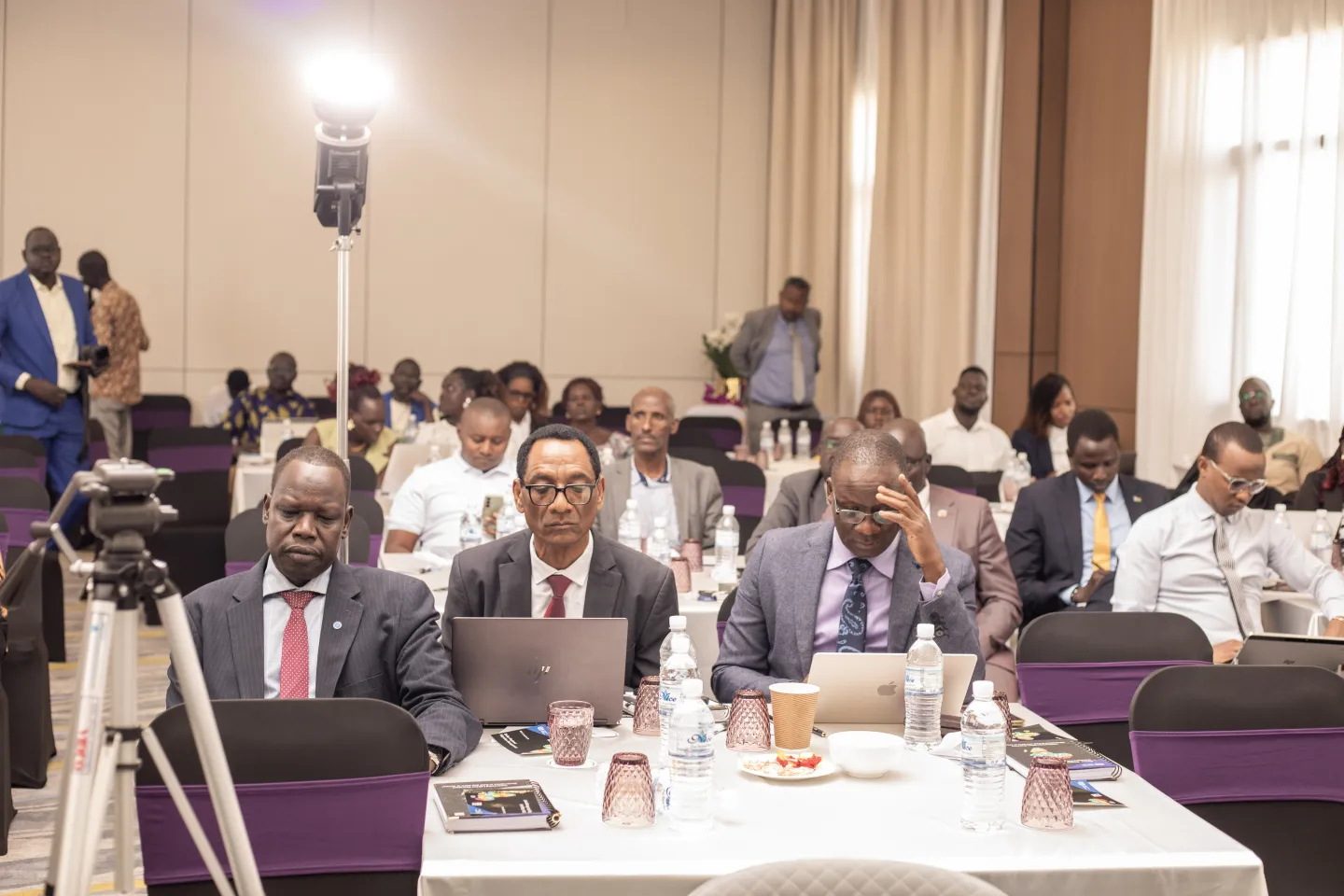
Participants also emphasized the importance of Migrant Resource Centres (MRCs), standardised codes of conduct for Private Employment Agencies (PrEAs), and stronger regional collaboration on fair recruitment and reintegration policies. Discussions further highlighted the need to align national efforts with continental frameworks, including the AU Migration Policy Framework for Africa (MPFA), the AU Free Movement Protocol, and Agenda 2063.
The importance of fair recruitment practices and reintegration policies was a central theme of the discussion. Participants reviewed emerging national frameworks and structures, including the recently launched LMIS in Uganda, Somalia’s endorsed labour migration policy and private recruitment agencies regulation, Kenya’s proposed Migrant Workers Welfare Fund and Ethiopia’s skills development and recognition of prior learning strategies to improve employability locally and abroad. Sessions also underscored the critical role of Social partners, the importance of Migrant Resource Centres (MRCs), the need to standardize codes of conduct for Private Recruitment Agencies (PrEAs) in the region, and the relevance of scaling up the Migrant Recruitment Advisory (MRA).
In structured discussions during the group work and plenary sessions, country representatives mapped institutional pathways for embedding BRMM practices into national systems. At the end of the three days, consensus emerged around the need for clear mandates, stable financing, and cross-ministerial coordination for continuity. These exchanges also focused on aligning national efforts with AU-led frameworks such as the AU Migration Policy Framework for Africa (MPFA), the AU Free Movement Protocol, the Agenda 2063 commitments on mobility and employment, the Fair and ethical recruitment strategy and the African Union draft Labour Migration Model Law.
Labour migration governance is a shared regional responsibility. South Sudan remains committed to strengthening national institutions, promoting labour mobility, and working with our regional partners to ensure migration contributes to stability, development, and shared prosperity
H.E. Josephine Lagu Yanga, Vice President of the Republic of South Sudan and Chairperson of the Service Cluster.
At the end of the meeting, participating countries reaffirmed their commitment to institutionalising programme achievements, strengthening regional cooperation, and advancing sustainable and rights-based labour migration governance across the East and Horn of Africa.
Relevant projects

East and Horn of Africa
Better Regional Migration Management