

Occupational safety and health
Film screening initiates discussion on decent work for coffee and agricultural workers in Viet Nam
A documentary screening in Da Nang has spotlighted the unseen struggles and triumphs of coffee farmers. Hosted by the ILO’s Vision Zero Fund and the Viet Nam Cooperative Alliance, the event drew attention to the need for safer working conditions in the coffee and agricultural sectors.
30 November 2024
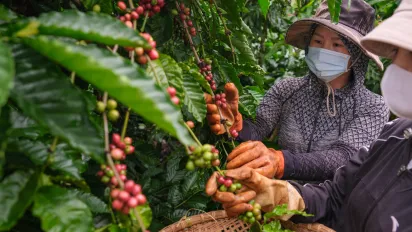
DA NANG, Viet Nam (ILO News) – Coffee is a vital source of income for nearly 25 million families worldwide, including about 1.4 million smallholder farmers in Viet Nam. Despite its importance, coffee farmers face numerous challenges, from work-related injuries, exposure to health threats to financial instability.
To spotlight the importance of workplace safety and health for coffee and agricultural workers, the ILO's Vision Zero Fund (VZF) and the Viet Nam Cooperative Alliance (VCA) hosted an inspiring screening of the documentary “From Beans to Brew: A Journey into the Lives of Coffee Farmers” on 25 November 2024, in Da Nang. This event is part of the global #CoffeePeople campaign, launched in October 2023 with support from the International Coffee Organization (ICO), aiming to promote safer and healthier working environments in Viet Nam, Brazil, and Uganda.
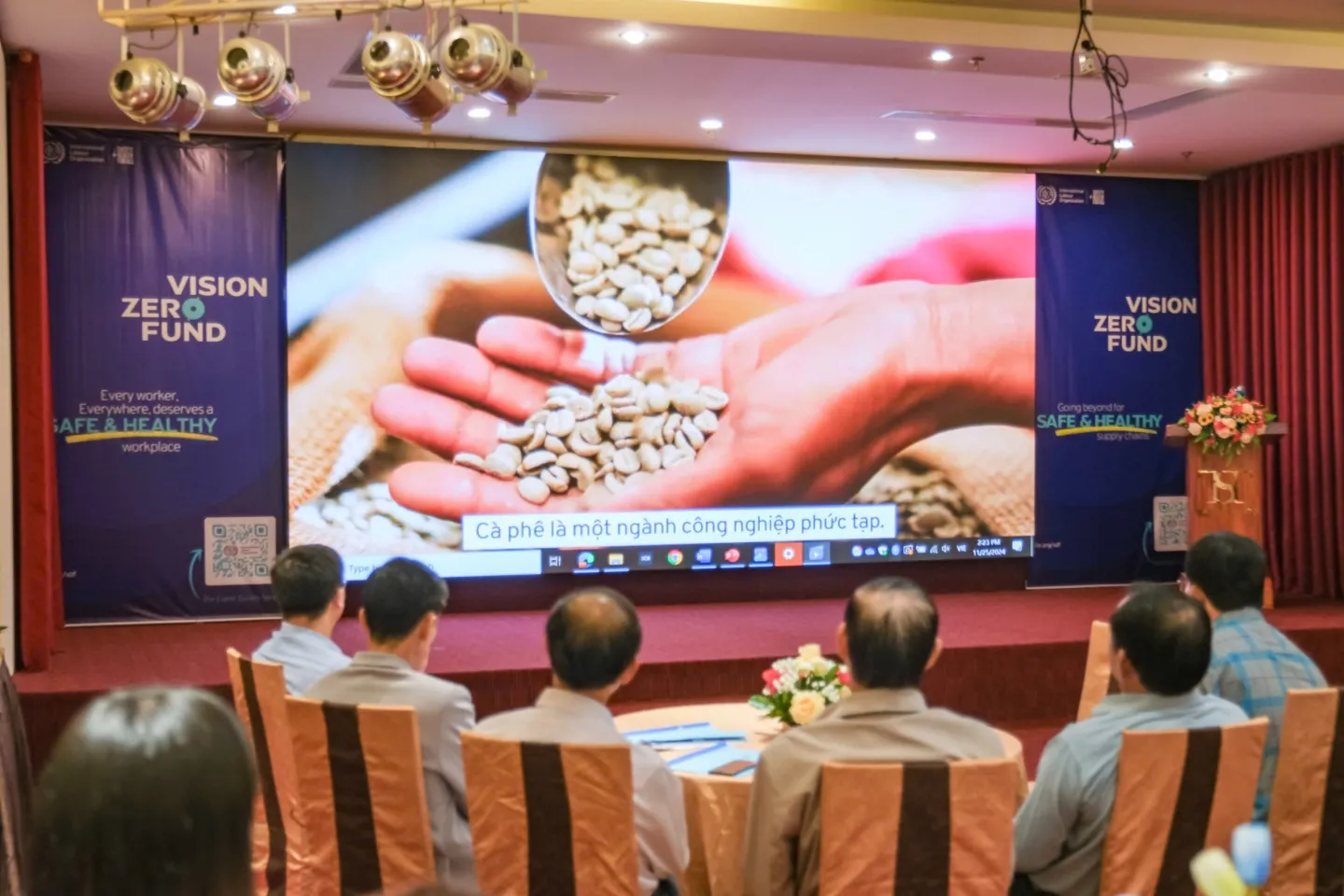
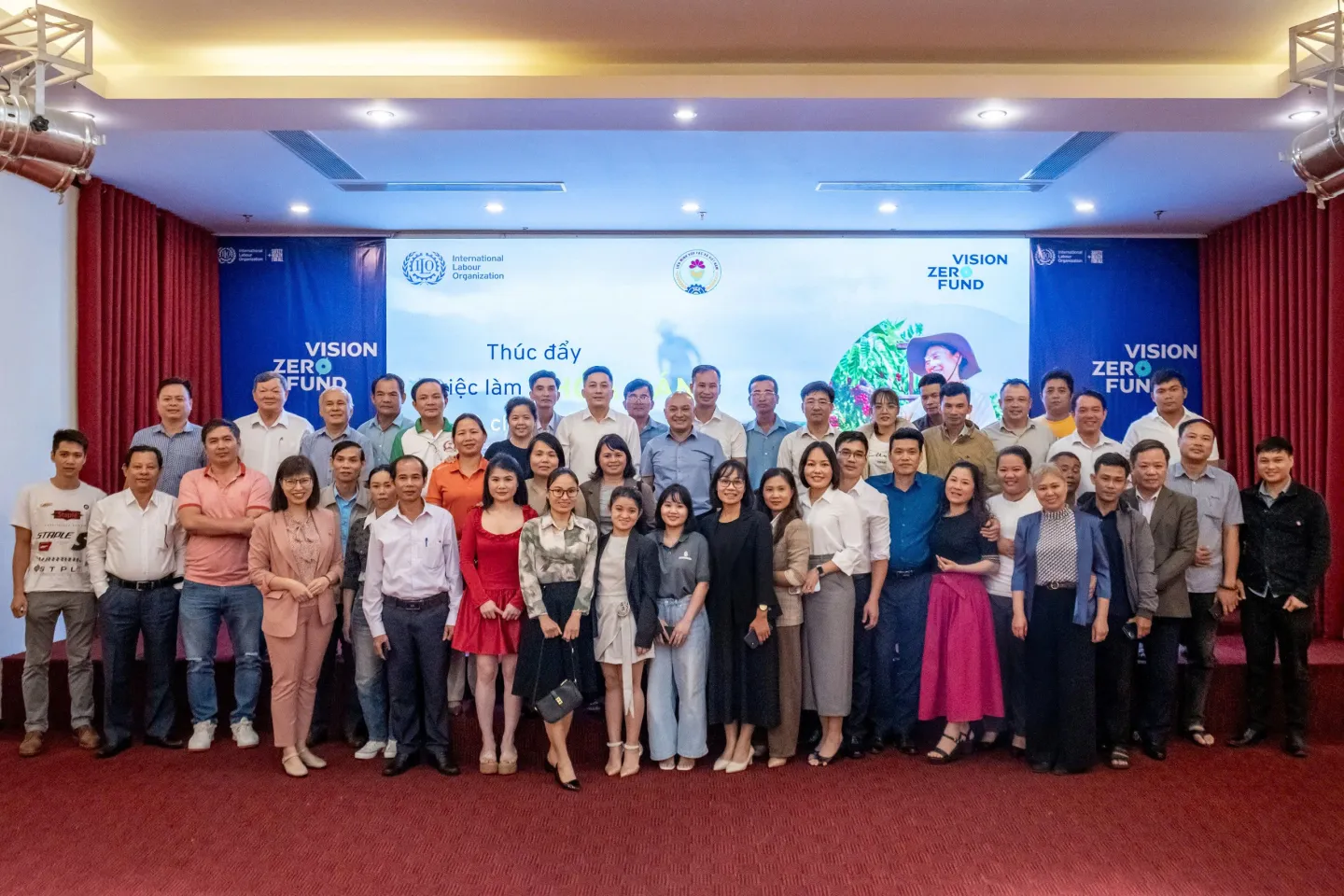
The event brought together over 50 participants from cooperatives across eight Central and Highland provinces, along with representatives from tripartite constituents. Attendees were introduced to the VZF project's occupational safety and health (OSH) initiatives and the #CoffeePeople campaign. The 30-minute documentary captivated the audience, offering a glimpse into the lives of coffee farmers from three countries, sharing their struggles, dreams, and triumphs. Additionally, insights from ILO experts and international organizations such as the European Commission (EC) and the International Coffee Organization (ICO) highlighted the significance of protecting workers' rights, particularly in the context of the standards set by new generation free trade agreements.
“I was deeply moved when I heard them ask, ‘Who is behind our daily cup of coffee?’ I took pictures of those scenes and immediately shared them with my family and community in Kon Tum. I am so happy to know that people enjoy the coffee but at the same time, they also care about those who make their coffee,” shared Bui Huy Cuong, a cooperative owner in Kon Tum.
Following the documentary screening, a panel discussion delved deeper into the topic of ensuring the fundamental principles and rights at work for workers in the coffee and agriculture sectors, towards sustainable agriculture in Viet Nam. The session welcomed representatives from the Ministry of Labour, Invalids and Social Affairs (MOLISA), the Ministry of Agriculture and Rural Development (MARD), the Viet Nam General Confederation of Labour (VGCL), and the Viet Nam Cooperative Alliance (VCA). Emphasising the criteria for sustainability in agricultural production, a representative from Department of Crop Production (MARD), Nguyen Tu Hai, stated: “While quality and food safety were once the main focus for agricultural products, meeting today's export standards requires our special attention to the safety and health of workers, the prevention and elimination of child labour, and ensuring gender equality, anti-discrimination, as well as improving working and living conditions for workers. Ensuring workers’ rights at work is essential for sustainable agriculture.”
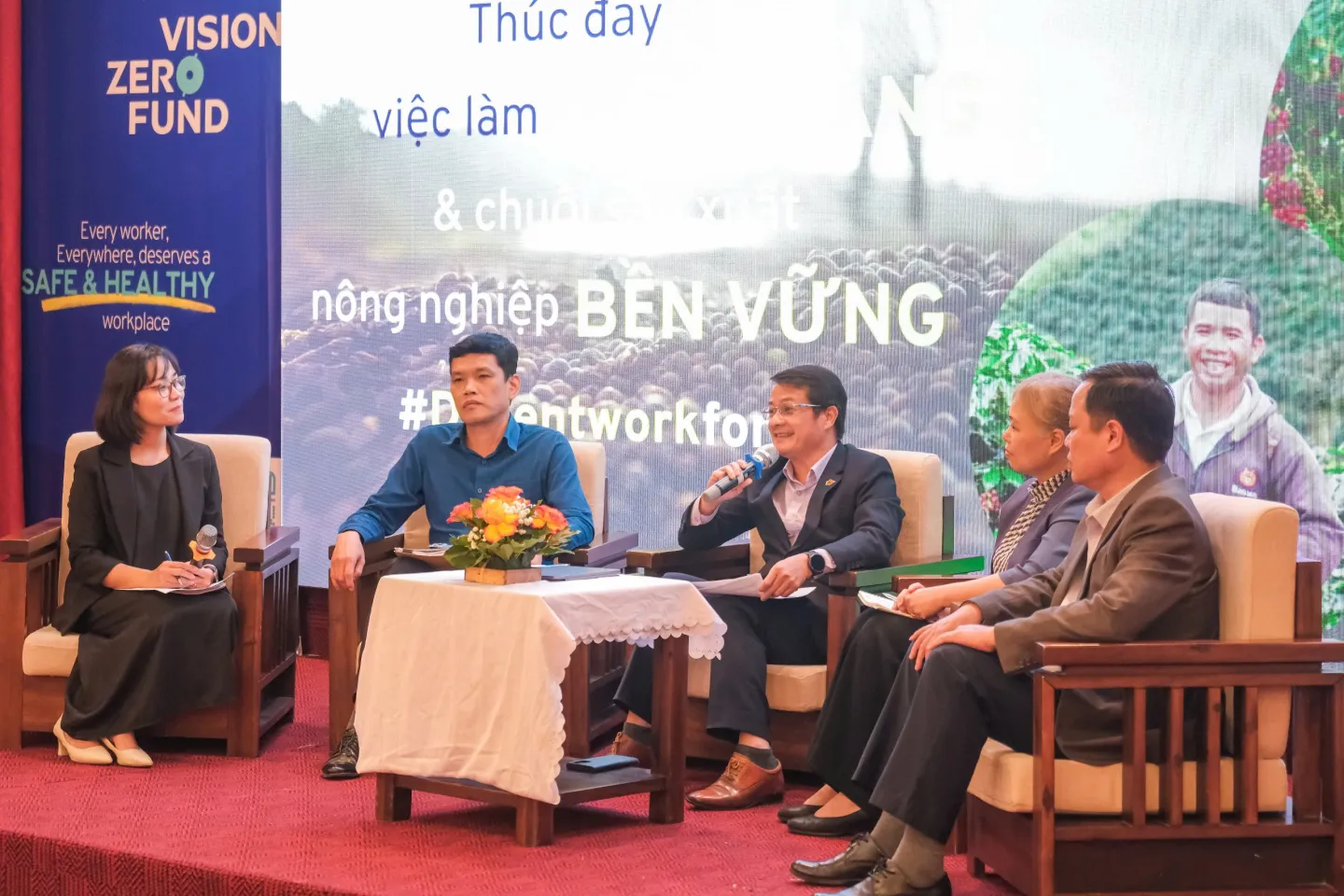
However, there are still many challenges for workers, especially workers in the agriculture and coffee sector to access their rights at work. As a representative of workers, Pham Thi Thu Lan, Deputy Director of the Institute of Workers and Trade Union, part of VGCL, highlighted: “It is crucial for workers to be involved in discussions and dialogues on matters related to their work and lives to ensure decisions are made based on mutual agreement."
The discussion shed light on the significant hazards faced by agricultural and coffee workers, including long hours outdoors, heavy lifting, exposure to hazardous chemicals without proper protection, agronomy challenges, and psychological stress. This underscores the urgent need to improve conditions in Viet Nam, where most agricultural workers are informal. Nguyen Khanh Long, Deputy Director of the Safe Work Department at MOLISA, shared the government's ambitious plans to enhance worker safety and health through the National Programme for Occupational Safety and Health for 2021-25.
Recognising cooperatives as a unique collective economic model where owners can also be workers and noting that 80 per cent of cooperatives in the Viet Nam Cooperative Alliance system are agricultural, Deputy Head of the Cooperative Policy and Development Department, Duong Tuan Cuong, emphasised the VCA's crucial role in promoting and protecting workers' rights. "Workers are the foundation of cooperatives. Ensuring their safety and rights is the greatest contribution to the prosperity of cooperatives. Therefore, the Viet Nam Cooperative Alliance consistently works to institutionalise regulations that safeguard workers' rights and welfare, all the while ensuring that labour standards are always followed."
Towards a future where every agricultural product including coffee is not only a testament to quality but also to the dignity and safety of those who produce them, initiatives to promote the decent work for all women and men like #CoffeePeople campaign take us a step closer to a world of work without discrimination, zero fatal accidents, no child labour, and a sustainable agricultural sector.

You may also be interested
Country portal
Viet Nam
Occupational Safety and Health
Improving Safety and Health in the Coffee Supply Chain in Viet Nam - a Vision Zero Fund Project
Relevant projects
Ship to Shore Rights South East Asia - Indonesia

Migrant workers
Ship to Shore Rights South East Asia (SEA)