

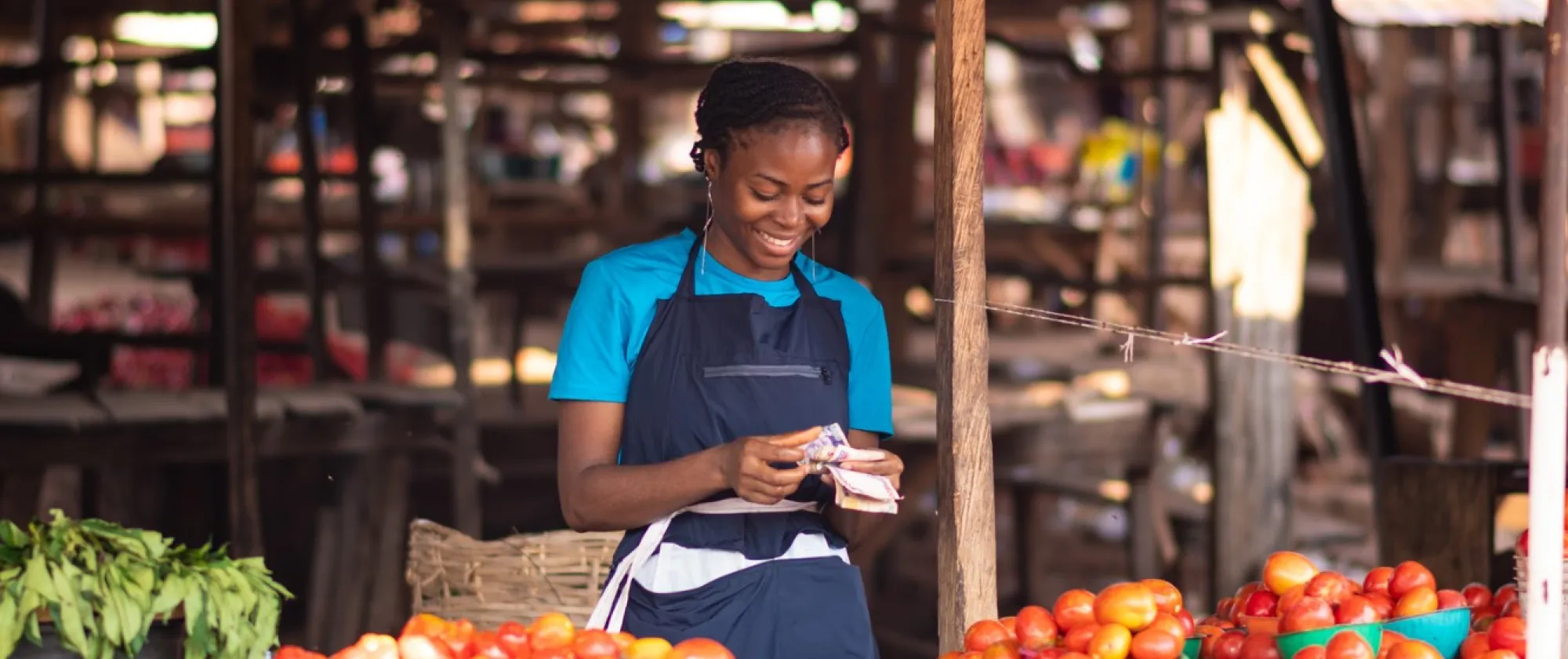
Fighting child labour through financial innovation: a call to action in Nigeria’s cocoa and gold value chains
Child labour remains a pressing issue in Nigeria, especially in the cocoa and artisanal small-scale gold mining (ASGM) sectors, affecting 39.2% of children aged 5 to 17, as per a 2022 survey. To address this, the ILO's ACCEL Africa project has introduced an Innovation Challenge Fund to enhance financial inclusion and reduce child labour in Nigeria's critical supply chains. By improving access to financial services, promoting savings, and protecting incomes, the initiative aims to empower vulnerable families to prioritize education and long-term stability, driving systemic change in affected communities.
12 December 2024
Child labour remains a significant challenge in Nigeria, particularly in the cocoa and artisanal small-scale gold mining (ASGM) sectors. According to a 2022 survey by the Nigerian Bureau of Statistics, 39.2% of children aged 5 to 17—approximately 24.67 million children—are engaged in child labour. Rural areas are disproportionately affected, with 44.8% of children involved in child labour compared to 30% in urban areas. The prevalence is alarmingly high among younger children, with 60.8% of child labourers aged between 5 and 11, many of whom are engaged in hazardous work.
The International Labour Organization (ILO), through the Accelerating action for the elimination of child labour in supply chains in Africa (ACCEL Africa) project, has launched an Innovation challenge fund to tackle this issue head-on in Nigeria. This initiative aims to enhance workers at the lower tiers livelihoods through financial inclusion, driving systemic change in these critical value chains.
The link between child labour and financial inclusion
Child labour often stems from economic vulnerabilities that leave families with few alternatives to survive. Limited access to financial services like savings, credit, and insurance exacerbates this dependency. Financial inclusion provides a pathway to stability by enabling families to manage economic shocks, invest in livelihoods, and prioritize education over child labour.
In Nigeria, more than 50 cooperatives and Village Savings and Loan Associations (VSLAs) were supported during Phase 1 of the ACCEL Africa project, impacting over 3,000 households. Despite these gains, many families in rural areas still rely on informal financial systems that do not offer sufficient tools for long-term stability.
Why innovative financial solutions are needed in Nigeria?
Nigeria’s cocoa and gold mining sectors are important to the nation’s economy, yet workers at the bottom of these supply chains face persistent economic challenges. Financial inclusion can address many of the root causes of child labour by:
- Enabling families to save and invest in their future through digital micro-savings platforms.
- Protecting smallholder farmers and miners from income shocks with hybrid agricultural insurance.
- Improving financial literacy among underserved communities using digital tools in local languages.
Innovative financial solutions like these have the potential to empower families to prioritize education and reduce reliance on child labour, while simultaneously building resilience within vulnerable communities.
What makes the innovation challenge fund unique?
The innovation challenge fund is not just another funding opportunity; it is a catalyst for change. This fund incentivizes the development of tailored financial solutions designed for communities in Nigeria’s cocoa and ASGM sectors. It builds on lessons learned from Phase 1, which saw significant reductions in child labour and improved access to financial services for thousands of households.
With a focus on inclusivity and sustainability, the fund supports projects that tackle real challenges, such as:
- Increasing household incomes and resilience.
- Reducing barriers to financial services.
- Leveraging technology to expand access and usage of financial services in rural areas.
Why should you participate?
By joining the innovation challenge fund, you can:
- Be part of a transformative solution. Contribute to eradicating child labour while creating economic opportunities for vulnerable families.
- Collaborate with key stakeholders. Engage with cooperatives, VSLAs, financial service providers, and policymakers to drive systemic impact.
- Access funding and technical support. Develop scalable financial solutions with the backing of a robust support system.
The deadline to submit proposals is only 10 days away. Don’t miss this chance to make a lasting difference. Together, we can empower families, transform value chains, and eliminate child labour in Nigeria.
Follow our innovative journey by signing up to our newsletter here.
Relevant projects

Accelerating action for the elimination of child labour in supply chains in Africa (ACCEL Africa)