

Ethiopia and South Africa Exchange Lessons on Strengthening Labour Market Information Systems
Ethiopia's labour market information system exists. The question is how to make it work better. Four days in South Africa offered some answers.
20 April 2026
PRETORIA, South Africa (ILO News, 14 – 17 April 2026), an Ethiopian delegation from the Ministry of Labour and Skills (MoLS) and the Ethiopian Statistics Service (ESS) conducted a strategic study tour in South Africa to enhance national data infrastructure. Facilitated by the ILO BRMM Programme, funded by the UK Foreign, Commonwealth and Development Office (FCDO), the mission focused on benchmarking South Africa’s Labour Market Information System (LMIS) to gather critical insights on building and sustaining a functional labour market framework in Ethiopia.
Ethiopia is advancing its Labour Market Information System (E-LMIS), a digital platform designed to connect jobseekers, employers, training institutions, and policymakers. While the system has made ground, some challenges remain. Issues including fragmentation, limited interoperability, and poor coordination persist. Moving forward, addressing these systemic gaps demands a holistic approach; one that moves beyond technology and taps into the lived experience of peer countries and fosters institutional collaboration.
South Africa’s labour market information ecosystem, built through sustained institutional coordination and integration of data systems, offered relevant and context-driven lessons. As both countries navigate shared socio-economic pressures with high youth unemployment, informality, and fragmented data, the exchange proved to be highly effective, ensuring that lessons were immediately applicable rather than merely theoretical.
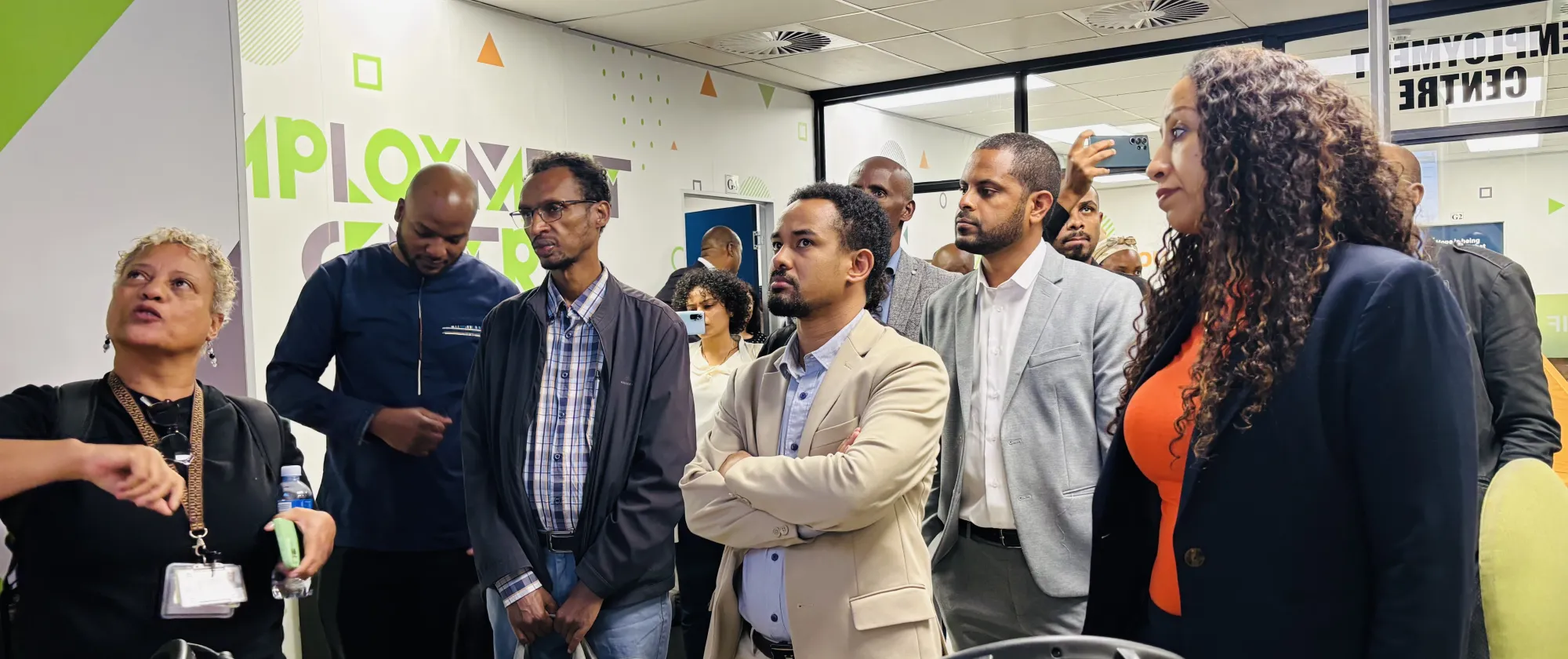
Over four days, the Ethiopian delegation engaged directly with key South African institutions. At the Department of Employment and Labour, participants improved their knowledge of the development and implementation of the South African LMIS. A highlight of the mission was the visit to the Germistone Labour Centre, where delegates observed comprehensive support for PES, including job matching, registration support and career counselling. The delegation also explored the centre's mobile unit, a vital innovation for rural areas designed to address challenges of connectivity and electricity. By witnessing these systems, the delegation gained a clear understanding of how to translate data into tangible support to job seekers.
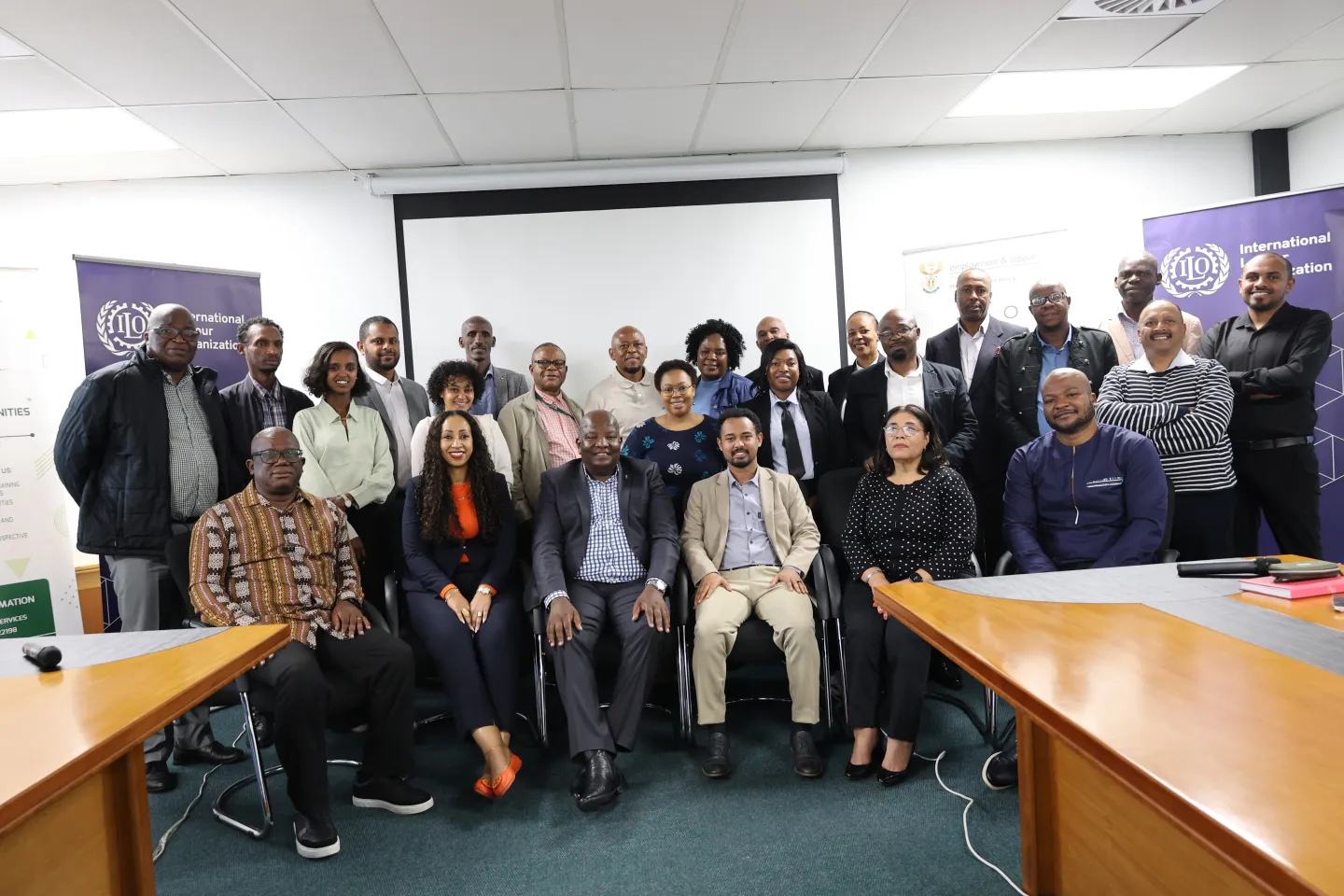
On the second day, through the engagement with Statistics South Africa (StatsSA), the Ethiopian delegation gained deep insights into quarterly labour force survey production and the governance needed to sustain data quality. The visit also highlighted StatsSA’s role in the South African LMIS and how statistical outputs are translated into national policy. By examining the hurdles of cross-institutional data management, the delegation gathered practical strategies to improve data governance and LMIS integration.
The final day focused on the ‘skills-to-market’ nexus with a meeting with the Quality Council for Trades and Occupations (QCTO). The delegation examined the comprehensive framework for occupational standards, from design and accreditation to assessment and certification. This session offered concrete reference points for Ethiopia’s efforts to better connect training with employment outcomes, culminating in a shared commitment to integrating skills data into labour market systems to ensure a truly demand-led workforce.
The visit also opened the door to continued exchange, with both sides expressing interest in follow-up technical engagement as Ethiopia is heading towards the next phase of E-LMIS implementation.
Relevant projects

East and Horn of Africa
Better Regional Migration Management