

Eswatini puts its people at the heart of a new safety and health law
Nationwide consultations on the draft Occupational Safety and Health Bill, supported by the ILO, have given employers, workers and government a direct hand in shaping how the Kingdom will protect people at work for the next generation.
14 August 2026
Eswatini, Mbabane (ILO News) - When Eswatini’s Ministry of Labour and Social Security took the draft Occupational Safety and Health (OSH) Bill to the regions, it did not arrive with a finished law to defend.
It came with a question for the people who will live with that law every working day: what should it say?
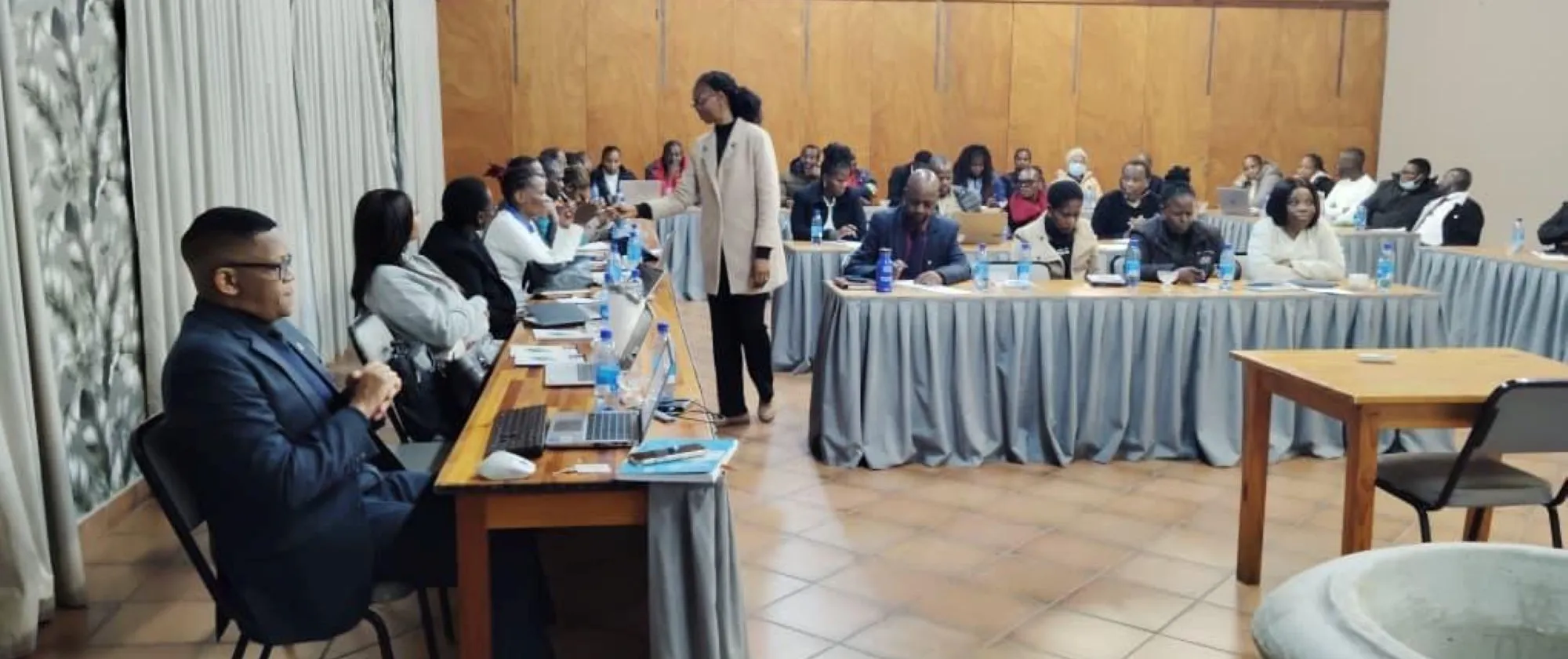
The answer came in numbers few had expected. Four regional consultations, covering every region of the Kingdom, each drew more than 45 participants against a target of 50, bringing employers, workers, government institutions, professional bodies and safety practitioners into the same room. A further session, funded by the Ministry itself, gathered representatives of the public service to examine what the Bill means for Government in its role as an employer. The consultation phase is now complete, and the ideas raised across the country are set to be written into the text of the Bill.
A law for a changed world of work
The review arrives at a defining moment for safety and health at work. In June 2022, the International Labour Conference recognised a safe and healthy working environment as a fundamental principle and right at work, raising the Occupational Safety and Health Convention, 1981 (No. 155), and the Promotional Framework for Occupational Safety and Health Convention, 2006 (No. 187), to the status of fundamental Conventions. For every ILO member State, that decision placed prevention, clear responsibilities and worker participation at the centre of national OSH systems.
At the Nhlangano consultation and the session with the public service, the ILO set out how international labour standards can serve as a practical benchmark for the Bill, from the fundamental OSH Conventions to sectoral standards on areas such as construction, agriculture, mining and chemicals, and the Violence and Harassment Convention, 2019 (No. 190). Participants were also taken through the areas in which the draft goes materially further than the current Act, including occupational health services, psychosocial risks, stronger protections for workers and new institutional arrangements for prevention.
Some of the liveliest discussion concerned questions the existing framework was never designed to answer. Technical advice from the ILO helped the Ministry respond as stakeholders asked whether accidents on the journey to and from work should be recognised in law, how employers’ duties apply when people work from home or under other evolving arrangements, and how the Bill can give meaningful protection to vulnerable workers.
What Emaswati asked for?
Stakeholders expressed strong support for the review and welcomed provisions that modernise protection at work. Their input converged on four recommendations that are likely to shape the final text:
- Health surveillance that follows the risk: Participants backed the introduction of occupational health services, including periodic and post-employment medical examinations, but asked that the law make these risk-based rather than uniform. Post-employment examinations matter in high-risk work such as mining, where occupational diseases can emerge years after exposure; they add little in a low-risk office.
- Professional standards for safety and health officers: In every one of the four regions, participants called for the Act to prescribe minimum qualifications and competencies for Safety and Health Officers, so that the people advising workplaces meet a consistent professional standard.
- An Institute that reaches small enterprises: The proposed Occupational Safety and Health Institute won wide support, particularly for its potential to bring education, training, research and capacity building to micro, small and medium enterprises and the informal economy, where access to OSH training remains limited. To keep it sustainable, participants proposed enterprise contributions, with contributing workplaces benefiting in turn from training and technical support.
- Regulations alongside the Act: There was broad consensus that a new Act will only make a difference on the ground if supporting regulations are developed in parallel, rather than years later.
National ownership, from consultation to a legislative package
The process has also been notable for the degree of national ownership behind it. Beyond financing the public service consultation, the Ministry will fully fund a technical drafting meeting before the end of September to consolidate the recommendations into the draft Bill. It will then prioritise the accompanying regulations, with the aim of submitting a comprehensive legislative package rather than a stand-alone Act.
The Ministry acknowledged the ILO’s financial and technical support in enabling the nationwide process, noting that the combination of technical expertise and broad stakeholder participation had significantly strengthened the quality of the proposed legislation.
For the workers on Eswatini’s farms, factories, construction sites, offices and small enterprises, the result should be a law that reflects not only international standards, but their own experience of work.