

Productivity Ecosystems for Decent Work in Egypt
Enterprise upgrading gains momentum in Egypt’s leather tanning and marble clusters
26 March 2026
Driving measurable improvements
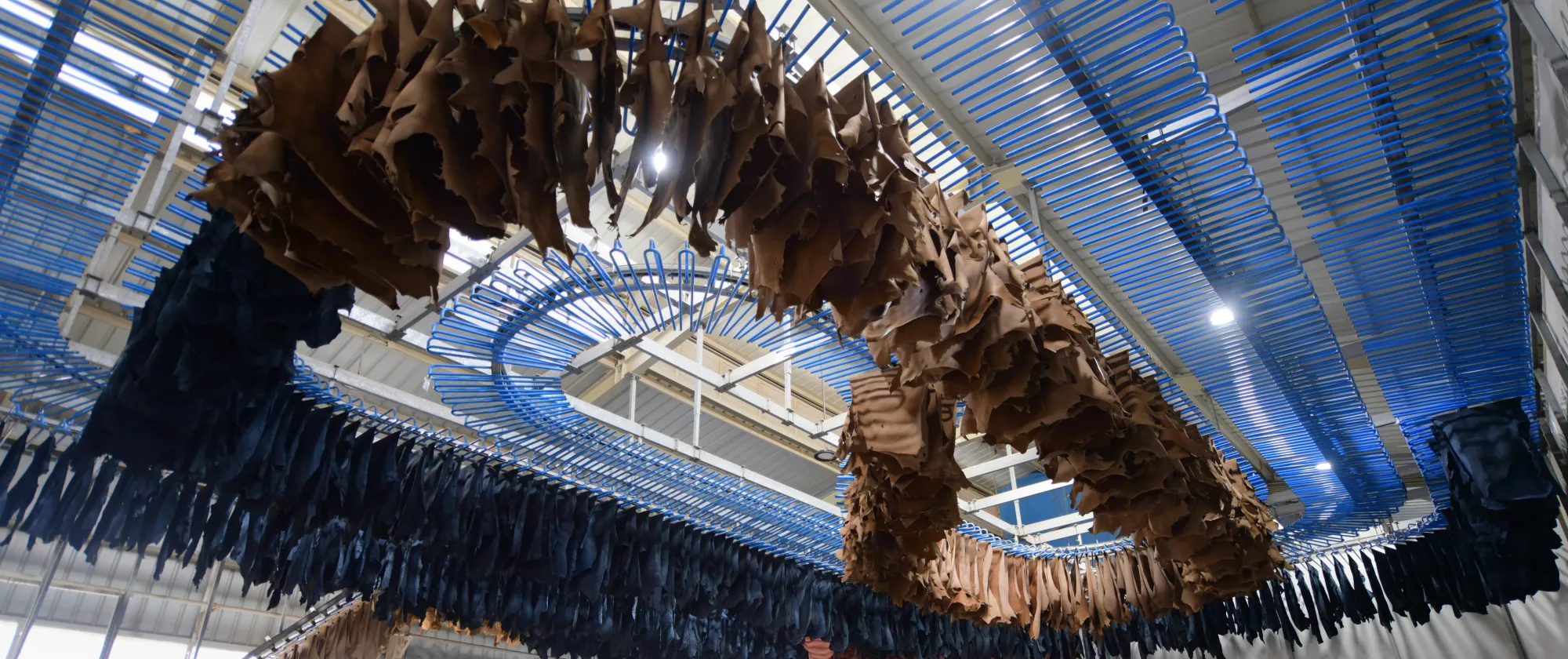
In Robbiki Leather City and the Shaq Al-Tho’ban marble cluster, progress is increasingly visible at the enterprise level, with tangible improvements in workflow efficiency, waste reduction, and occupational safety and health.
These gains reflect the ongoing work of the ILO’s Productivity Ecosystems for Decent Work in Egypt project, which implements the ILO’s Sustaining Competitive and Responsible Enterprises (SCORE) Training methodology. By supporting enterprises, the project promotes a virtuous cycle of sustained productivity growth linked to improved working conditions.
At the sectoral level, recent developments are linking enterprise progress with systems that enable sustainable change. In Robbiki Leather City, the renovated Leather Tanning Technological Centre is a key milestone, showing how accessible services and institutional ownership support long-term upgrading and incentivize engagement. The project is partnering with the Centre to strengthen its role as a model tannery within the cluster.
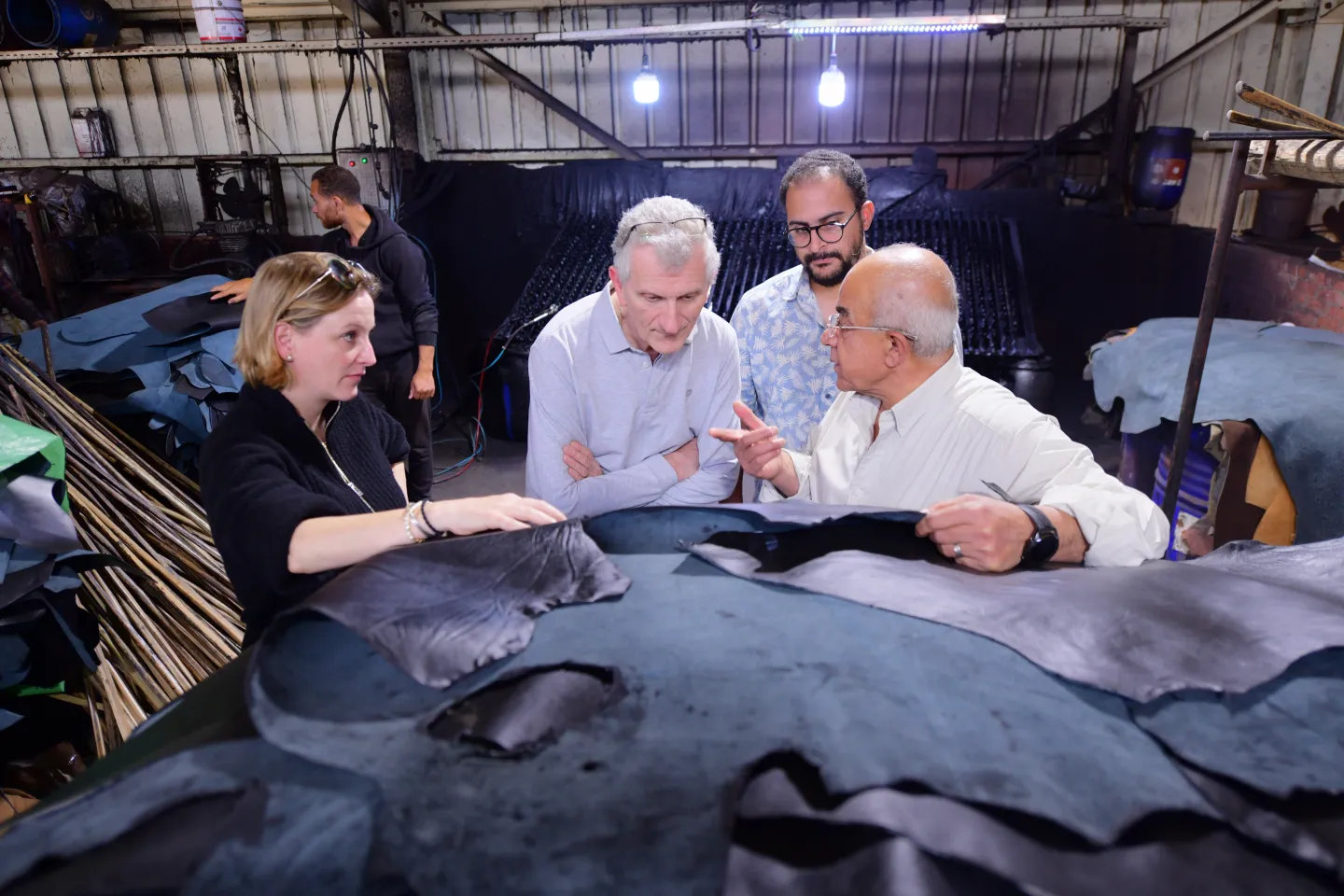
In the Shaq Al-Tho’ban marble cluster, stakeholder engagement has highlighted the importance of aligning technical support with production cycles and market pressures, with enterprises prioritizing solutions that are practical, applicable, and non-disruptive to operations.
From ministerial commitment to global expertise, partnerships are driving progress
This progress aligns with the recent visit of Egypt’s Minister of Industry, Eng. Khaled Hashem, who reaffirmed the importance of strengthening industrial zones, boosting local manufacturing and competitiveness, and enhancing the role of technological centres in enterprise upgrading and skills development.

During a recent mission to Egypt, Dragan Radić, Chief of the ILO Micro, Small and Medium Enterprises (MSME) Branch, engaged with national stakeholders to support the strategic direction of the initiative and share global experience in enterprise upgrading and productivity development. Reflecting on what drives participation, he noted that:
Businesses join when it feels doable. If we make it easy to start, easy to get support, and easy to see results, more enterprises will take part.
Dragan Radić, Chief of the ILO Micro, Small and Medium Enterprises (MSME) Branch
"Scaled across clusters, this strengthens competitiveness, supports better-quality jobs, and contributes to more resilient, inclusive economic growth. This emphasis on broader engagement was echoed during the latest National Steering Committee meeting, where discussions shifted toward enabling sector-wide transformation and scaling impact," Radić added.
Evidence-driven insights shaping the next phase of productivity and decent work
The project is disseminating two sector assessment studies on Egypt's leather tanning sector and marble sector, offering key references for stakeholders. They analyse market structures, working conditions, and policy frameworks, identifying root causes of productivity and decent work deficits.
Based on these insights, prioritized interventions are now being implemented, focusing on occupational safety and health, skills development, and formalization.

The Productivity Ecosystems for Decent Work programme is a global ILO initiative operating in Ghana, South Africa and Viet Nam. Funded by Switzerland and Norway, the programme promotes productivity growth for decent work at policy, sectoral and enterprise levels, supporting inclusive and sustainable industrial development. The ILO’s Productivity for Decent Work programme in Egypt is funded by the Italian Agency for Development Cooperation and implemented in partnership with the Ministry of Industry.
For more information, please contact: Asmaa Rezk l Sr Communication and Information Management Assistant, ILO Cairo Office l E-mail: [email protected]
Related content

Productivity Ecosystems for Decent Work in Egypt
Enhancing productivity and improving working conditions in Egypt's leather tanning sector

Productivity Ecosystems for Decent Work in Egypt
Enhancing productivity and improving working conditions in Egypt's marble sector

Productivity Ecosystems for Decent Work in Egypt: Improving productivity and strengthening working conditions in key industrial sectors
Relevant projects
Productivity Ecosystems for Decent Work in Egypt: Improving productivity and strengthening working conditions in key industrial sectors