

Enhancing National Capacity in Labour and Migration Data Production in Somalia and South Sudan
Technical teams from Somalia and South Sudan spent a week in Addis Ababa getting hands-on with the building blocks of their respective Labour Force and Migration Surveys, from sampling design and digital data collection to validation workflows, leaving with concrete outputs ready for national rollout.
17 October 2025
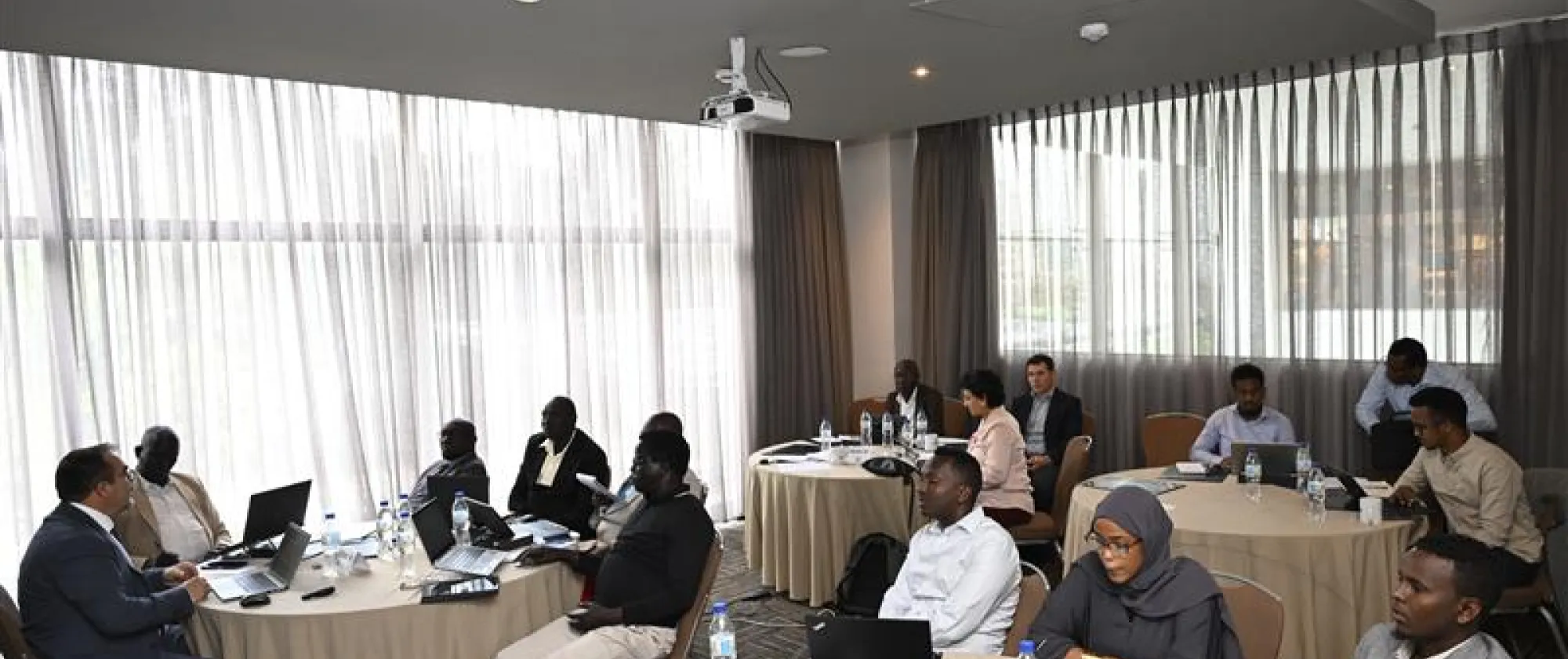
From 13 to 17 October 2025, technical teams from the Somalia National Bureau of Statistics (SNBS) and the South Sudan National Bureau of Statistics (NBS) convened in Addis Ababa, Ethiopia, for a five-day hands-on training workshop on the design and implementation of the Labour Force and Migration Survey (LF&MS). The training placed particular emphasis on sampling design and the development of Computer Assisted Personal Interview (CAPI) applications. Organised by the International Labour Organization (ILO) under the UK FCDO-funded Better Regional Migration Management (BRMM) Programme, the workshop aimed to strengthen national readiness for the rollout of LF&MS in both countries.
In his opening remarks, Andrew Mukulu, ILO Technical Specialist for Labour Migration Statistics, emphasised that the training was designed to equip participants with practical tools and technical expertise required for effective survey implementation.
Somalia and South Sudan are preparing to implement Labour Force and Migration Survey to strengthen labour market and migration statistics in line with international standards. Reliable data are essential for evidence-based policymaking, labour market planning, and integration into national Labour Market Information Systems (LMIS). However, conducting such surveys require strong technical capacity in sampling methodologies, digital data collection systems, and harmonised data processing workflows. The workshop was structured to address these needs by building competencies in sampling design, CSPro/CAPI digital tool development, data validation, weighting procedures, guided by the Generic Statistical Business Process Model (GSBPM).
The workshop combined theoretical sessions with intensive hands-on exercises. Participants were divided into two specialized groups: a Sampling Team and a CSPro/IT Team, each guided by ILO specialists. The Sampling Team focused on reviewing national sampling frames, examining stratification and clustering techniques, and conducting simulations using STATA and R software. They finalized sample selection procedures, validated cluster structures, and prepared sampling outputs for integration into the CAPI tool. Participants also developed automated R scripts and tested syntax using real national datasets.
In parallel, the CSPro Team reviewed and adapted the ILO model LF&MS questionnaire to country-specific contexts. Sessions covered modular questionnaire design, validation rules, navigation flows, configuration of administrative and data modules, and integration of the CAPI tool into national IT systems. Joint sessions ensured alignment between sampling outputs and digital data collection tools. These included live test interviews using real sample data and troubleshooting of linkage errors.
By the end of the workshop, participants produced a range of practical outputs, including a validated and stratified national sampling design, automated R-based sampling scripts, draft nationally adapted LF&MS questionnaires aligned with ILO standards. They also developed documented workflows for data validation, weighting, and integration into LMIS platforms. A prototype selection of sample clusters was completed for South Sudan, providing a reference model for national implementation. Participants received guidance on assigning households to interviewers, applying data weighting procedures and generating statistical tables for LMIS dashboards. The workshop concluded with the development of a draft implementation roadmap, outlining next steps for survey rollout in both countries.
Relevant projects

East and Horn of Africa
Better Regional Migration Management