

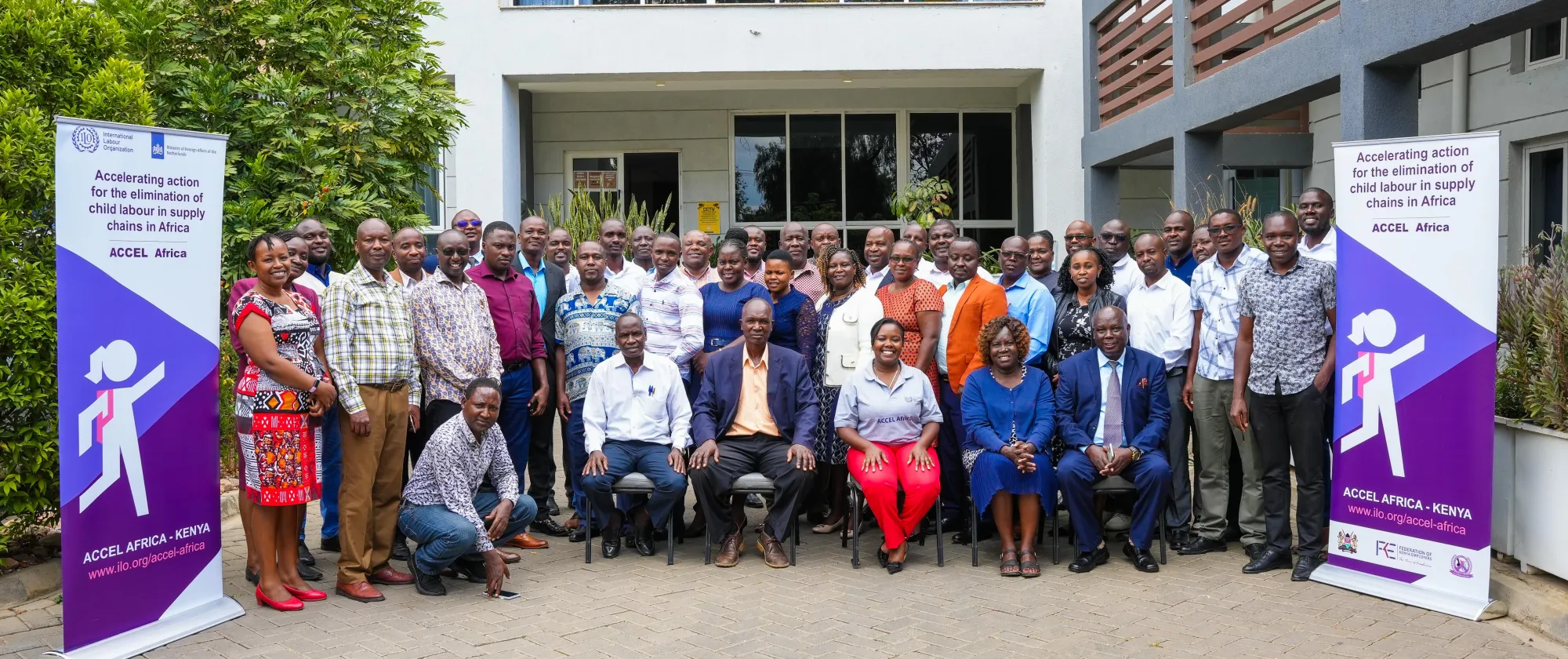
Empowering communities to combat child labour: ACCEL Africa training for sub-county administrators
Sub-county administrators play a critical role in connecting national and local governments, shaping policies, and ensuring that child protection measures are enforced. The training covered legal frameworks, strategies for identifying and addressing child labour, and effective coordination with agencies like the Directorate of Public Prosecutions. Participants developed action plans tailored to their communities, enhancing their ability to protect children and drive change.
17 October 2024
NAIVASHA (ILO News) - Child labour continues to be a pervasive issue across sub-Saharan Africa, with millions of children facing exploitation due to poverty, lack of education, and inadequate legal protections. Tackling this issue requires a multifaceted approach, one that engages local leaders who have a direct impact on their communities. In this regard, the ACCEL Africa project, through a recent training initiative, is equipping sub-county administrators in Kenya with the tools and knowledge needed to lead efforts in eradicating child labour at the grassroots level.
Sub-county administrators serve as vital links between national policies and local implementation. They are the key figures who manage and oversee essential services in their communities, making them uniquely positioned to influence child protection initiatives. Their role is critical not only in governance and policy enforcement but also in being the point of contact for the most vulnerable populations, including children at risk of exploitation.
The three-day training, organized by ACCEL Africa, was designed to equip sub-county administrators with a comprehensive understanding of the causes and consequences of child labour. It offered a blend of theoretical knowledge and practical skills, enabling participants to tackle child labour from multiple angles.
The training kicked off with foundational sessions led by experts from the ILO and local child protection agencies. These sessions covered the key factors driving child labour in Kenya and sub-Saharan Africa, such as poverty, lack of education, and informal work environments. By understanding the socio-economic landscape, participants were better prepared to address the root causes of child labour within their communities.
One of the key focuses of the training was the legal frameworks that support child protection. Administrators were given in-depth knowledge of the ILO’s Conventions and Kenyan child protection laws, which equip local governments with the necessary tools to safeguard children’s rights. The training also emphasized the importance of inter-agency collaboration, particularly with the ODPP, to ensure that child labour cases are investigated, reported, and prosecuted effectively.
Beyond theoretical sessions, the training included hands-on workshops that were tailored to the specific challenges faced by sub-county administrators. The workshops provided an opportunity for participants to engage with real-world scenarios and apply the knowledge gained in the classroom to practical situations.
One of the most valuable aspects of the workshops was the creation of county-specific action plans. These plans were designed to address the unique challenges of each sub-county, with solutions tailored to local contexts. Some administrators developed strategies to re-enrol children who had left school to work, while others focused on awareness campaigns to educate families about the risks and consequences of child labour.
The ACCEL Africa project recognizes that the fight against child labour is not limited to one-time training events. To ensure lasting impact, ACCEL Africa has established a support network for sub-county administrators, fostering ongoing collaboration and knowledge-sharing among local leaders. This network allows administrators to connect with their peers, share experiences, and seek advice as they continue their work in eradicating child labour.
A WhatsApp group and regular follow-up sessions will provide administrators with the opportunity to seek guidance from experts, receive updates on new policies and resources, and share success stories. This approach ensures that the learning continues even after the training has ended, helping local leaders to remain engaged and motivated in their fight against child labour.
The training for sub-county administrators represents a critical step toward the eradication of child labour in Kenya and beyond. By empowering local leaders with the tools and knowledge to address child labour effectively, ACCEL Africa is creating a ripple effect that can lead to long-term change. As sub-county administrators implement their action plans, coordinate with local and national stakeholders, and advocate for children’s rights, they are contributing to a broader vision of social justice and sustainable development in the region.
The role of local leaders in addressing child labour cannot be overstated. They are the champions of change in their communities, working to create environments where children can thrive, free from exploitation. With the continued support of ACCEL Africa, sub-county administrators are equipped to lead the charge in ending child labour and building a brighter, more equitable future for all children.
Through training, collaboration, and ongoing support, ACCEL Africa is fostering a powerful network of local leaders who are not only committed to protecting children’s rights but are also driving forward the agenda of Sustainable Development Goal 8.7 – the global commitment to eradicate child labour by 2025.
Relevant projects

Feasibility study and design of an impact bond to reduce child labour in Côte d’Ivoire