

District meeting marks new phase in fight against child labour in Uganda’s coffee and tea supply chains
21 August 2024
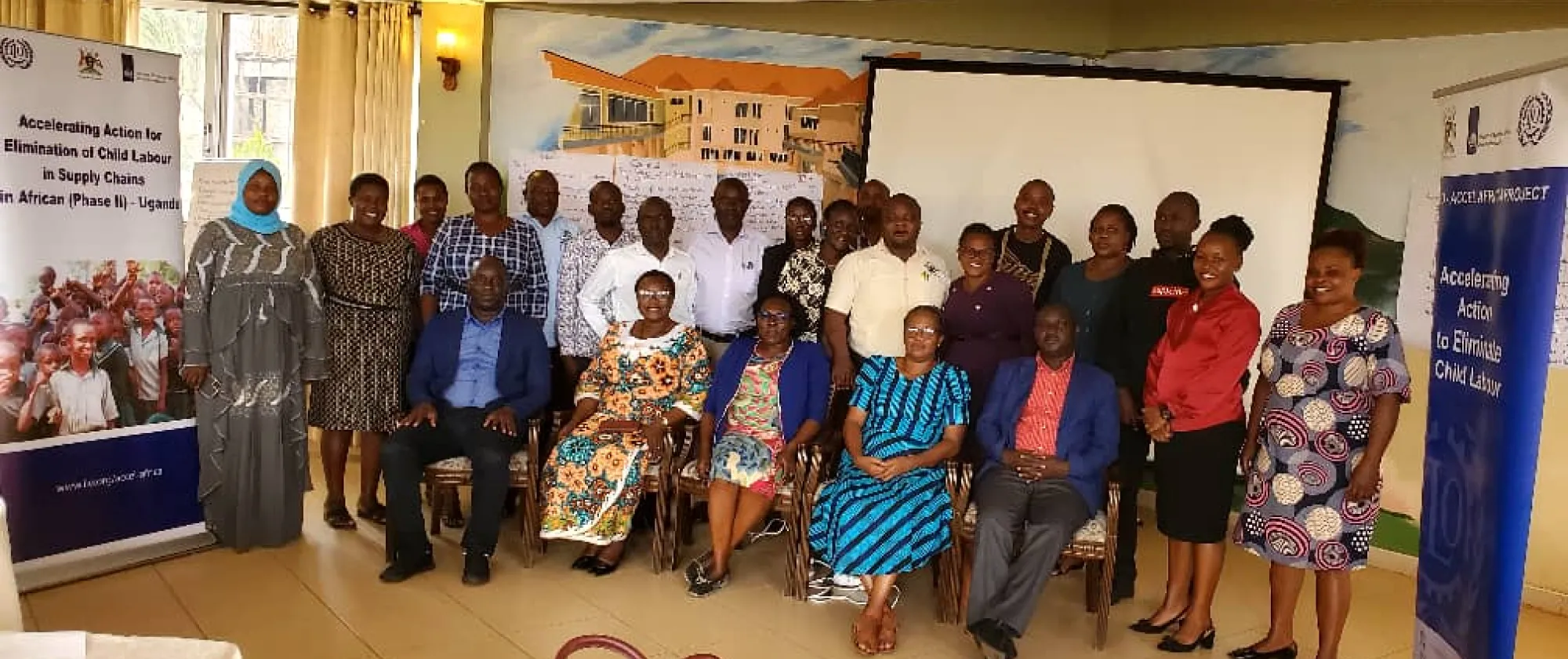
Fort Portal City Uganda – August 15, 2024 – A crucial district orientation meeting was held in Fort Portal on August 15, 2024, bringing together key government officials from Kabarole and Kyenjojo districts. The purpose of the meeting was to introduce the ACCEL Africa project’s second phase, which aims at eradicating child labour in Uganda’s coffee and tea supply chains. Organized by the ILO in collaboration with the District Local Governments of Kabarole, Kyenjojo and Fort Portal City, the meeting sought to promote project ownership and the active involvement of district officials, who will play a vital role in the project’s success.
The orientation began with an overview of the project, setting the stage for discussions on how local governments can contribute to the elimination of child labour in their regions. Officials from various departments, including Community Development, Agriculture, Education, Labour, and members of the District Committees on Probation and Child Wellbeing, were present. Their participation highlighted the importance of a coordinated, multi-sectoral approach to tackling child labour.
Throughout the meeting, presenters emphasized the critical need for district governments to be more deeply involved in the project’s implementation. Evelyn Kabanyagaki, the Senior Labour Officer of Kyenjojo Local Government, highlighted some funding challenges sorrounding their commitment to eliminate child labour "There is no budget specifically allocated for child labour issues. I consistently leverage opportunities from other departments to conduct community sensitization on child labour, which remains a significant challenge among the tea out grower communities."
The meeting provided a platform to review the successes of the 1st phase of the project, which had focused on raising awareness and improving livelihoods among farming communities in Kabarole district. However, the disruptions caused by the COVID-19 pandemic had limited the extent of local government involvement, a gap that the 2nd phase aims to address.
The discussions during the meeting were cantered on how district officials can support the project’s objectives, which include strengthening monitoring systems, improving policy implementation, and ensuring that the efforts to combat child labour are sustained at the local level. The officials expressed their commitment to these goals, recognizing the long-term benefits of eradicating child labour for the communities they serve.
By the conclusion of the meeting, a clear path forward had been established, with district officials pledging their support and agreeing on the need for ongoing collaboration. The orientation in Fort Portal marked an important milestone in the ACCEL Africa project, laying the groundwork for a more integrated and effective approach to combating child labour in Uganda’s coffee and tea supply chains.
About ACCEL Africa:
The project is funded by the Ministry of Foreign Affairs of the Netherlands and implemented by the International Labour Organization (ILO). The project’s overarching goal is to eliminate child labour in key agricultural supply chains across six African countries, including Uganda. In Uganda, the focus is specifically on the coffee and tea supply chains, which are critical to the country’s economy but are also where child labour is a significant issue.
Unlike typical interventions, the ACCEL Africa project employs a systems-building approach that seeks to address the root causes of child labour. This involves not just immediate interventions, but also the strengthening of existing frameworks, policies, and institutional capacities to create sustainable change. The project aims to improve legal and institutional frameworks, develop innovative, evidence-based solutions, and scale up successful strategies through knowledge sharing and partnerships.