

Decent work and women’s economic empowerment
From displacement to decent work: Women rebuild roads and their futures in Somalia
With ILO support, displaced and host community women in Baidoa in southwest of Somalia are training as stone cobblers, earning income and rebuilding vital roads. The project promotes decent work, gender equality, and hope for families affected by conflict.
15 January 2026
Baidoa, Somalia (ILO News) - Through an employment intensive infrastructure project led by the ILO, women from internally displaced persons camps and host communities are being trained and employed as stone cobblers, a role traditionally dominated by men. At least 30 percent of all jobs under the project are reserved for women, advancing gender equality in the world of work.
At the crack of dawn, Ruqiya Mohamed Noor, a 32 year old widow and mother of eight, leaves an IDP camp on the outskirts of Baidoa in Southwest Somalia and walks five kilometres to a road construction site. There, she works alongside dozens of women who, like her, are earning a living through ILO supported employment.
The project, implemented with the Baidoa District Authority and the Ministry of Public Works of the Southwest State of Somalia and funded by KfW Development Bank, is part of the ILO’s broader effort to create decent work opportunities for people affected by displacement and conflict. It addresses Somalia’s jobs crisis while rebuilding essential infrastructure and promoting social cohesion.
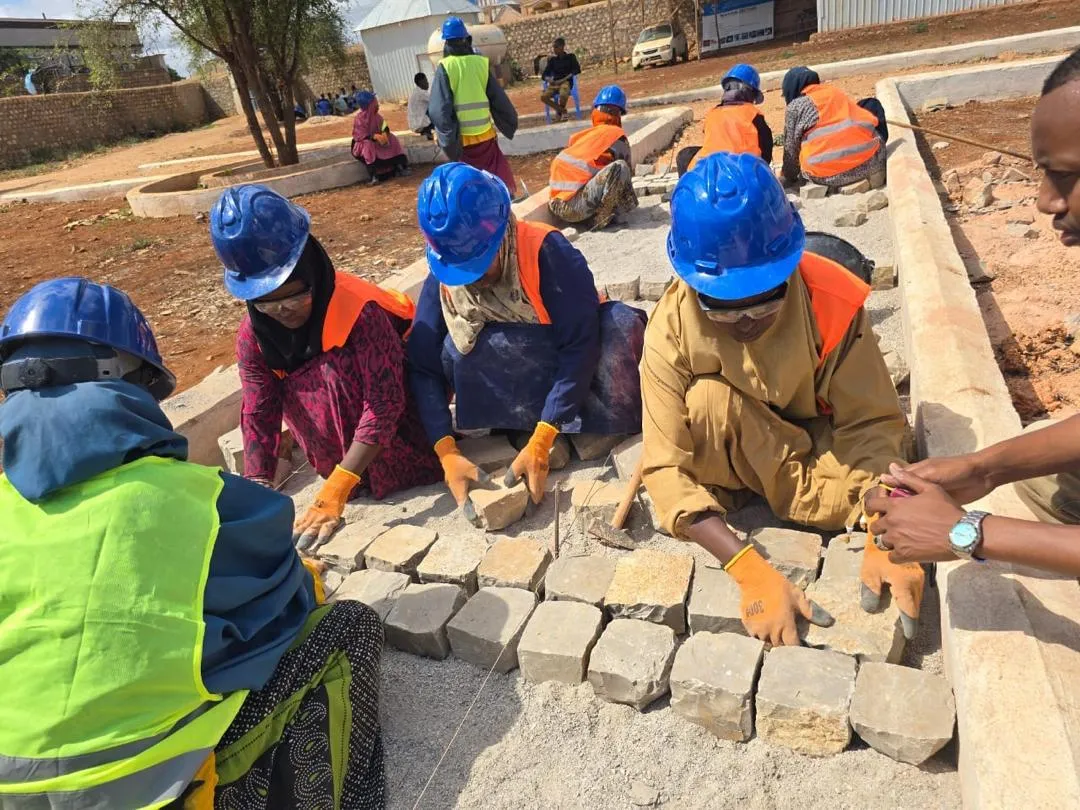
For Ruqiya, access to decent work has restored dignity and stability. After losing her husband to illness, she lost her income and was forced to move to an IDP camp. Survival became uncertain.
Her life changed when she was selected for training under the ILO project. In addition to earning a daily wage, she received skills training in stone cobbling, occupational safety, and basic worksite practices. These skills have enabled her to perform skilled work and earn a reliable income.
At first, Ruqiya supported road construction by spreading gravel. With ILO training, she progressed to stone cobbling. She describes the experience as an opportunity that opened her eyes to what women can achieve when given access to skills and employment.
The project follows the ILO’s Employment Intensive Investment Programme approach, which prioritises local labour and ensures that a significant share of project funds goes directly into the local economy through wages and local suppliers. For women workers, this means fair pay, safe working conditions, and predictable income.
For the first time since her husband’s death, Ruqiya can independently support her children. Her earnings now cover food, education, and healthcare for her family.
She says decent work has given her confidence and hope. Being able to provide for her children through her own labour was once a distant dream. Today, it is her reality.
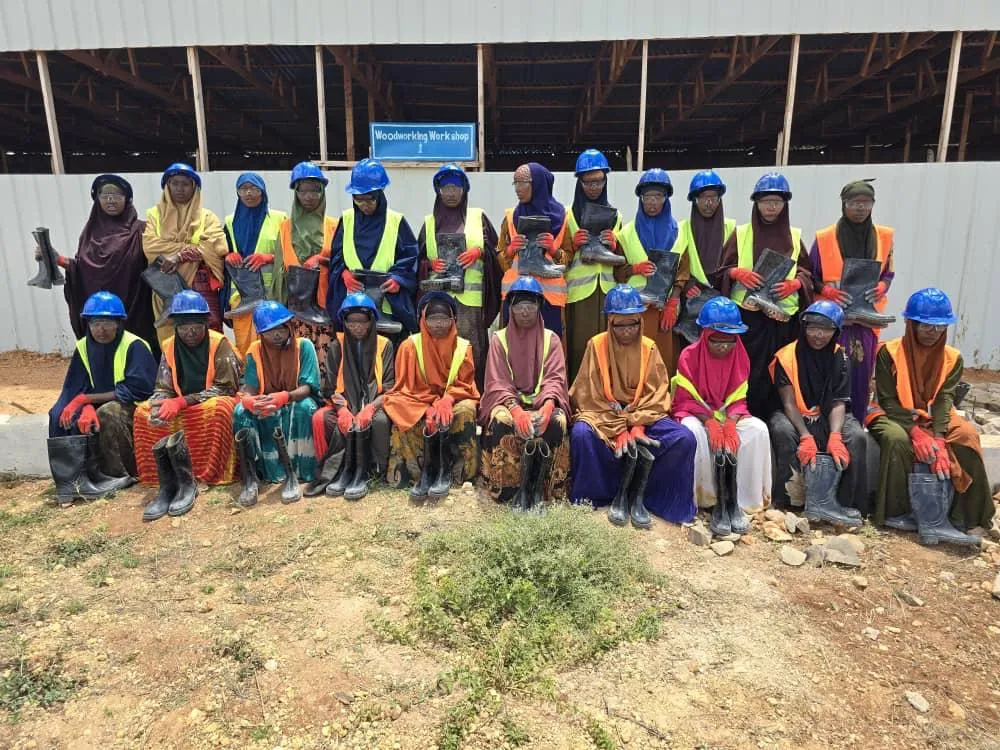
Ruqiya is one of hundreds of women benefiting from the project in Baidoa. Overall, the initiative is expected to generate more than 300,000 workdays of short term employment for displaced people, returnees, and host community members across Southwest Somalia. Beyond roads and public infrastructure, the project is building skills, fostering inclusion, and strengthening labour market participation.
The ILO deliberately targets vulnerable women, recognising that investing in women’s employment delivers impact at household and community level. When women gain access to decent work, families are lifted out of vulnerability and communities become more resilient.
Sadia Mohamed, who has worked on the project for nearly two years, says the training has expanded her future prospects. With the skills she has gained, she feels better prepared to compete for work opportunities beyond the project.
The stories of Ruqiya and Sadia highlight how the ILO’s commitment to decent work is changing lives in Baidoa, Southwest Somalia. By combining skills development, fair employment, and inclusive labour practices, the ILO is helping women move from displacement to dignity and from vulnerability to opportunity.