

Decent Work Pledge marks new commitment to safety and fairness in Zimbabwe’s construction sector
In Harare, the ILO and social partners came together to strengthen safety, labour rights and productivity in Zimbabwe’s construction sector, formalising their commitment through the signing of a Decent Work Pledge aimed at driving inclusive and sustainable growth.
15 December 2025
Zimbabwe, Harare (ILO News) - The International Labour Organization (ILO), alongside government representatives, employers, trade unions and industry stakeholders, convened in Harare for the Decent Work in Construction Communication Campaign, reaffirming a shared commitment to safe, fair and productive work in Zimbabwe’s growing construction sector. Stakeholders included Zimbabwe Congress of Trade Unions (ZCTU), Zimbabwe Federation of Trade Unions (ZFTU), Employers’ Confederation of Zimbabwe (EMCOZ), National Social Security Authority (NSSA), Small and Medium Enterprises Development Corporation (SMEDCO), and various construction companies, workers and media.
Held under the theme Towards 2030: Building a safe and inclusive and economically empowered Zimbabwe, the campaign comes amid rapid infrastructure development, including major projects at Mount Hampden, road upgrades, airport access routes and water systems. These investments are reshaping urban landscapes and driving demand for construction services.
The ILO Country Director, Philile Masuku emphasized the sector’s role in building infrastructure that supports communities and economic growth. While expansion offers opportunities for jobs and enterprise development, it also highlights the need for stronger labour safeguards to ensure inclusive, sustainable progress.
She further shared
The ILO’s work is guided by the belief that decent work is the foundation for productive and sustainable development. High-performing enterprises succeed not only because of technical capacity alone, but because they promote work environments that offer stability, security, meaningful engagement, effective social dialogue and equality of opportunity, among other things.”
Despite positive prospects, construction remains one of the most hazardous industries globally. The ILO estimates 2.93 million annual work-related deaths, with over 60,000 in construction alone. Millions more suffer injuries, particularly among young and informal workers and small enterprises.
The campaign called for robust safety systems, better training and effective enforcement of labour standards. Participants stressed shared responsibility among workers, employers and government to create workplaces where risks are managed, and concerns raised without fear. Strengthened labour inspection, clear regulations and compliance incentives were identified as key enablers.
In his keynote address, Ministry of Public Service Labour and Social Welfare Chief Director, Mr Clifford Matorera shared.
In Zimbabwe a thriving construction industry is crucial for achieving sustainable development, improving life living standards and building against economic shock.

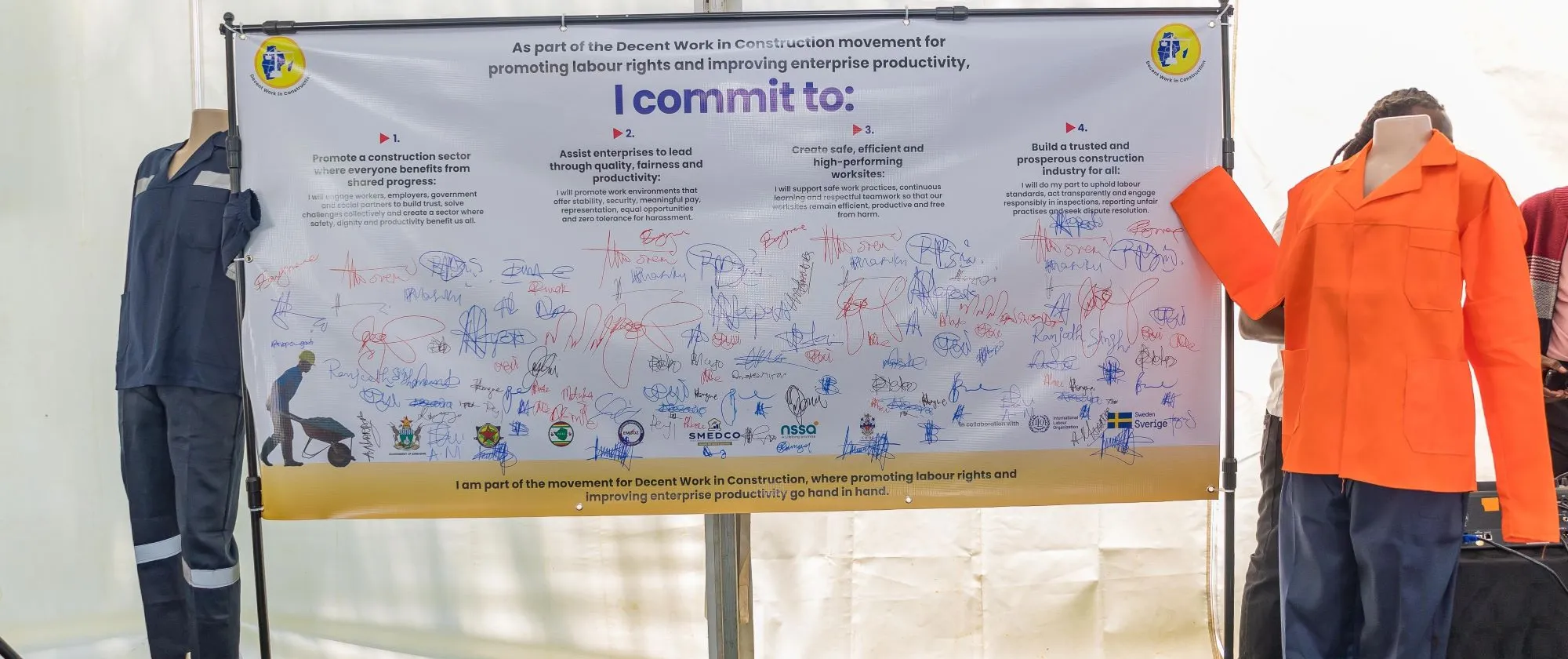
A highlight of the event was the signing of a Decent Work Pledge by social partners, symbolizing a collective commitment to safety, dignity, social dialogue and productivity. It was great to see players in the construction sector also taking the pledge and committing their support to Decent work pledge. The ILO reaffirmed its support for Zimbabwe’s efforts to build a responsible construction sector that protects workers, empowers enterprises and fosters inclusive economic development.
Relevant projects

Decent work and labour rights in Southern Africa’s construction sector

A Systemic Approach to Decent Work and Labour Rights in Southern Africas Construction Sector