

Decent Work at the heart of East Africa’s future
As Caroline Khamati Mugalla, Director of the ILO Country Office for the United Republic of Tanzania, Burundi, Kenya, Rwanda and Uganda, reflects on the months of June, July and August, she is struck by the scale of ambition across the countries the Office serves. At the heart of these ambitions is an increasingly important question: how can economic transformation be translated into productive and decent work, particularly for young people?
14 September 2026
-
 By Caroline Khamati MugallaDirector, ILO Country Office for United Republic of Tanzania, Burundi, Kenya, Rwanda and Uganda
Across East Africa, countries are setting bold goals for the future. Tanzania’s Development Vision 2050 places human capabilities and employment at the centre of its transformation agenda. Rwanda’s second National Strategy for Transformation aims to create 1.25 million productive and decent jobs over five years 250,000 annually while Uganda’s Fourth National Development Plan envisages the creation of some 4.4 million jobs over five years. Burundi aspires to become an emerging economy by 2040 and a developed country by 2060, with employment and youth economic empowerment integral to that journey. And as Kenya approaches the horizon of Vision 2030, discussions are shaping the country’s longer-term development pathway.
Different countries, different pathways, but ultimately the same challenge these ambitions have to translate into opportunities and better lives for people.
That challenge is particularly important for young people. Africa’s youth labour force will continue to grow in the coming decades, while too many young women and men already struggle to find secure and productive employment. So, while creating jobs matters enormously, we also must ask what kind of jobs and livelihoods are being created and whether they provide income, protection, rights and the possibility of progressing in life.
Over the last three months, I have seen different pieces of that challenge reflected in our work.
In Zanzibar, for example, we are working with national institutions to strengthen labour market intelligence. This may sound technical, but its purpose is very practical. If we do not know where jobs are emerging, which occupations are changing and where employers cannot find the skills they need, it becomes much harder to prepare young people for those opportunities. Our partnership with Tanzania’s Judiciary addresses another part of the same picture: ensuring that as employment relationships change, the institutions responsible for labour justice are equipped to respond.
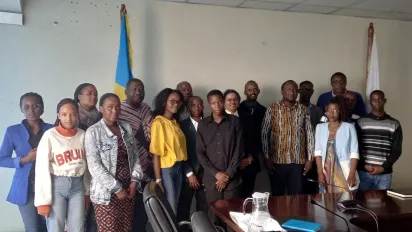
The connection between the classroom and the labour market has also been very visible in Rwanda. Working with the Rwanda TVET Board and LuxDev, we supported the validation of a Digital Skills Competency Framework for TVET Teachers. Behind the framework are teachers who must prepare young Rwandans for workplaces that look very different from those of even a decade ago. Strengthening their ability to do that is one practical contribution towards Rwanda’s much bigger employment ambition.
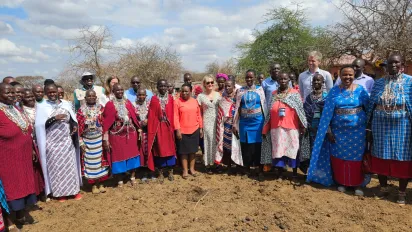
Kenya provides another example of what happens when we connect skills more deliberately with economic opportunity. Through the Public–Private Development Partnership for Inclusive Growth through Decent Work, the first phase contributed to 1,900 jobs and 778 businesses. What interests me about the partnership is not only those numbers, but what they tell us about bringing training institutions, government and the private sector around the same table. The second phase in Nakuru, Narok and Kajiado is giving us an opportunity to build on those lessons and reach further.
And then there are the stories that bring these numbers down to the level of a household.
In Uganda, 80 women and men came together through an employment-intensive fish-farming initiative and generated 7,200 workdays in three months while building a community aquaculture enterprise. For those involved, this is not an abstract discussion about employment policy. It is work, income and the possibility of building something that can continue to support their families.
The same is true in coffee-growing communities, where families are strengthening their livelihoods through savings groups and small enterprises. This matters for another reason. When a household has a more reliable income and is better able to withstand economic shocks, there is less pressure for children to leave school and enter work too early. In that very practical sense, strengthening livelihoods is also part of our fight against child labour.
These experiences remind me why our work cannot begin and end with projects. We must ask what we are learning from them, what governments and our social partners can build upon, and how approaches that work can eventually reach far more people.
This is also why partnership matters so much. Whether we are working with labour institutions in Zanzibar, the Judiciary in Tanzania, TVET institutions in Rwanda, public and private partners in Kenya or communities in Uganda, the ILO does not walk this journey alone. Governments, employers’ and workers’ organizations, development partners, training institutions, enterprises and communities are the ones who ultimately make change sustainable.
The scale of East Africa’s employment challenge means that individual projects will never be enough. Our responsibility is to help connect these experiences to the bigger picture to learn what works, strengthen the institutions around it and help promising approaches to move from pilot to policy, and from policy to scale.
And young people themselves must be part of that conversation. We cannot shape the future of work for them without listening to what they want from that future, the obstacles they encounter and the opportunities they see.
Young people themselves must be part of that conversation. We cannot shape the future of work for them without listening to what they want from that future, the obstacles they encounter and the opportunities they see.
Caroline Khamati Mugalla, Director, ILO Country Office for United Republic of Tanzania, Burundi, Kenya, Rwanda and Uganda
The development ambitions of the countries we serve are bold, and rightly so. Africa’s young population represents enormous potential for innovation, productivity and transformation. Our task is to make sure that this potential is matched by opportunity, and that opportunity comes with dignity, rights and security.
Behind every employment target, after all, is a person a young woman looking for her first opportunity, a worker trying to earn a secure living, an entrepreneur building a business, or a parent hoping that their children will have choices they themselves may not have had.
It is for them that decent work must remain at the heart of East Africa’s future.
Relevant projects
Public-private development partnerships for inclusive decent employment and productive livelihoods
Digital Economy
Boosting Decent Jobs and Enhancing Skills for the Youth in Rwanda’s Digital Economy