

Child Labour
Community-based child labour monitoring and remediation in Uganda
Child labour is a major challenge in Uganda’s rural coffee-growing communities, driven by poverty, household vulnerability, limited access to services, and weak education and protection systems. The CLEAR Supply Chains project – led by the International Labour Organization in partnership with UNICEF, FAO and ITC, and co-financed by the European Union - addresses the root causes of child labour in the coffee supply chain. It does so by designing and strengthening, amongst others interventions, a Child Labour Monitoring and Remediation System (CLMRS), anchored in community-based monitoring and referral mechanisms.
18 May 2026
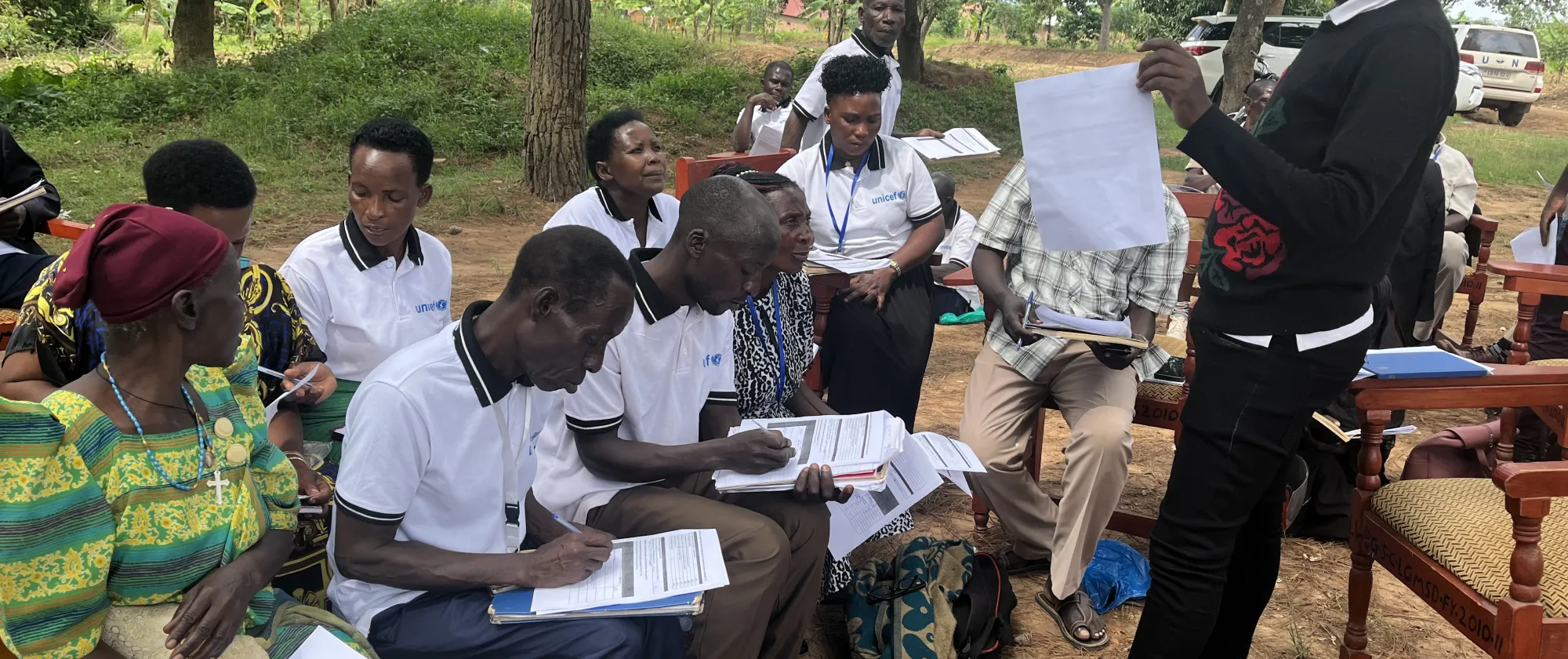
Uganda (ILO News) - Within the project-supported CLMRS, Child Wellbeing Committees and the District Senior Probation and Social Welfare Officer play a central role in coordinating child protection services, overseeing case management, and collaborating with communities and key stakeholders including the education sector, law enforcement, labour inspectors, agricultural extension officers, and NGOs, to prevent and respond to child labour. In Kalungu District, these efforts have been further strengthened through the training of 163 community members as para-social workers, enhancing their capacity to identify, monitor, and refer cases of child labour.
Since July 2024, the para-social workers in Kalungu District have identified 601 children (413 boys and 188 girls) in child labour through 12,452 household visits. Most cases were identified in the coffee value chain (334) followed by horticulture (200). A total of 359 children engaged in child labour were remediated through reintegration into primary or secondary school, and referral to technical and vocational training. Now, two years after the CLEAR Supply Chains project began supporting the establishment of a CLRMS in Kalungu District, the District’s Senior Probation and Social Welfare Officer, Brian Kasumba, reflects on the progress achieved.
Here is the recap of the interview.
What improvements have you seen in how child labour is addressed in the district?
The presence of para-social workers in the district’s sub-counties such as Lwabenge and Kyamulibwa has improved access to child protection services. Communities can now clearly distinguish between child labour and child work, enabling more accurate reporting. Community members now report directly to para-social workers, cases are handled faster and within the community. This has contributed to faster case management, improved local response, and increased school enrolment, with more children returning to school following community awareness efforts.
How has the project supported you in collaborating with other departments, for instance production department, education department, sub-county Community Development Officers, and para‑social workers to prevent and eliminate child labour?
The project has strengthened collaboration across education, agriculture, law enforcement, labour inspection and community development. Through Child Wellbeing Committees, stakeholders jointly identify and address child protection issues. Issues are resolved directly at sub-county level. Training of local government agricultural extension officers has also contributed to reduced child labour through improved identification of child labour at the farm level and coordinated follow up with para-social workers who provide counselling and awareness raising to the household members, and support remediation of cases, for example reintegration in school or referral to technical and vocational training.
What gaps remain to prevent and eliminate child labour in Kalungu District?
Despite progress, challenges remain. Awareness among parents of the appropriate age for enrolling in TVET programs is limited as well as the inability to provide basic scholastic materials that are required for reintegration into the formal education system. Graduates from technical and vocational training require post-training support and start-up kits. The District Community Development Office is collaborating with the District Production and Commercial Office to link graduates to agricultural extension services and market access.
What commitments or actions has the district made to continue the fight against child labour?
Kalungu district is taking steps to sustain these gains through the District Child Wellbeing Committee by integrating child protection into planning and budgeting processes, strengthening partnerships with civil society and non-government organizations in the district and promoting continuous sensitisation and positive parenting practices to ensure long-term protection for children.
Related content

Child labour
CLEAR Supply Chains: Ending child labour in supply chains
Relevant projects
Child labour
CLEAR Supply Chains: Ending child labour in supply chains