

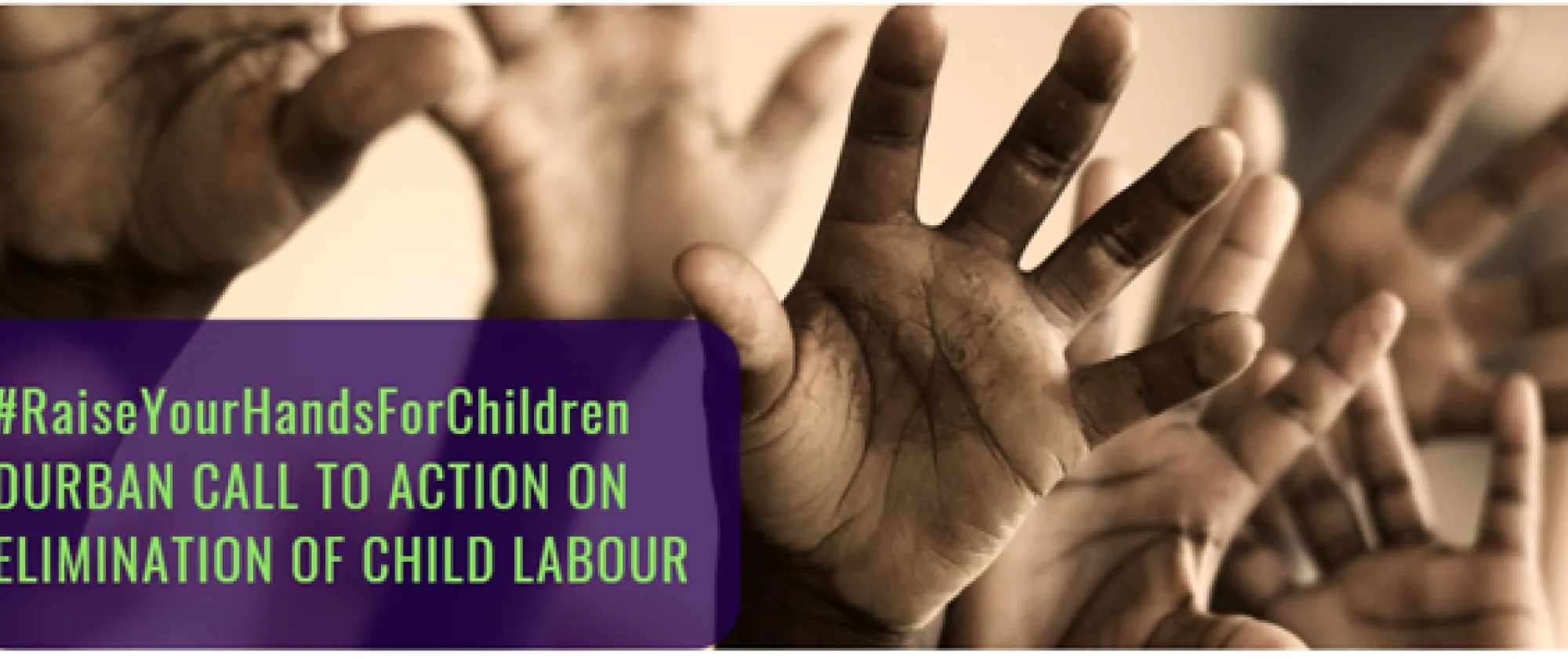
Child Labour Elimination
A Commitment to the Durban Call to Action
13 May 2024
In May 2022, the global community reaffirmed its commitment to combatting child labour with the adoption of the Durban Call to Action on the Elimination of Child Labour. This landmark agreement, endorsed by governments, employers’ organizations, workers’ organizations, and civil society, and United Nations agencies, sets forth a focused framework for accelerating joint action to eradicate child labour by 2025. Kenya, in alignment with this global initiative, has undertaken significant steps to address and eliminate child labour within its borders.
Kenya's Current Context
According to the latest statistics by ILO and UNICEF, child labour remains a significant challenge in Kenya, with an estimated 1.5 million children engaged in some form of work. This figure underscores the persistent issue of child labour, particularly prevalent in sectors such as agriculture, domestic work, and informal urban settings.
Many of these children are exposed to hazardous work, compromising their health, education and overall development. Despite efforts to combat this issue through legislation, policy and programmatic frameworks, poverty, inadequate access to education, and cultural norms continue to perpetuate child labour practices.
The impact of the COVID-19 pandemic has further exacerbated vulnerabilities, leading to an increase in social and economic challenges for families.Consequently, this has pushed more children into the labour market. Addressing these challenges requires concerted action from Government agencies, social partners, civil society organizations, and other development partners to enforce existing laws, expand social protections, and ensure all children have access to quality education, thus breaking the cycle of poverty and exploitation.
National Legislation and Policy Frameworks
Kenya has ratified key international legal instruments, most notably, the Worst Forms of Child Labour Convention (C. 182) and the Minimum Age Convention (C. 138), thereby demonstrating its commitment to protect children from exploitation and hazardous work. Domestically, Kenya has enacted several legislations to domesticate these global commitments, including: the Children Act 2022, and the Employment Act 2007, which provide a framework and substantive content for addressing child labour and to set the minimum age for employment in Kenya.
Kenya's Response to the Durban Call to Action –
In response to the Durban Call to Action, Kenya has prioritized several strategic actions aimed at accelerating the elimination of child labour:
- National Action Plans: Kenya is currently reviewing its National Policy on the Elimination of Child Labour and the National Action Plan on the Elimination of Child Labour to include substantive protections against child labour under the Durban Call to Action on the Elimination of Child Labour, 2022 and with key international labour standards as contextualized to prevailing situation of child labour in Kenya. As such, the draft policy emphasises on addressing the root causes of child labour and addressing child labour in the key sectors that contribute most to child labour.
- Education and Awareness: The Kenyan Government has formulated policies and rolled out programmes to promote universal access to quality education. Initiatives include expanding school infrastructure, enhancing teacher training, and ensuring gender equity and equality in accessing educational opportunities to reduce dropout rates and prevent children from entering the labour market prematurely.
- Social Protection: Kenya has expanded its social protection programmes to vulnerable households, aiming to reduce household poverty which is a major –driver of child labour. Provision of cash transfers and benefits for children ensures critical support to families, enabling them to meet their basic needs without relying on child labour.
- Labour Inspection and Enforcement: Strengthening labour inspection mechanisms is a priority, ensuring compliance with labour laws and swiftly addressing instances of child labour through enforcement actions and penalties for violators.
- Public-Private Partnerships: Collaboration with businesses, employers’ organizations, and civil society is crucial in promoting responsible business practices. This includes due diligence in supply chains to prevent child labour and support sustainable economic development.
Achievements and Challenges
Kenya’s efforts have yielded notable achievements, including a decline in the incidence of child labour in recent years. However, challenges remain, particularly in reaching marginalized communities, improving data collection, and reporting mechanisms, and addressing the impact of external shocks such as the COVID-19 pandemic.
Kenya remains committed to achieving the ambitious goals set forth by the Durban Call to Action. Through comprehensive policy frameworks, strengthened enforcement mechanisms, and collaborative partnerships, Kenya continues to pave the way towards a future where every child enjoys their fundamental rights, including protection from child labour. As global efforts intensify, Kenya stands poised to contribute significantly to the collective goal of eliminating child labour by 2025, ensuring a brighter future for its children and generations to come.
Related content

CAPSA Project - Kenya, Uganda and the EAC Secretariat
CAPSA - Capacity Strengthening of Governments to Address Child Labour and Forced Labour and Violations of Acceptable Conditions of Work in...
Relevant projects
CAPSA Project - Kenya, Uganda and the EAC Secretariat
CAPSA - Capacity Strengthening of Governments to Address Child Labour and Forced Labour and Violations of Acceptable Conditions of Work in...