

Child Labour
CLEAR supply chains strengthens Child Labour due diligence
How can companies strengthen child labour due diligence in the coffee sector? For 23 participants representing 6 major coffee buying and trading companies, the answer is clear: practical measures such as implementing robust child labour policies, raising awareness through effective communication, and engaging stakeholders are essential steps towards preventing and addressing child labour in the coffee supply chain.
8 September 2026
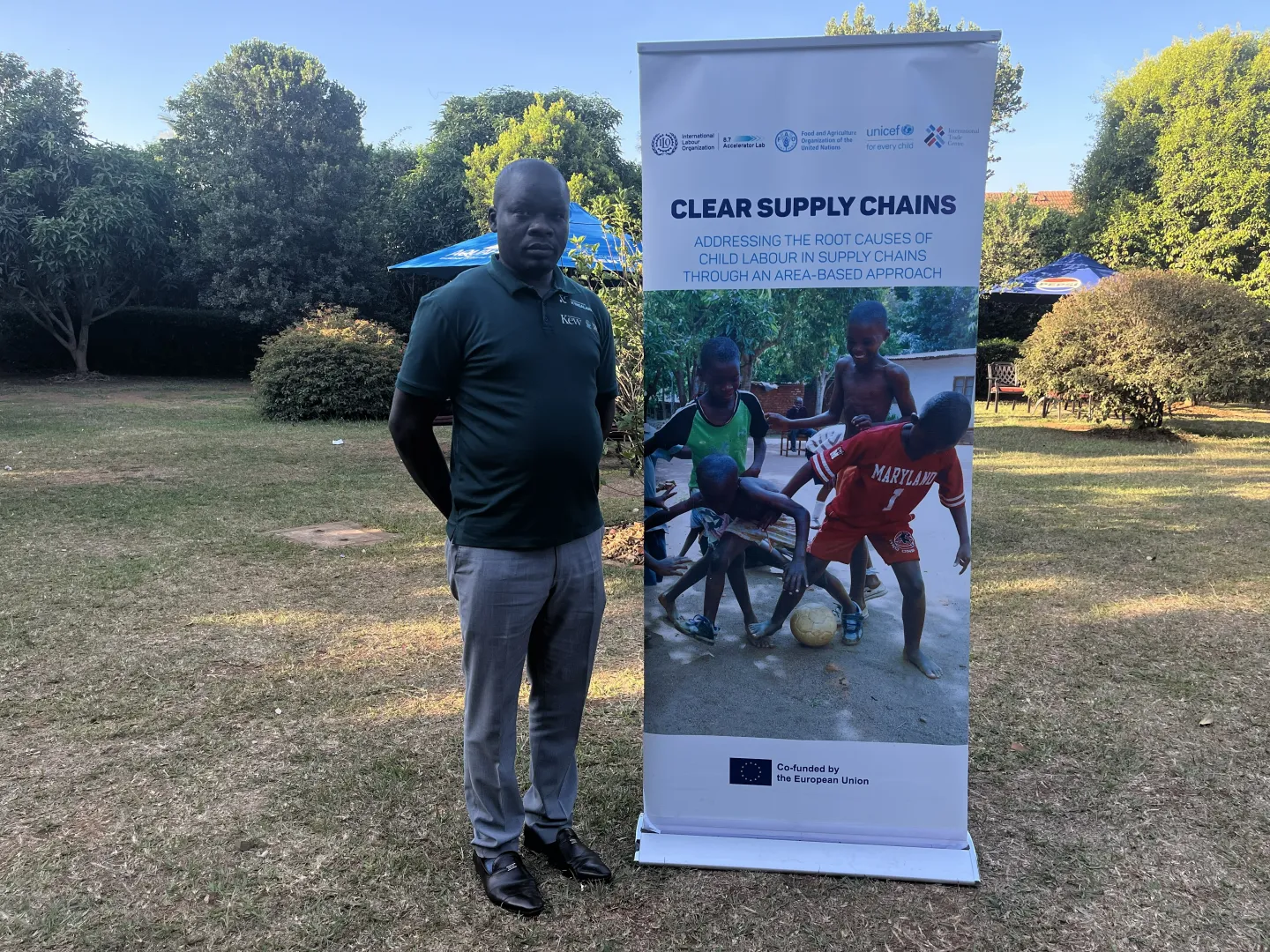
Uganda (ILO News)- As part of the collaboration between the ILO and a group of major coffee buyers and traders organized under the Child Labour Platform (CLP), the CLEAR Supply Chains project organized a second capacity building training for CLP coffee member companies in Uganda. The training brought together 23 participants (11 women, 12 men) from 6 coffee companies – Louis Dreyfus Company (LDC), Ibero (NKG), Kyagalanyi (Volcafe), JDE Peet’s, Touton and Ofi/Olam.

For two days participants received an advanced and practical-oriented training on child labour due diligence. In addition to explaining the different steps of a proper child labour due diligence and providing concrete examples of other companies and value chains, participants learnt about the Uganda’s public child labour identification, monitoring and referral mechanism. The Senior Probation and Welfare Officer of Kalungu District, Brian Kasumba, explained the different roles and responsibilities of parasocial workers and community-based services, agricultural officers and labour officers, and how all these sectors collaborate to prevent and remediate child labour in Kalungu District. Concrete guidance was provided to the companies on how they could report a child labour case to the Government and how to follow-up. Pathways to collaborate with private sector were also highlighted for instance through multi-sectoral coordination mechanisms like the Child Wellbeing Committee at district level.
The participating CLP member companies committed to work on developing or reviewing their child labour policies, grievance mechanisms, stakeholder engagement maps and communications plans on child labour.
“The training helped in identifying gaps and understanding the importance of having a comprehensive child labour policy”. Samuel Mafabi, Child Protection and HRDD Officer, Kyagalanyi Coffee Limited, Uganda.
| Knowledge area | Pre-training knowledge assessment | Post-training knowledge assessment |
| I understand child labour. | 80.9% | 95.1% |
| I know how to develop a policy on child labour. | 23.8% | 100% |
| I know the elements of hazardous child labour. | 57.1% | 100% |
| I know the authorities and frontline actors to engage when handling a child labour case. | 52.3% | 100% |
| I know why a company should have a grievance mechanism in place. | 66.7% | 100% |
| I understand what is meant by meaningful stakeholder engagement. | 42.9% | 100% |
Following the training, the ILO will provide technical assistance to the participating companies as they strengthen their child labour due diligence systems. The ILO will measure progress at two intervals, the first will be, 4-months after the training in December 2026, and the second at 8-months after the training in April 2027.
''The training will help us in reviewing human rights due diligence policy and strategy, in particular preparing the mechanism to track grievances and remediation.” Dafrosa Sanga, Sustainability Manager, JDE Peet’s.

Related content

Child labour
CLEAR Supply Chains: Ending child labour in supply chains
Relevant projects
Child labour
CLEAR Supply Chains: Ending child labour in supply chains