

International Day of Persons with Disabilities
Celebrating inclusivity and creativity through Indonesia's batik traditions
The environmentally friendly batik initiative, led by one of the ILO’s partners in promoting inclusivity, offers a pathway to independence and entrepreneurship for individuals with learning disabilities.
3 December 2025
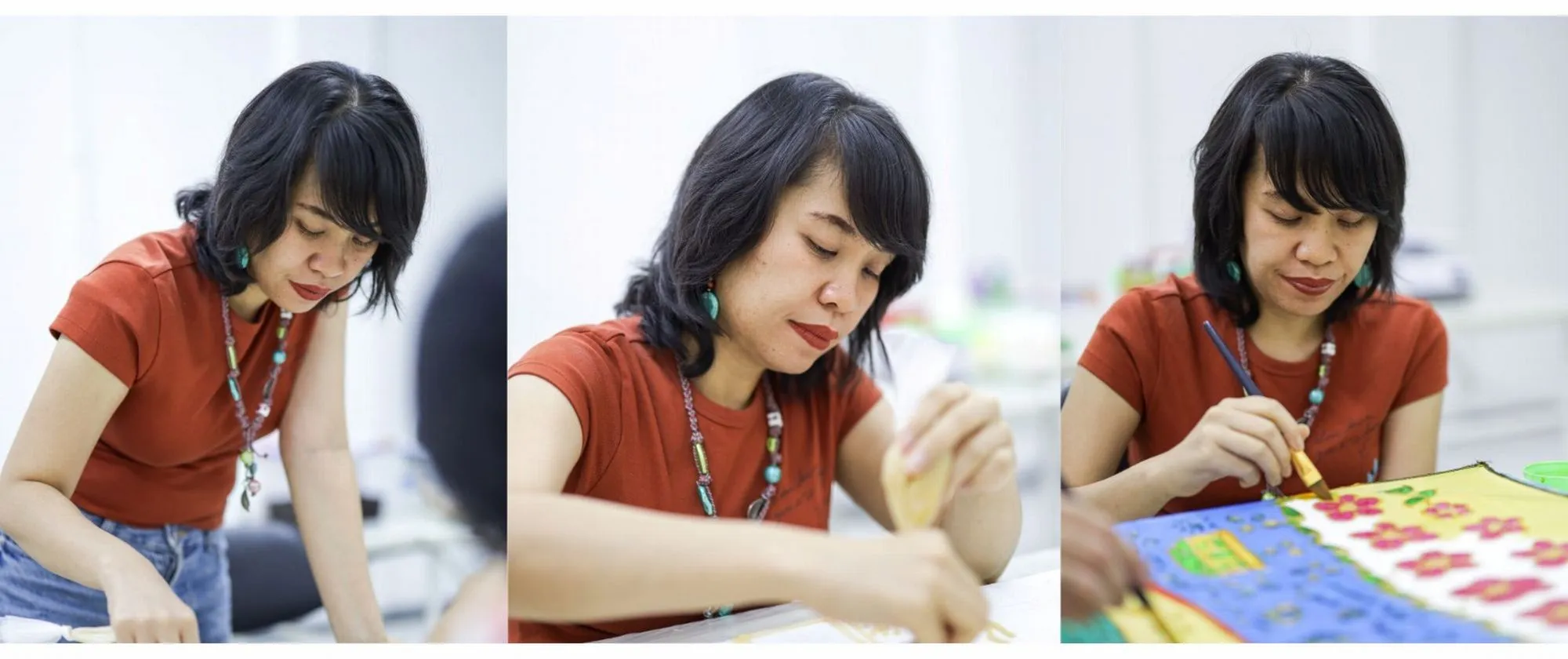
JAKARTA, Indonesia (ILO Story) - Audrey Demitry Elaine, together with her colleagues from the Special Child Care Foundation (YPAS), poured their creativity and dedication into painting batik motifs – celebrated as Indonesia’s cultural heritage and artistic masterpieces – for the Batik Design Competition. The event was organized by the Indonesian Employers’ Association (Apindo), in collaboration with the Ministry of Creative Economy and the International Labour Organization (ILO), to commemorate 75 years of Indonesia’s membership in the ILO.
As one of the ILO’s partners in advancing inclusivity, YPAS supports children with learning difficulties such as Attention Deficit Disorder (ADD), Attention Deficit Hyperactivity Disorder (ADHD), Dyslexia and Dysgraphia. These conditions are often referred to as hidden disabilities because they are not immediately visible but can affect learning and daily activities.
By engaging in this sustainable batik-making technique, they gain valuable skills, confidence and a sense of inclusion, while also contributing to the preservation of Indonesia’s cultural heritage.
Arini Suwarno, Chair of YPAS
“Individuals with learning disabilities look like any other people. They also have good education, talent and skills. However, for example, people with ADD may struggle to pay attention and stay on task. This means that workers with ADD need clear instructions, either in writing or with visuals,” explained Arini Suwarno, Chair of YPAS.
Among YPAS’s initiatives is the development of Batik Guta Tamarin, a technique also known as cold batik. Instead of traditional wax, it uses tamarind seed powder processed into a thick paste, mixed with hot water and vegetable oil or margarine. This paste is applied to fabric with tools such as piping bags or triangular plastic to form patterns before dyeing.
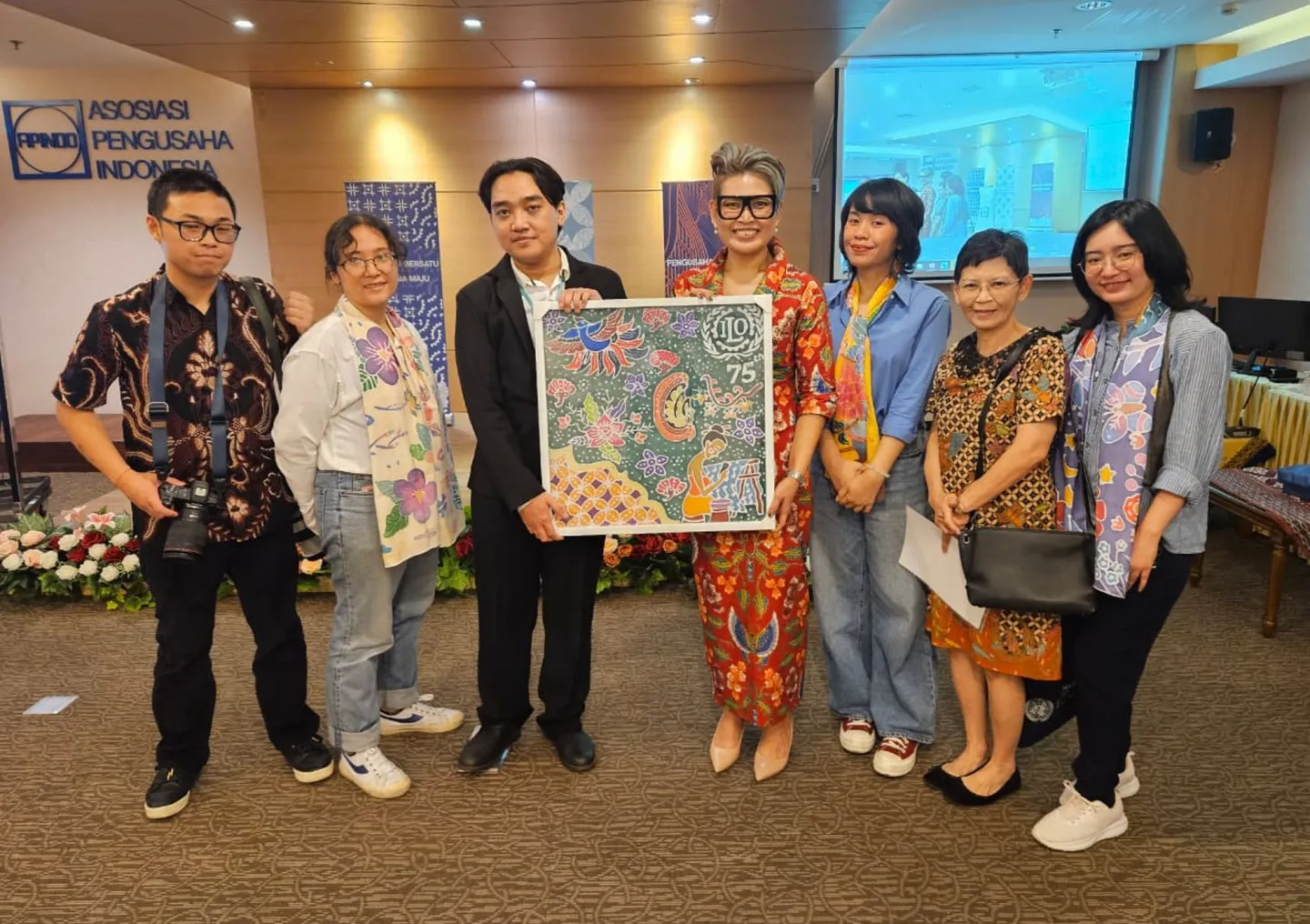
Showcasing its Batik Guta Tamarin, YPAS took part in a four-month competition process from April to August, which included entry submissions, presentations and multiple rounds of selection judged by representatives from the Ministry of Creative Economy, Apindo and the ILO. YPAS’s batik design earned 9th place among the top ten finalists.
Rendered in warm colours, the artwork portrays a woman creating batik while holding a smartphone, accompanied by the bird of paradise (cendrawasih). Together, these elements reflect the role of women in the workforce, the advancement of business digitalization, and the significance of green, sustainable jobs.
“This initiative empowers individuals with learning disabilities by giving them the opportunity to participate in a creative and culturally significant craft. Through the use of Batik Guta Tamarin, the batik process becomes simpler, cheaper, safer and more environmentally friendly,” added Arini. “By engaging in this sustainable batik-making technique, they gain valuable skills, confidence and a sense of inclusion, while also contributing to the preservation of Indonesia’s cultural heritage.”
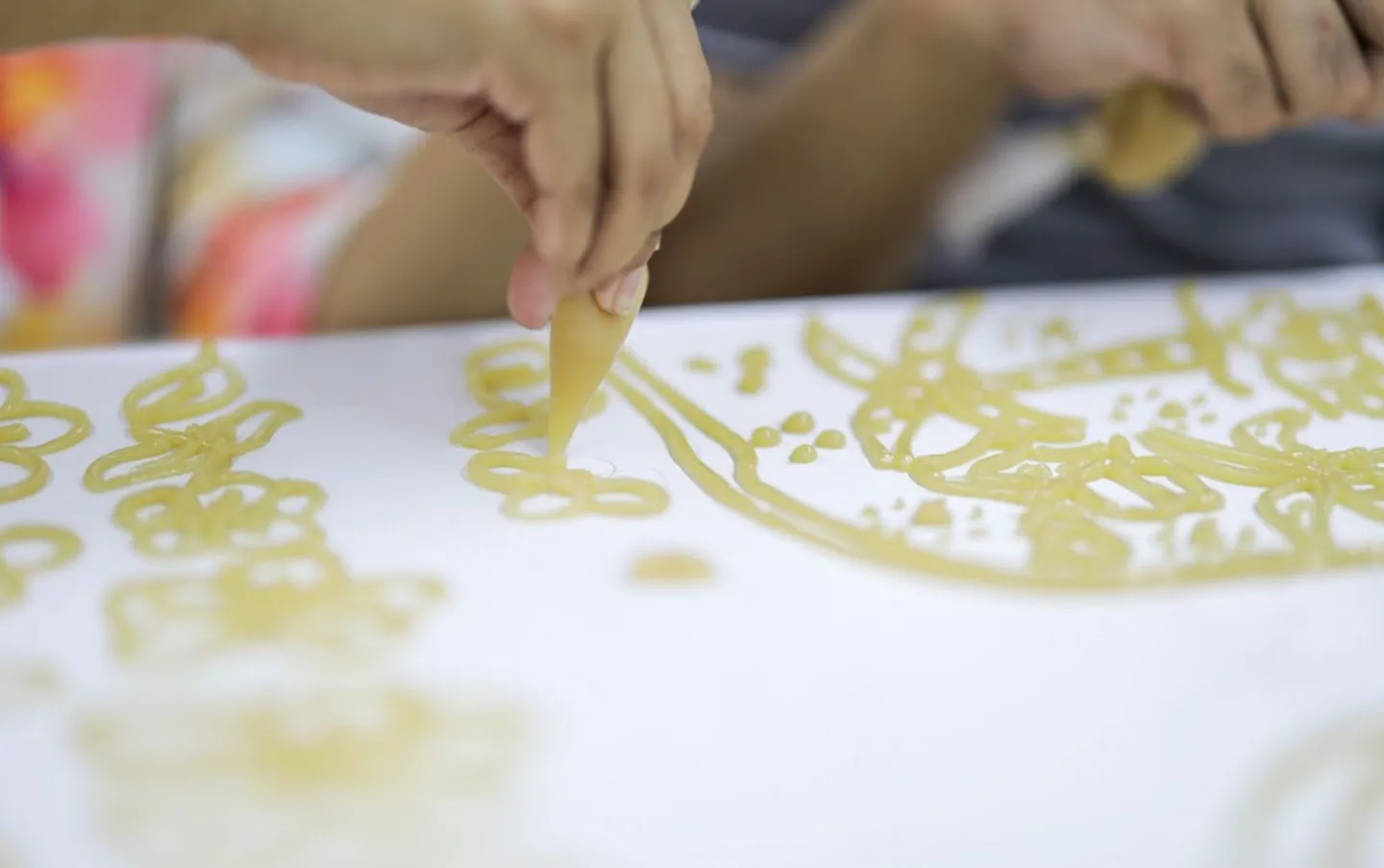
Audrey, a graduate of Visual Communication Design (VCD) from Pelita Harapan University, has always been passionate about design and illustration. Through her involvement with YPAS, she is grateful to have found a way to pursue her love for art and creativity.
“I have been trying to find employment, but it is not easy for someone with ADD, as I struggle with social interaction and communication,” she shared. Audrey explained that while her academic background and creative skills are strong, the challenges of maintaining focus, adapting to fast-paced environments, and navigating workplace communication often make the job search more difficult.
Before joining the batik competition, Audrey had already gained valuable experience as one of the illustrators for an ILO publication on Financial Planning for Family in 2023. That project introduced her to the discipline of working with schedules, deadlines, structured processes and specific instructions.
“I vividly remember how overwhelmed I was. I struggled with structures and detailed requirements. Yet, my mentor really helped me and I was glad that I managed to finish the job,” she recalled.
I have been trying to find employment, but it is not easy for someone with ADD, as I struggle with social interaction and communication.
Audrey Demitry Elaine, an illustrator and designer
This early experience strengthened her consistency and prepared her for future challenges. When the opportunity came to join the competition team, she was delighted to work alongside her colleagues, including M. Farhandy, a VCD graduate from Tarumanegara University. For Farhandy, the competition allowed him to channel his love for drawing while also learning to adapt to structured work environments and embrace responsibility.
Audrey’s commitment has since grown through the batik programme. Today, as one of main designers, she produces up to five batik designs every two days. These designs are transformed into scarves, pillowcases, handkerchiefs and other products, blending creativity with craftsmanship.
Looking ahead, Arini expressed hope that batik skills can empower people with learning disabilities, not only as a means of self-expression but also as a pathway to independence and entrepreneurship. For Audrey, her aspiration is simple yet profound: she hopes to remain consistent in pursuing her work and passion.
Related content
Indonesia and the ILO: 75 Years of Collaboration
Our impact, their voices
Their lives transformed through ILO programmes in Indonesia