

employment services
Building stronger employment services to empower Rwanda’s Youth
Kigali Rwanda (ILO News) - The International Labour Organization (ILO), in close collaboration with the Ministry of Public Service and Labour (MIFOTRA), has taken an important step in strengthening Rwanda’s employment services to better respond to the aspirations of its young people. In an economy that is evolving rapidly, where digital transformation and new labour market dynamics are reshaping opportunities, there is an urgent need to equip employment advisors with the tools, confidence, and knowledge to guide youth toward sustainable livelihoods and decent work.
12 August 2025
To address this, the ILO supported a seven-week intensive training programme that brought together thirty employment advisors from Kigali, Huye, and Musanze. Over the course of the training, the advisors deepened their skills in providing career guidance, supporting young job seekers in identifying opportunities, and building stronger relationships with employers. The sessions went beyond theory, focusing instead on practical exercises, peer-to-peer exchanges, and simulations that mirrored real-world situations. This approach ensured that advisors could immediately translate new learning into actionable steps within their daily work.
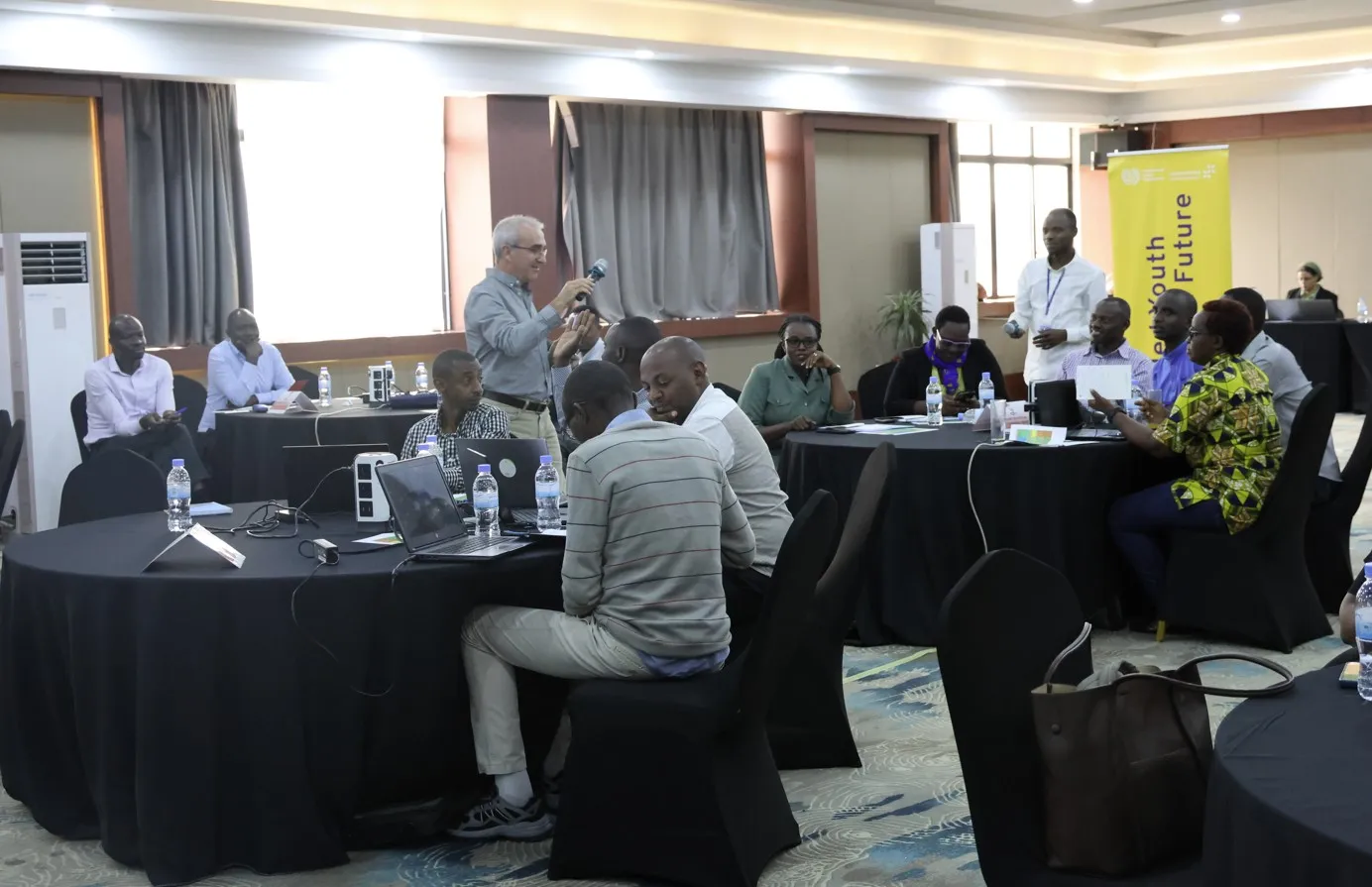
One of the most important outcomes of the programme was the enhanced capacity of advisors to conduct diagnostic interviews that help young people articulate their skills, strengths, and career goals. Advisors also practiced guiding youth through the process of writing effective CVs, preparing for interviews, and navigating the job search with confidence. At the same time, the training emphasized the use of digital tools and labour market information systems to link young job seekers with employers. By integrating these methods, advisors are now better equipped to respond to the realities of Rwanda’s fast-changing labour market and to support youth in accessing emerging opportunities, particularly in high-growth areas such as the digital economy.
Another significant achievement was the way the programme strengthened the role of Employment Service Centres. The training underscored the importance of positioning these centres not only as places where job seekers come for support but also as hubs of collaboration between municipalities, private sector actors, and public institutions. Advisors discussed concrete strategies to gather and share local labour market intelligence, making services more responsive to employer needs while simultaneously opening pathways for young people to secure decent jobs. In doing so, the initiative is helping to foster a stronger, more coordinated employment ecosystem that benefits both workers and businesses.

The training was not just about individual skills but about building a shared vision for the future of employment services in Rwanda. By the end of the programme, each advisor had developed a set of clear, actionable steps to implement within their respective institutions. These commitments ranged from improving service delivery and outreach, to organizing thematic workshops that strengthen employability, to creating stronger linkages with private sector partners. Collectively, these steps represent a shift toward employment services that are more accessible, more impactful, and better aligned with Rwanda’s development goals.
The impact of this initiative extends beyond the thirty advisors who took part. By enhancing the capacity of frontline employment advisors, the ILO and MIFOTRA are investing in systems that will reach thousands of young people across Rwanda in the months and years ahead. Each young person who walks into an employment centre now has a better chance of receiving high-quality, tailored support that can help them move from skills training into meaningful employment.
Looking ahead, the skills and strategies acquired by the advisors will directly contribute to the effective implementation of Rwanda’s National Employment Policy and will reinforce the country’s broader efforts to prepare its workforce for the future of work. They will also strengthen Rwanda’s digital transformation agenda, ensuring that young people are not left behind but are instead positioned to thrive in the new economy.
This initiative demonstrates the ILO’s commitment to delivering results that matter stronger employment systems, improved service delivery, and better opportunities for young people. By combining international expertise with national ownership, the partnership between MIFOTRA and the ILO offers a model of how targeted capacity building can drive systemic change supporting not just today’s job seekers, but shaping a labour market that will serve Rwanda’s youth for generations to come
Related content

Digital Economy
Boosting Decent Jobs and Enhancing Skills for the Youth in Rwanda’s Digital Economy