

Building a Safety Net for Uganda's Returning Migrant Workers
Validating Uganda’s draft National Return and Reintegration Framework to strengthen coordinated support for returning migrant workers and improve access to reintegration services, skills development, and livelihoods.
1 June 2026
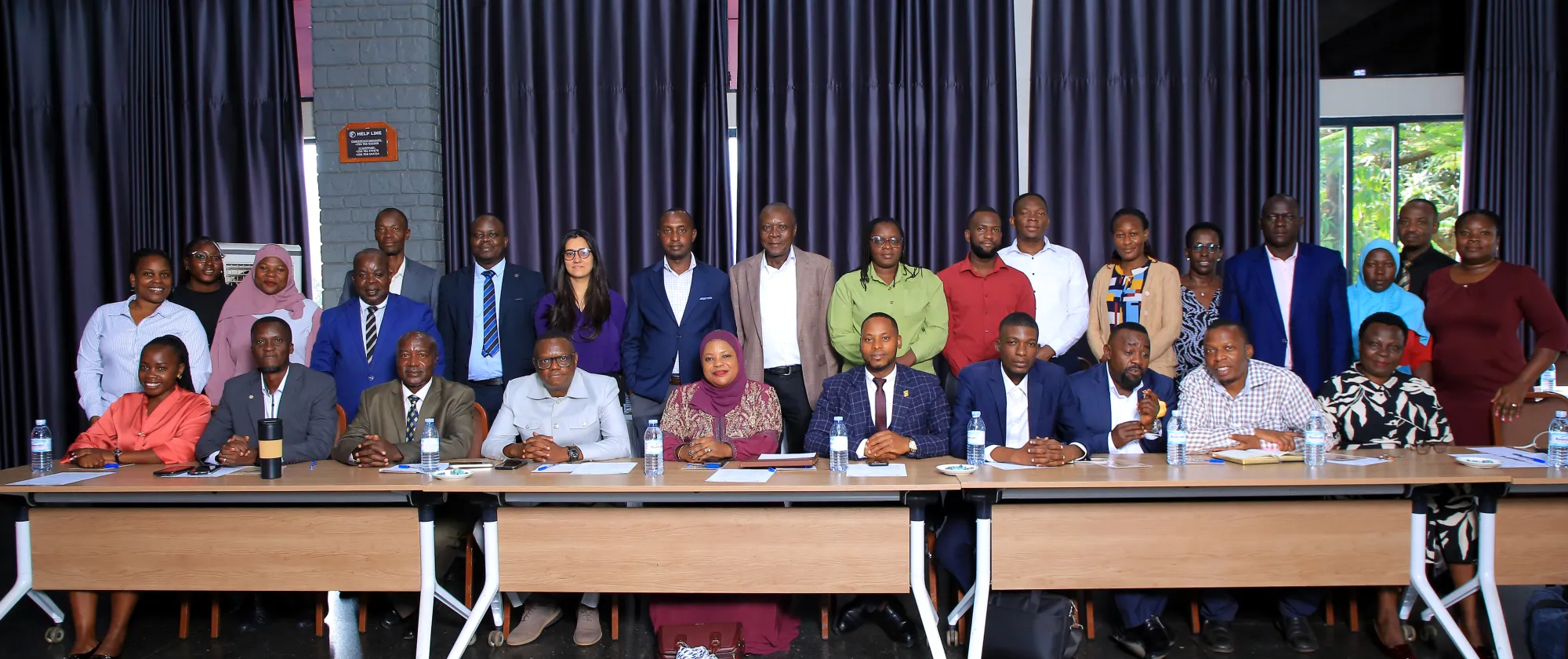
On 28 May 2026, the Ministry of Gender, Labour and Social Development (MGLSD) of Uganda, in partnership with the International Labour Organization (ILO) under the UK FCDO-funded Better Regional Migration Management (BRMM) Programme, validated the draft National Return and Reintegration Framework during a national workshop held in Kampala. The validation workshop brought together 39 participants (14 women) representing a broad range of stakeholders. These included government ministries and agencies, such as the Office of the Prime Minister and Ministry of Foreign Affairs, as well as social partners, private employment agencies, civil society organizations, returnee associations, and international organizations, including the International Organization for Migration (IOM).
Uganda is both a country of origin and destination for migrant workers. According to the Ministry’s latest data, an estimated 339,159 Ugandan workers migrated for overseas employment between 2016 and 2025, with the majority taking up employment opportunities in the Arab States. While labour migration offers significant income and employment opportunities, increasing numbers of Ugandans are returning from abroad due to economic challenges, irregular migration situations, and emergency returns. Returned migrant workers frequently face compounded health, psychosocial, social, and economic challenges, particularly women returned migrant workers who face heightened vulnerabilities.
Despite ongoing government efforts, reintegration support for returning migrant workers has often been fragmented, short-term, and insufficiently coordinated across institutions. To address these challenges, Uganda is developing a National Return and Reintegration Framework that will establish a coordinated, gender-responsive, and rights-based approach to reintegration, aligned with national development priorities and international labour standards.
Reintegration and rehabilitation are crucial subjects that may affect everyone at some point in the future. This framework should serve the interests of Ugandans and their families, with the broader goal of making Uganda a better country to live in
Mr. Milton Turyasiima, Assistant Commissioner for Employment Services, Ministry of Gender, Labour and Social Development
The one-day validation workshop followed a structured participatory methodology. The National Consultant presented the draft framework, outlining strategic priorities, reintegration service delivery models, employment and livelihood pathways, financial inclusion mechanisms, and gender-responsive approaches for youth and persons with disabilities. Plenary discussions enabled stakeholders to examine proposed institutional coordination mechanisms and implementation modalities. Participants further engaged in group work to refine the implementation plan and monitoring and evaluation framework.
During the discussions, participants emphasized that the National Return and Reintegration Framework should support all migrant workers regardless of status, with strong coordination among government institutions and stakeholders. They called for timely reintegration information through enhanced collaboration with consular officials and migrant associations abroad, expansion of services beyond Greater Kampala for nationwide access, and incorporation of reskilling, upskilling, and Recognition of Prior Learning (RPL) to strengthen returnees' employment prospects.
The workshop officially validated the draft National Return and Reintegration Framework, together with its implementation plan and monitoring and evaluation framework. The draft will now be revised to incorporate stakeholders’ recommendations before being submitted for government endorsement. Once adopted, the framework is expected to strengthen Uganda's reintegration system by promoting a coherent and sustainable approach that enables returning migrant workers to access decent employment opportunities, skills development, entrepreneurship support, and financial services. Capacity-building initiatives and pilot implementation activities follow to support its effective rollout.
Relevant projects

East and Horn of Africa
Better Regional Migration Management