

Our impact, their voices
Bringing knowledge to the fields: How mobile training is transforming vanilla farming in Timor-Leste
Farmers in remote communities are gaining skills, confidence, and new opportunities through mobile training delivered directly to their villages.
27 April 2026
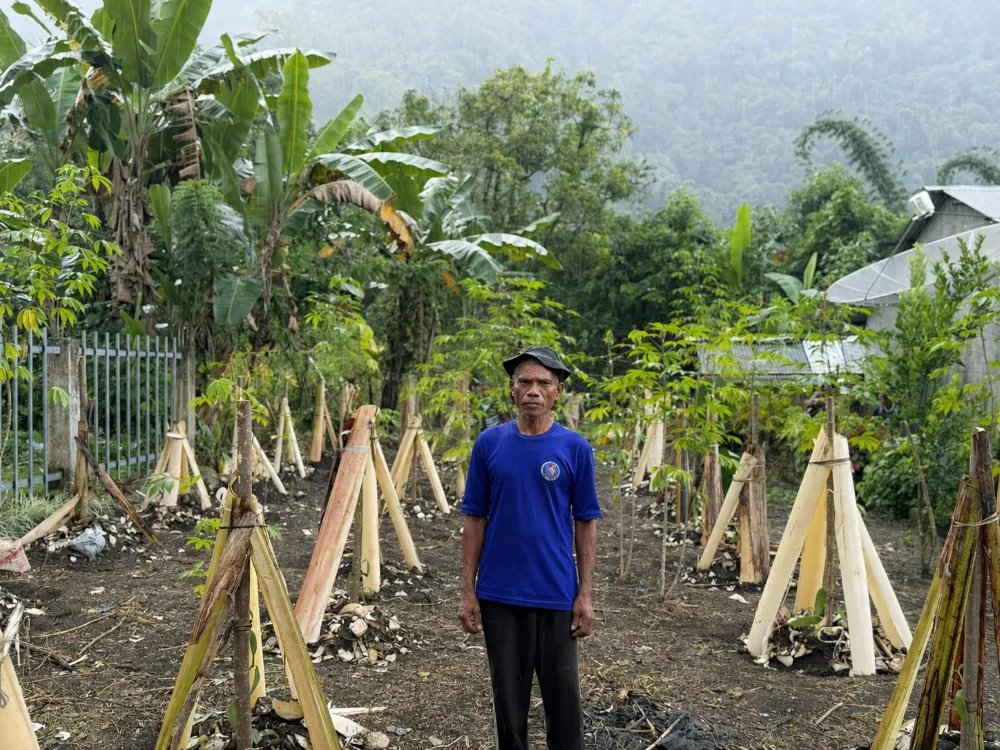
DILI, Timor-Leste (ILO News) - For years, 45-year-old vanilla farmer Aderito Cortereal cultivated vanilla in Rotuto village with little success. Although he had years of experience, he struggled with poor yields, failed pollination, and low-quality crops.
“I've been cultivating and selling vanilla for years, but with little success. Most plants failed during pollination, yields were minimal, and the quality was poor. What I know is that I lacked the skills and knowledge.”
Like many farmers in rural Timor-Leste, Aderito worked hard but had limited access to agricultural training. The knowledge he needed existed, but training centres and government offices were often too far away and too costly to reach.

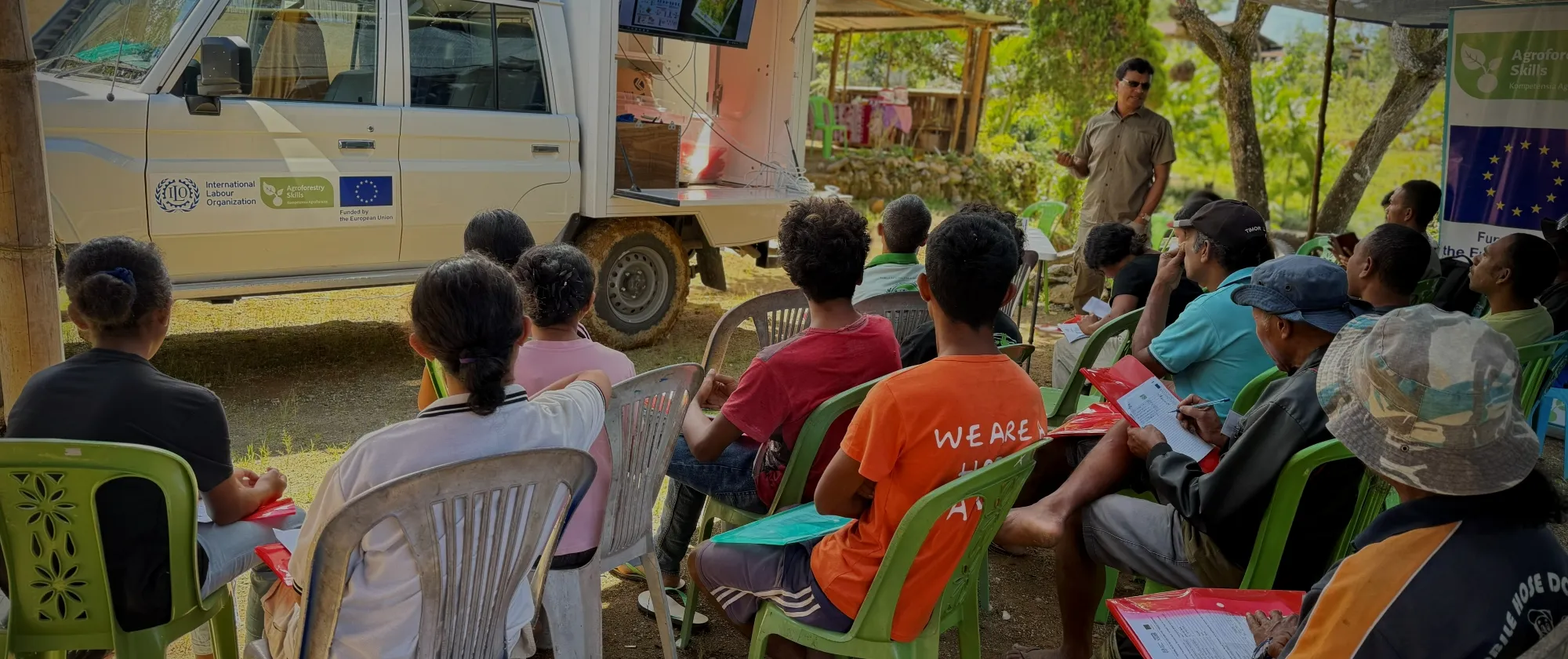
That changed when the Agroforestry Skills Programme’s Mobile Training Unit arrived in Rotuto on 16 and 17 April 2026.
Implemented by the ILO and funded by the European Union, in partnership with Timor-Leste’s Ministry of Agriculture, Livestock, Fisheries, and Forestry, the mobile unit brings practical training directly to rural communities. Equipped with visual learning materials, a television screen, and national trainers, the unit allows farmers to learn in their own villages without leaving their farms behind.
For Aderito and 25 fellow farmers, the training focused on hand pollination techniques, plant health identification, and Good Agricultural Practices. Beyond technical knowledge, the experience gave him renewed confidence and motivation to help others in his community.
I feel proud, more equipped, and motivated to better care for my farm. I'm happy to offer part of my land as a vanilla demonstration plot, a resource that benefits both the community and me. In the end, we all win.
Aderito Cortereal, vanilla farmers
His decision to offer his farm as a demonstration site reflects a broader transformation taking place across rural communities, where farmers are beginning to share knowledge and support one another.
A similar story unfolded in Horalua village, where 78-year-old farmer Isac Mendes has spent most of his life growing maize and beans. In 2023, after hearing about the growing market for vanilla, he planted 100 vanilla trees. But without proper guidance, he struggled to improve quality and productivity.
“I sold what I had but didn’t know the standard price. I just accepted whatever I was offered. The quality was low, the plants flowered inconsistently, and I didn’t know how to improve.”
On 14 and 15 April 2026, Isac joined 35 other farmers as the Mobile Training Unit arrived in his village. Sitting alongside younger farmers, he carefully followed the lessons and practical demonstrations.
“This is something new that I have been looking for over many years. This training has already inspired me to change the way I farm vanilla. I have big plans for my vanilla farm, including passing down what I have learned to my community and my children.”
For many farmers in Manufahi municipality, limited access to knowledge has long been one of the biggest barriers to improving production. According to Augusta Belo, Head of the Forestry and Plants Department at the Ministry of Agriculture in Manufahi, farmers previously had to travel long distances to receive technical guidance.
Manufahi has great potential for vanilla farming. The enthusiasm and the market are there, but most farmers lack the skills needed to produce quality yields. Before, farmers had to travel long distances to reach our office for training. Now they don’t have to anymore.
Augusta Belo, Head of the Forestry and Plants Department at the Ministry of Agriculture in Manufahi
She also highlighted the importance of collaboration between the government and development partners in reaching remote communities.
“Bringing training directly to communities is both commendable and necessary. The efforts of development partners like the ILO and the European Union are a real help, both for us and for the communities.”
For Julino das Neves, a national trainer at the Ministry of Agriculture, the Mobile Training Unit is also changing how farmers engage with learning.
“The mobile training is a convenient and impactful model that helps us reach the people who need it most. The tools inside the vehicle make learning engaging and accessible, and that is what matters most in any training.”
By bringing knowledge directly to farmers’ fields, the Mobile Training Unit is helping rural communities strengthen livelihoods, improve vanilla production, and build confidence for the future.
Related content
EU Programme
Agroforestry skills for employment and resilience in Timor-Leste
Relevant projects
EU Programme
Agroforestry skills for employment and resilience in Timor-Leste