

Apprenticeship
Breaking barriers, floor by floor: Nabeha Marzan's journey into engineering
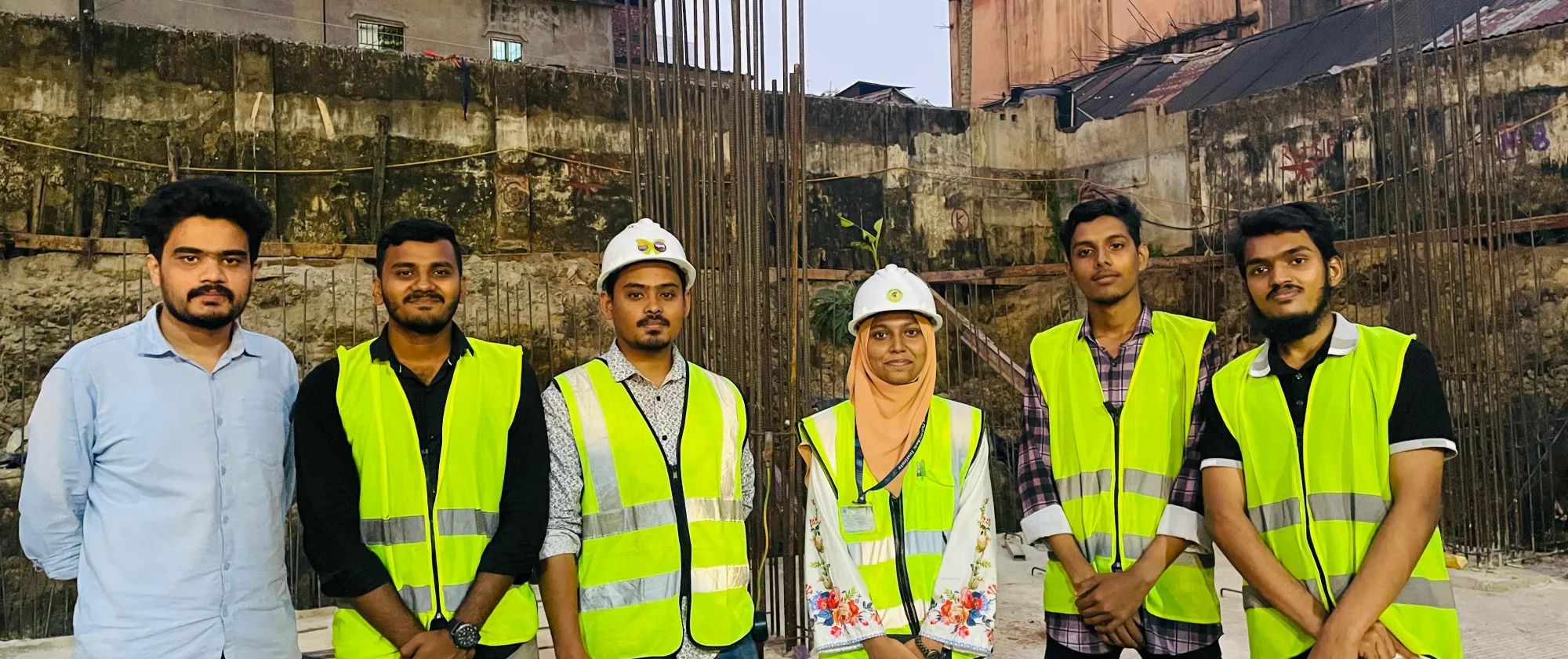
Nabeha Marzan is one of 47 apprentices who gained industry-ready skills through ILO's re-modelled industry-institute Attachment Programme with the Ministry of Education of Bangladesh, landing a full-time role with her industry partner.
14 July 2026
DHAKA (ILO News) – I am Nabeha Marzan, 21 years old, and I recently graduated in Civil Engineering from Chattogram Polytechnic Institute. Like many young graduates, I often heard the same frustrating advice: you need experience to get a job, but you need a job to get experience. Today, I can say I found a way through that cycle.
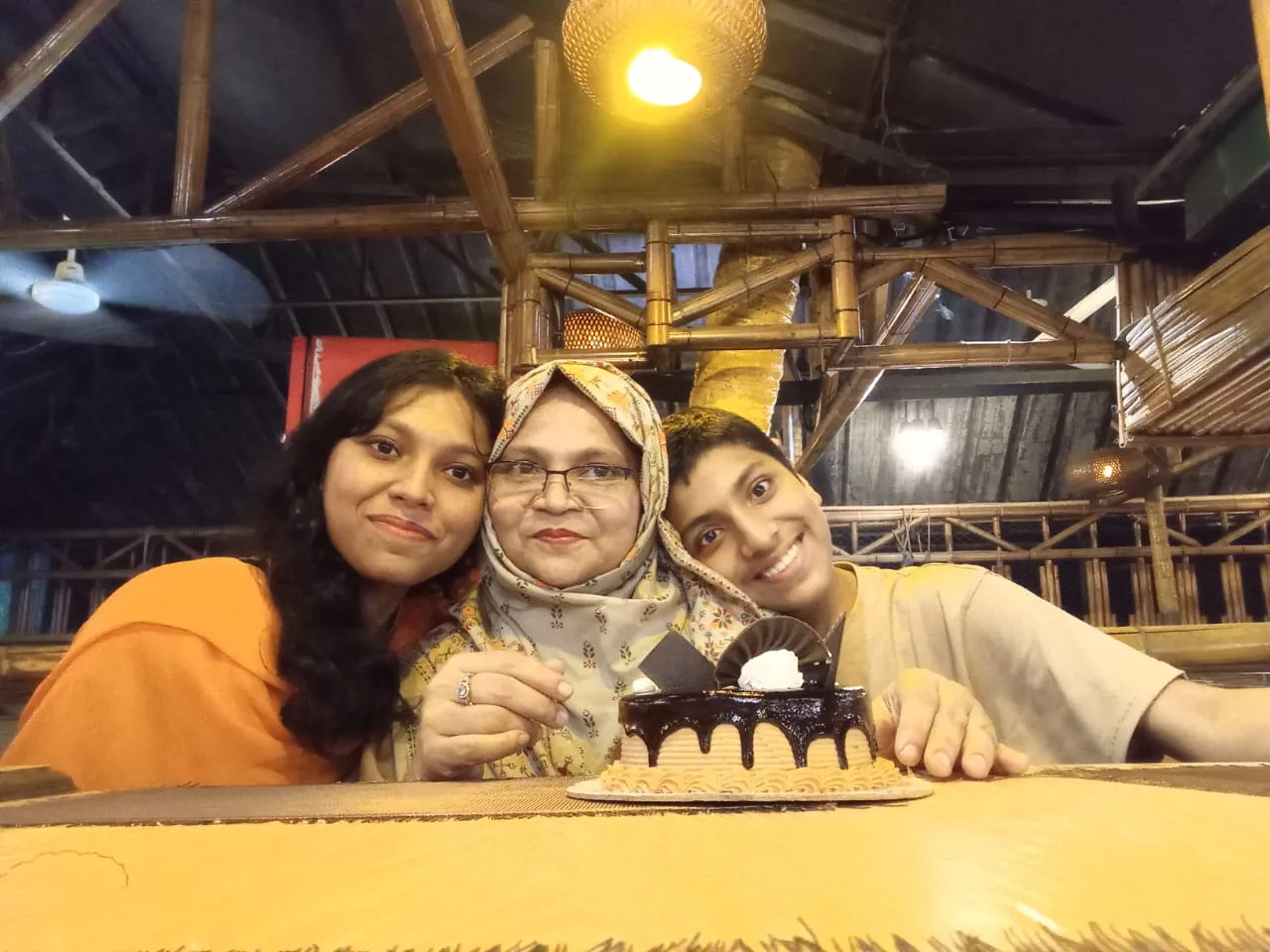
My path here was not easy. I lost my father when I was in grade six, and my mother struggled to raise me and my younger brother on her own. After I completed my secondary education, my family decided I should join a TVET programme so I could complete my education quickly and move into employment.
I chose a Diploma in Civil Engineering programme - not an easy path for a woman in Bangladesh. In our batch of 200 students, only 30 were female, and even most of that 15 per cent could not finish the programme or enter the job market. Still, I stayed committed to my ambition.
From the very beginning, I worked hard for my results and earned a scholarship every semester, which covered my tuition and educational expenses.
Being proactive paid off again when I learned about the re-modelled Industrial Attachment Programme, supported by the ILO under the ProGRESS project and funded by the Government of Canada. I registered, interviewed and was selected; it turned out to be a life-changing experience.
Alongside my technical coursework, I received training in digital literacy and soft skills: communication, teamwork, workplace ethics, professionalism, and problem-solving during the attachment phase. These weren't skills I was learning in my regular classes, but they turned out to be just as important as anything from my textbooks.
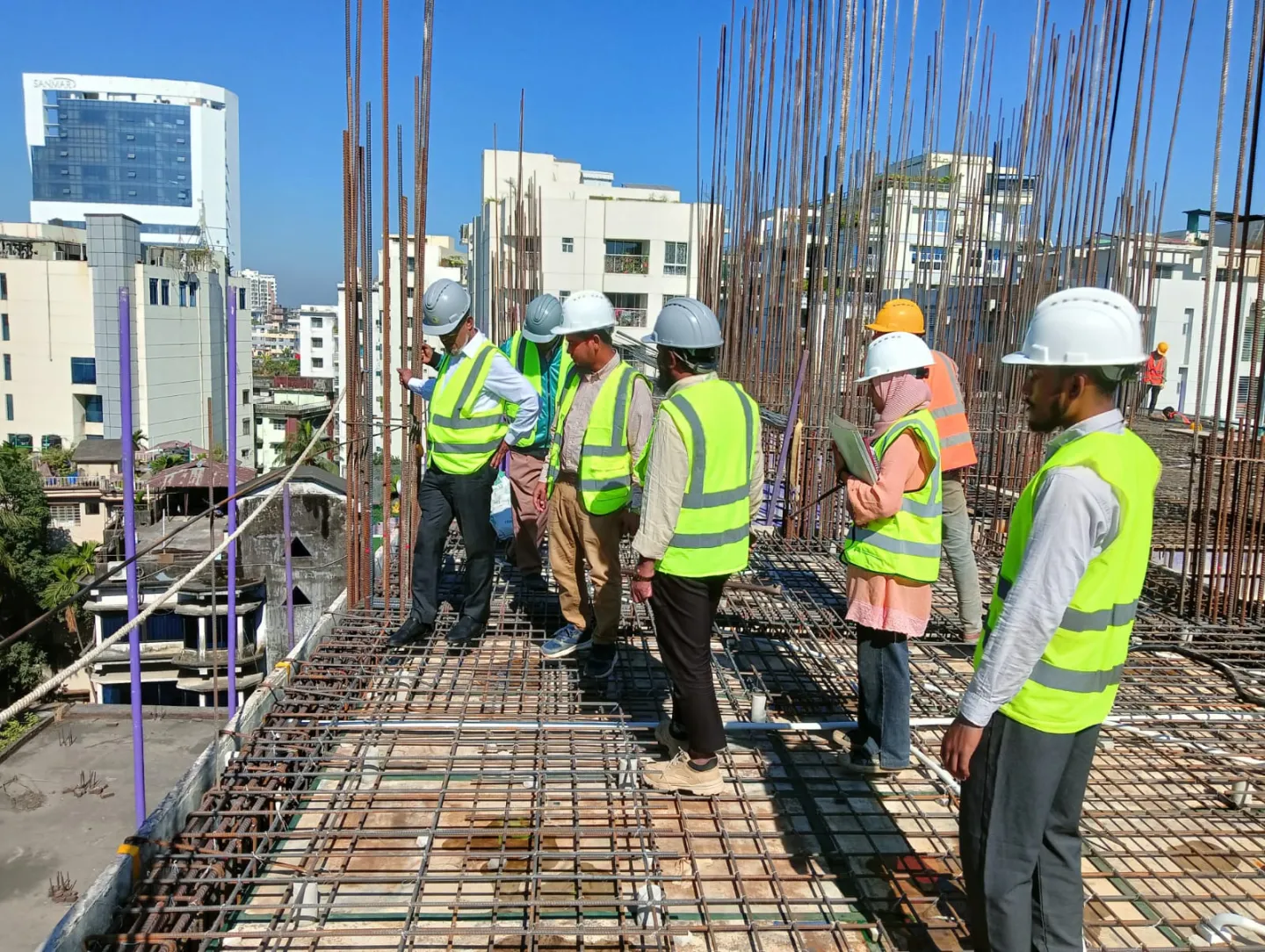
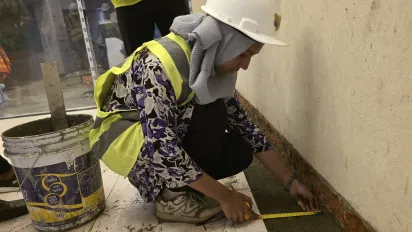
The turning point came with my placement at CPDL, a construction company in Chattogram. For the first time, I was applying what I had studied in a live, real-world environment. I worked on project management tasks, collaborated with teams, construction workers, and learned how quality and safety standards actually work on a construction site - not just in theory, but in practice.
Sometimes my work took me up to the 9th or 10th floor of the project site. I was never scared of the height but I knew that, in our society, this still isn't seen as "a woman's job." I broke that perception. Today, my relatives, neighbours, and others are proud of me. I firmly believe any job belongs to anyone, not to men or women specifically.
That experience changed everything. I gained confidence, took on responsibility, and became employment-ready in a way that classroom learning alone could not have prepared me for. When I completed the attachment, CPDL offered me a full-time job as Assistant Officer. I moved directly from education into formal employment; no gap, no uncertainty about where to start.
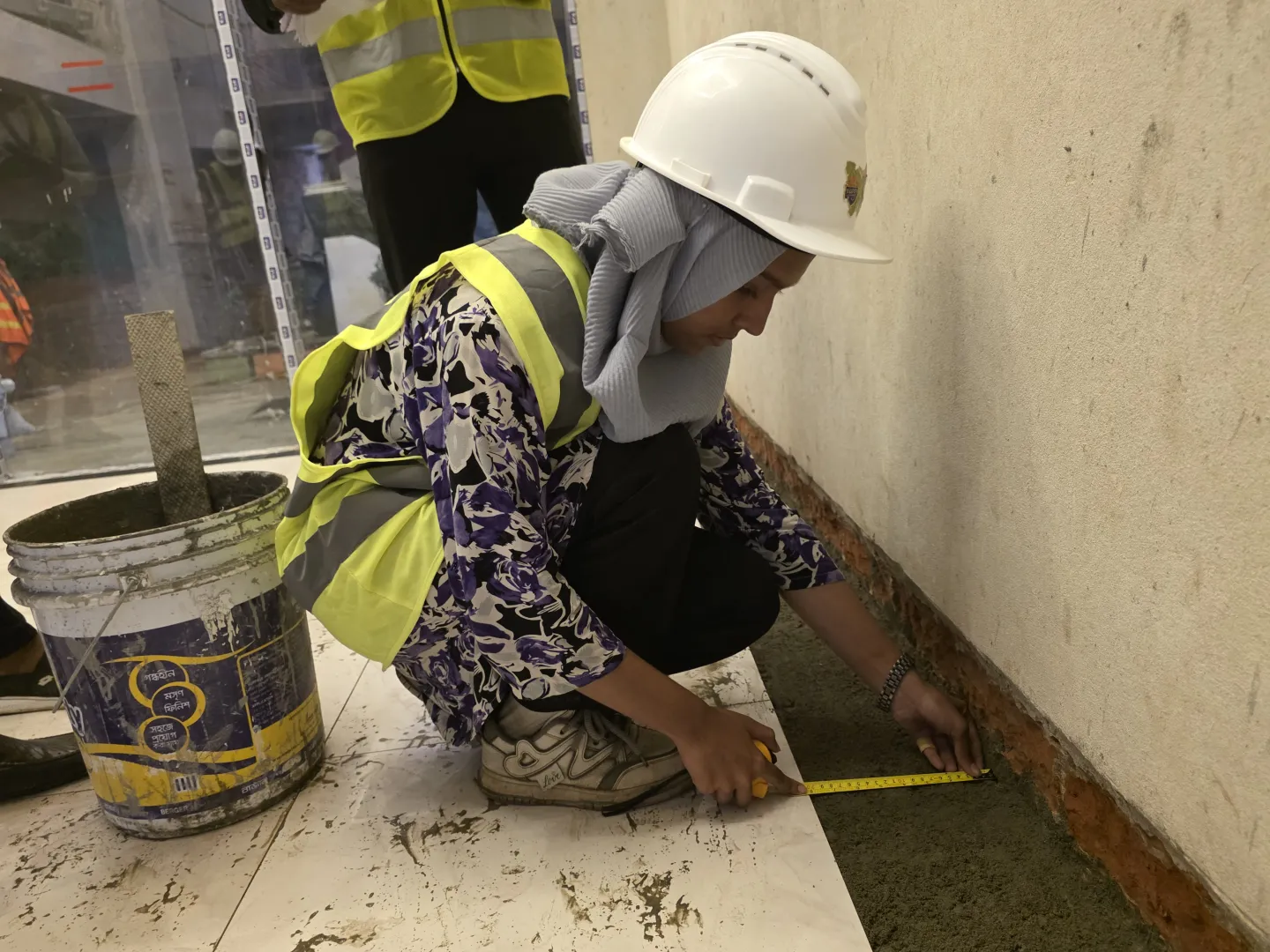
Today, I earn a good income, which I use to support my family and to fund my own higher education. I am hopeful I will complete my probation period successfully. The construction sector is changing quickly, with rapid digitalization, growing automation, and increasing focus on sustainability and green practices. I know that to keep growing in this field, training has to keep pace with these shifts.
I believe stronger collaboration between TVET institutes and industry is essential, so training stays aligned with what the labour market actually needs and so more young people get the kind of hands-on opportunity I had. Employers, too, have a role to play in mentoring young workers and investing in their continuous development.
My journey shows that structured industrial attachment programmes can genuinely bridge the gap between classroom education and real-world employment. For young people like me, especially young women stepping into fields we're told aren't "ours", that bridge can make all the difference, turning a cycle that once felt impossible to break into a clear path toward decent work.
Fast facts: Re-modelled Industrial Attachment programme
- Implemented under the ILO's ProGRESS project, led by the Technical and Madrasah Education Division (TMED) in collaboration with the Directorate of Technical Education (DTE) and the Bangladesh Technical Education Board (BTEB), with funding support from Global Affairs Canada (GAC).
- The pilot involved 47 diploma students from Chattogram Polytechnic Institute and Bangladesh Sweden Polytechnic Institute, placed with six leading industries based in Chattogram: BSRM, GPH Ispat, Confidence Cement, Maf Shoes, Rancon FC and CPDL.
- Structure: one month of preparatory training in digital literacy and soft skills, followed by three months of industry-based training under the supervision of industry mentors.
- As of mid-January 2026, 45 of the 47 students completed the pilot, with a significant number progressing to job interviews and receiving employment offers from their host companies.
- Industry partners reported that pre-screening and the work readiness programme reduced recruitment costs and improved training outcomes.
- Following the pilot's success, TMED, DTE and BTEB have initiated to integrate the model into national TVET reforms to strengthen education-to-employment pathways across Bangladesh.
Related content

Project: Employability of women workers
Promoting Gender Responsive Enterprise Development and TVET Systems (ProGRESS)
Skills development
Industry-paid attachment programme supports job-ready skills for diploma graduates
Relevant projects
Project: Employability of women workers
Promoting Gender Responsive Enterprise Development and TVET Systems (ProGRESS)