

Aligning Data, Skills, Protection and Recruitment Governance under a Coordinated National Framework in Ethiopia
This article highlights the outcomes of the National Project Co-Creation and Co-Design Workshop held in Bishoftu in January 2026 under the EU–ILO Action. It outlines how federal and regional institutions, social partners and technical stakeholders jointly validated priority actions across four pillars: labour migration data systems, skills development and recognition, migrant protection, and recruitment governance. It emphasises the transition from project design to implementation readiness, with agreed institutional roles, a refined workplan, a validated MEL framework, and proposed governance arrangements to ensure coordinated, evidence-based and nationally owned labour migration reform.
16 January 2026
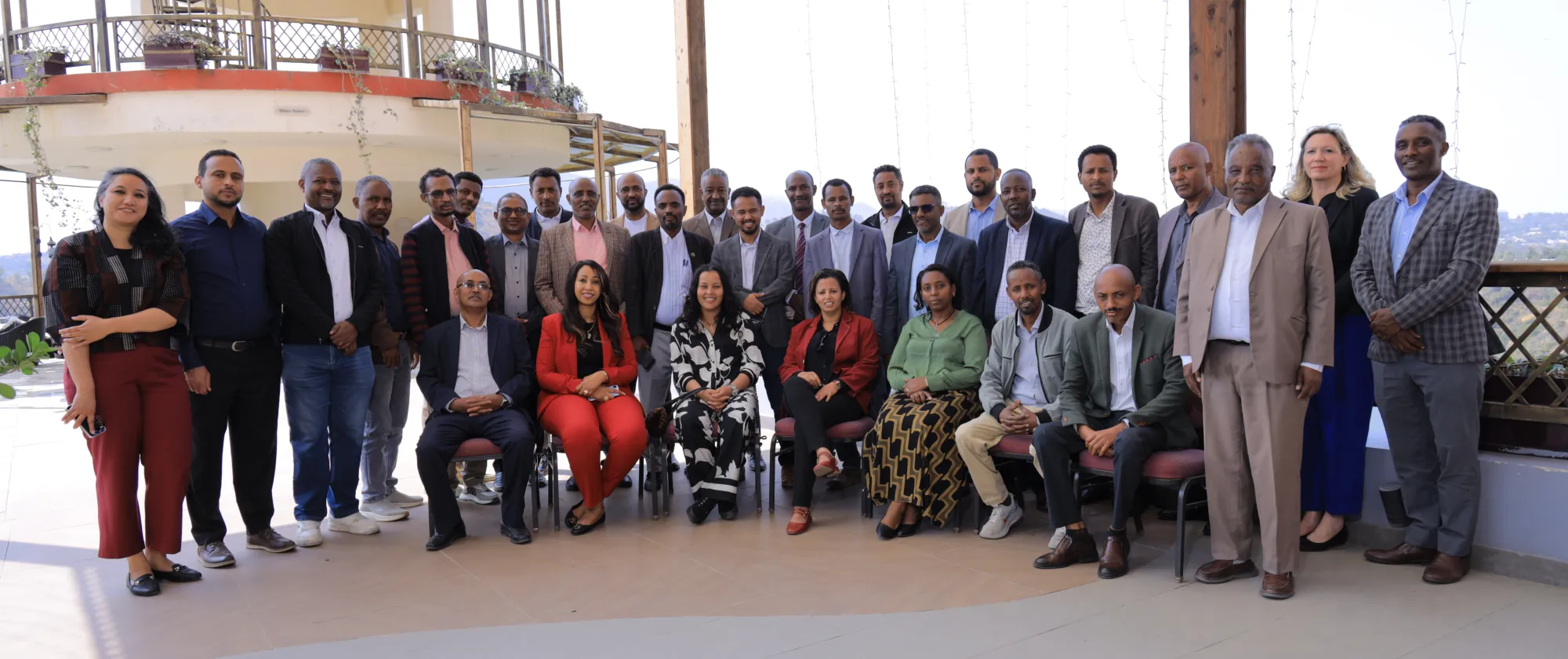
From 27–29 January 2026, 35 representatives from federal ministries, regional Bureaus of Labour and Skills, social partners, private recruitment agencies, civil society organisations, development partners, and technical experts convened in Bishoftu, Ethiopia for the National Project Co-Creation and Co-Design Workshop under the European Union (EU)–funded Action “Strengthening Inter-Regional Cooperation for Safe, Regular, and Orderly Labour Migration in Ethiopia.”
Through organised validation and collaborative planning, the workshop represented an essential beginning phase that moved the project from design to operational readiness. As Ms Aida Awel, Chief Technical Advisor, emphasised during the opening session, effective labour migration governance requires a “disciplined, evidence-based and systems-oriented co-creation process” anchored in institutional coordination
Labour migration remains a momentous socio-economic driver in Ethiopia. Women and youth constitute a substantial share of migrants, while irregular migration pathways continue to heighten exposure to exploitation, abuse, and trafficking. Despite legislative reforms, including amendments to the Overseas Employment Proclamation and expansion of bilateral labour migration agreements, governance challenges persist. These include skills mismatches with destination labour markets, fragmented federal–regional coordination, weak enforcement of recruitment standards, gaps in migrant protection systems, and limited integration of labour migration data.
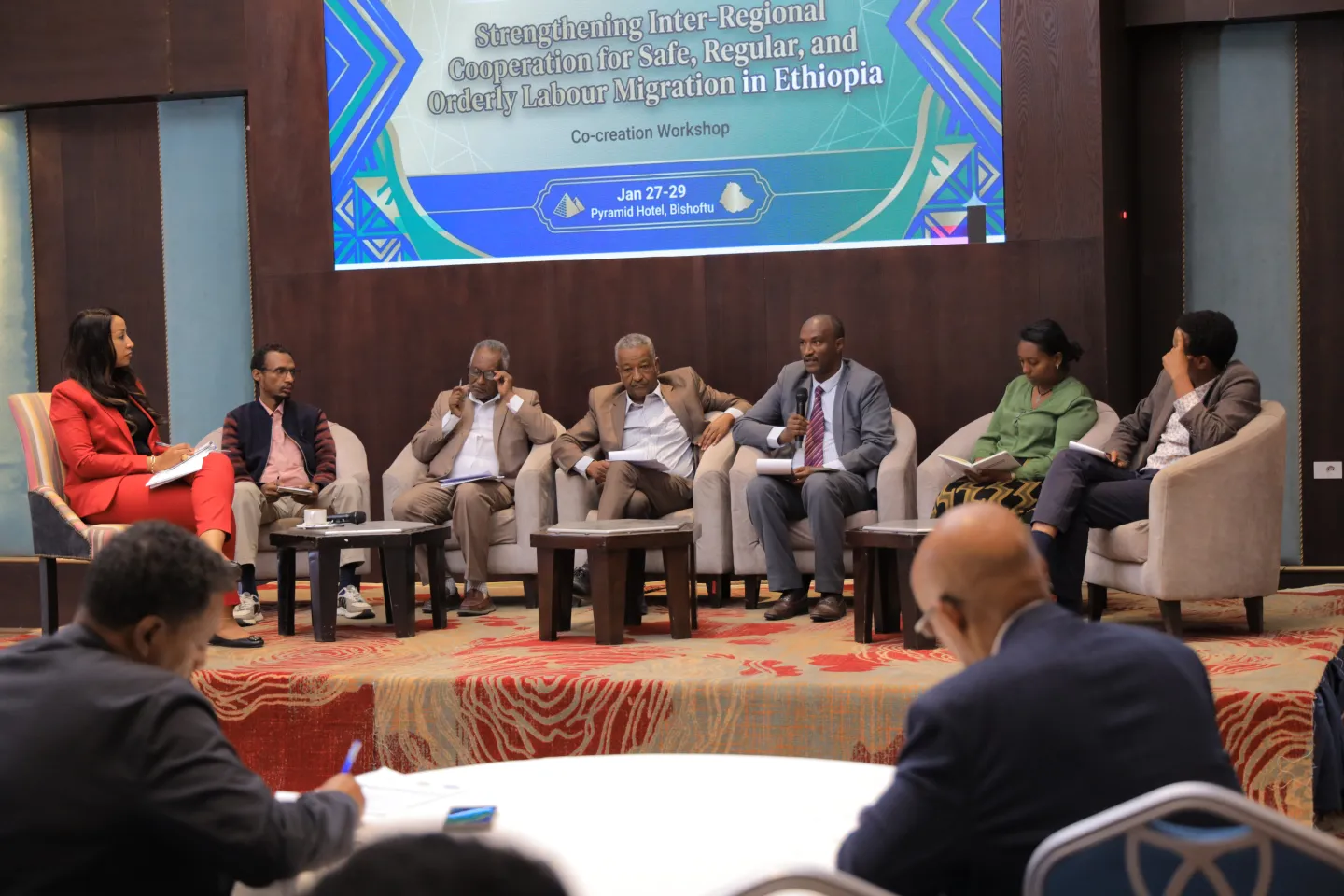
The three-day workshop applied a structured, participatory co-design methodology combining plenary presentations, high-level panel discussions, thematic breakout sessions, and validation exercises. The first day focused on strategic alignment, featuring federal and regional panel discussions examining systemic governance challenges and operational realities. While federal representatives highlighted key challenges as skills alignment gaps, weak recruitment oversight, limited data interoperability, and protection constraints, particularly for women migrant workers , regional bureaus underscored the need for decentralisation of some of the services, including grievance redress and pre-departure training; strengthened enforcement capacity; and enhanced resource allocation.
The second day, translated these reflections into concrete action planning across four thematic pillars of the Action: labour migration data systems; skills development, assessment and recognition; migrant protection and pre- and post-departure services; and recruitment governance and fair recruitment. Mixed working groups identified priority interventions, clarified institutional responsibilities, sequenced timelines, and outlined indicative targets.
During the final day, participants consolidated and validated at least five priority action areas per pillar, refined the detailed workplan, reviewed the draft Monitoring, Evaluation and Learning framework, and discussed governance arrangements anchored within existing national coordination structures.
The workshop validated the project’s intervention logic, refined a results-oriented workplan, endorsed key elements of the MEL framework, and agreed on principles for federal–regional coordination and project governance for effective implementation of the programme. Next steps include finalisation of the baseline assessment that would define concrete benchmarks for the action, formal establishment of governance structures, and phased rollout of priority interventions across all four pillars, reinforcing institutional ownership and inter-regional cooperation.
This project is funded by the European Union. Its contents are the sole responsibility of the International Labour Organization and do not necessarily reflect the view of the European Union.
Relevant projects

An ILO-EU Partnership
Strengthening Inter-regional Cooperation for Safe, Regular, and Orderly Labour Migration in Ethiopia