


United Nations Day for South-South Cooperation: 12 September 2024
Ahead of the Summit of the Future: the ILO at highest levels joins forces in celebrating South-South Day 2024
On Global South-South Cooperation Day, the International Labour Organization (ILO) celebrates the solidarity among Global South countries, highlighting shared histories and progress achieved through mutual cooperation. The ILO has consistently supported South-South and triangular cooperation as vital mechanisms for promoting decent work, social justice, and sustainable development. In an interconnected world, the exchange of knowledge, experiences, and resources among developing countries has driven innovation and resilience, especially in social protection, skills development, and labor market policies. Despite challenges, including those intensified by the COVID-19 pandemic, South-South cooperation remains crucial for building resilience and promoting inclusive recovery. The ILO remains committed to supporting these collaborative efforts, recognizing them as essential to achieving the Sustainable Development Goals (SDGs) and fostering a future of work that is inclusive, equitable, and sustainable. Through continued partnership, the ILO is confident that a better future for all workers can be realized.
12 September 2024
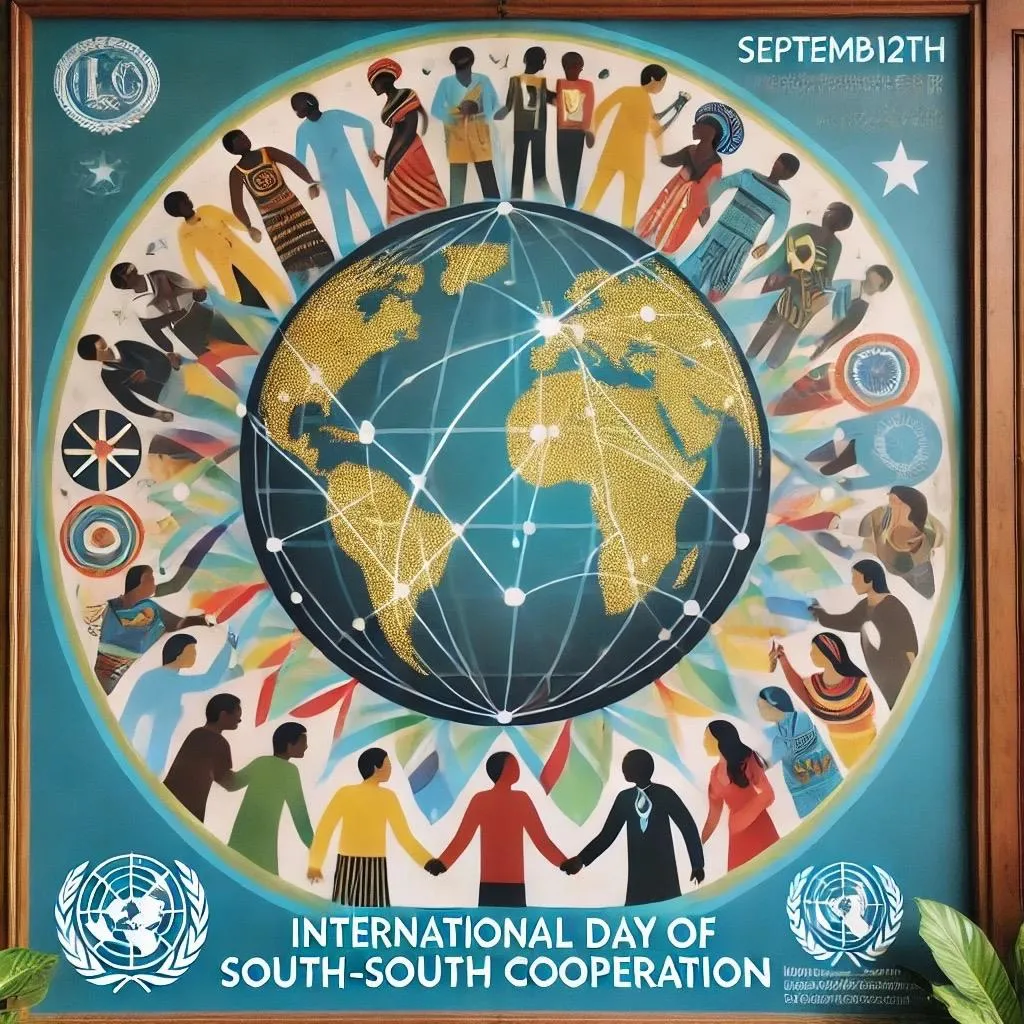
On this Global South-South Cooperation Day, the International Labour Organization (ILO) joins with partners and stakeholders worldwide to celebrate the enduring tradition of solidarity among countries of the Global South. This day highlights the shared histories, experiences, and aspirations that bind these nations together and offers a moment to reflect on the significant progress achieved through South-South cooperation, as well as the challenges that remain.
The ILO has long supported South-South and triangular cooperation as powerful mechanisms to promote decent work, social justice, and sustainable development. In a world that is increasingly interconnected, the exchange of knowledge, experiences, and resources among developing countries has emerged as a crucial driver of progress.
South-South cooperation embodies principles of mutual benefit, respect, and equality, offering a partnership model that is uniquely tailored to the needs and aspirations of the Global South.
South-South and triangular cooperation are central to a contemporary approach to development.
A better tomorrow with Social Justice depends on solidarity between countries, knowledge exchange, innovation, and directing resources to where they are most needed. ILO Director-General Gilbert F. Houngbo
Over recent decades, countries of the Global South have demonstrated extraordinary resilience and innovation in confronting complex challenges, ranging from economic crises to health pandemics, climate change, and deepening social inequalities. In many cases, these nations have pioneered solutions that are now recognized globally. Through South-South cooperation, countries have shared best practices, technology, and expertise, allowing them to learn from one another and build on each other's successes.
The ILO has been privileged to collaborate with its partners in the Global South to support initiatives that promote decent work, enhance social protection, and strengthen labor markets. Through South-South cooperation, it has become clear that collective action is a powerful tool in advancing workers' rights, improving working conditions, and fostering inclusive economic growth.
One of the most compelling examples of South-South cooperation within the ILO's work is the exchange of knowledge and expertise in areas such as social protection, skills development, and labor market policies. Countries in the Global South have taken the lead in developing innovative social protection systems that address the needs of vulnerable populations, including informal workers, women, and youth. These experiences have provided invaluable lessons for other countries facing similar challenges and have enriched the global dialogue on social protection.
In the area of skills development, South-South cooperation has enabled the sharing of successful vocational training and education models tailored to the specific needs of economies in the Global South. By investing in human capital, these countries are not only empowering their own populations but also contributing significantly to the global workforce.
Furthermore, South-South cooperation has played a pivotal role in advancing the rights of workers in the informal economy. In many developing countries, informal workers make up a substantial portion of the labor force and often face precarious working conditions with limited access to social protection. Through the exchange of experiences and best practices, countries have developed innovative policies and programs to extend protections to informal workers, thereby reducing inequalities and promoting social justice.
Yet, while there is much to celebrate, it is also necessary to acknowledge the persistent challenges. The COVID-19 pandemic has deepened existing inequalities and created new obstacles to development. The Global South has borne the brunt of the pandemic's economic and social impacts, with millions of workers losing their jobs and livelihoods. In this context, South-South cooperation remains more critical than ever, serving as a vital tool for building resilience, promoting an inclusive recovery, and ensuring that no one is left behind.
The ILO remains steadfast in its commitment to supporting South-South and triangular cooperation as vital pathways to achieving the Sustainable Development Goals (SDGs) and promoting decent work for all. The organization will continue to work alongside its partners in the Global South, building on past successes and addressing future challenges. By strengthening collective efforts, there is a shared belief that a world of work that is inclusive, equitable, and sustainable can be created.
In conclusion, the ILO reaffirms its dedication to South-South cooperation as a potent force for positive change. Through continued collaboration, there is confidence that a future can be built where every worker enjoys their rights, where social protection is a universal reality, and where sustainable development benefits both current and future generations.