

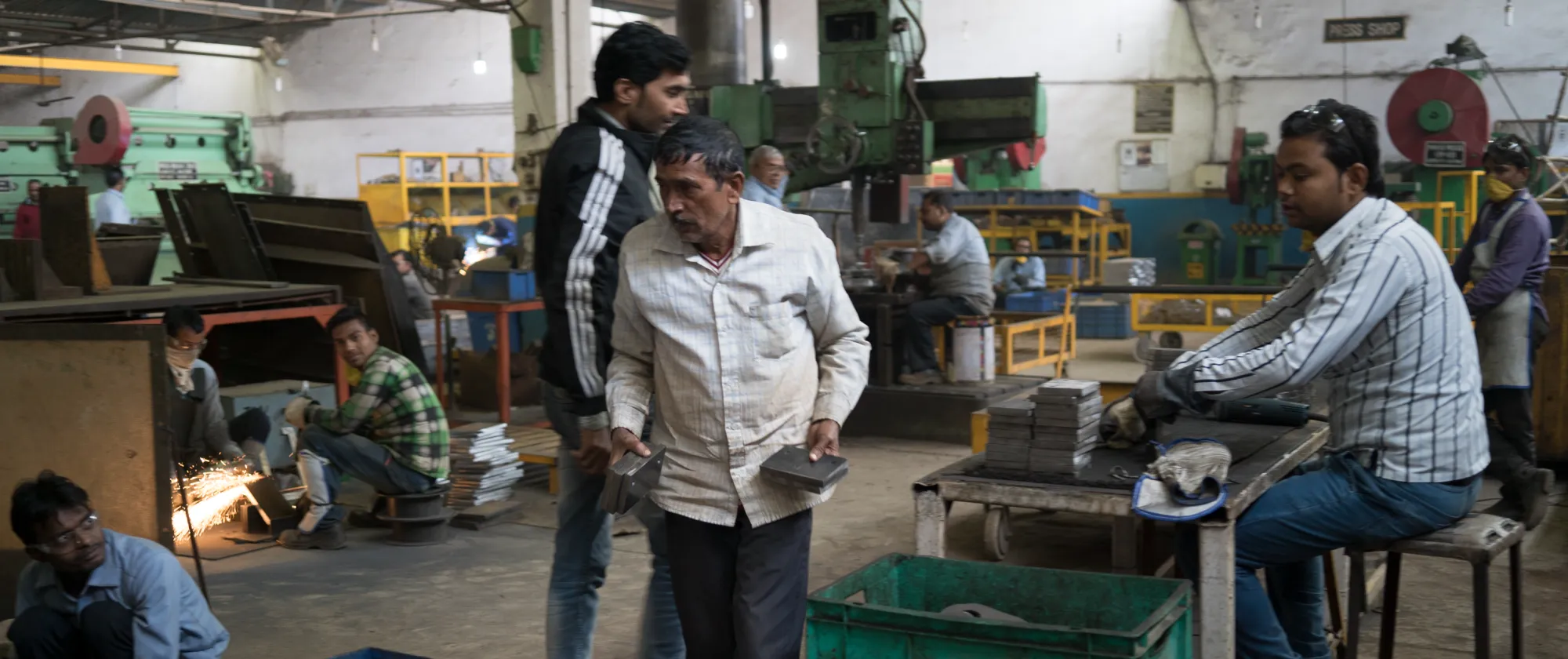
Voices and insights on social protection and migration in the South Asia–Gulf corridor
Ageing migrant populations require new approaches to social protection
The first paper in the ILO STREAM Programme's Voices and Insights series examines how ageing among long-term migrant workers is exposing gaps in social protection across the migration corridor linking South Asia and Gulf Cooperation Council (GCC) countries.
20 August 2026
BEIRUT (ILO News) – As growing numbers of migrant workers spend decades living and working in Gulf countries, migration and social protection systems built on the assumption that workers will return home at retirement are increasingly struggling to meet their needs in later life, according to a new paper published as part of the ILO STREAM Programme's Voices and Insights series.
The paper, Old-age security in the South Asia–Gulf migration corridor: Policy challenges and opportunities, by Dr İdil Akıncı of the University of Edinburgh, argues that many workers who have built their lives in the Gulf face growing uncertainty as they approach retirement. Focusing on lower- and middle-income Indian migrant families in the United Arab Emirates, the paper identifies three interconnected policy challenges:
- Migrant workers often have limited retirement income. Most rely on end-of-service benefits, personal savings and family support rather than comprehensive pension systems.
- After retiring, access affordable healthcare becomes restricted. This is particularly challenging for lower-income groups when they lose employer-provided health coverage.
- Residential security is a major concern. The high cost of housing and visa requirements can make it difficult for retirees to remain in the Gulf, even when their families continue to live there.
The paper argues that these challenges reflect broader structural gaps in social protection across both countries of destination and countries of origin. As increasing numbers of migrant workers and their families establish long-term and multi-generational lives in the Gulf, traditional return-oriented migration policies are becoming less aligned with reality.
Drawing on more than a decade of research with migrant families, the paper calls for policy approaches that better reflect changing migration patterns. These include transitioning to a contributory social protection fund, improving access to affordable healthcare and housing, expanding pathways to secure residency, and developing more portable social protection arrangements for migrant workers across borders.
The paper is the first contribution in the ILO STREAM Programme's Voices and insights on social protection and migration in the South Asia–GCC corridor series. The collection brings together independent contributions that explore emerging issues in migration and social protection. Individual papers will be released on a rolling basis before being compiled into a single edited volume.
Interview with the paper's author: What happens to temporary migrant workers as they age in the Gulf?
About STREAM
The STREAM Programme ((Extending social protection to migrant workers and their families in the South Asia–Gulf corridor) is a multi-country, multi-partner ILO initiative that works to expand inclusive, gender-responsive and rights-based social protection coverage for migrant workers and their families across the South Asia-GCC migration corridor.
Implemented by the ILO in partnership with and with funding from the Swiss Agency for Development and Cooperation (SDC), the Foreign Policy Instrument of the European Union, and the Ford Foundation, STREAM aims to create a world where every migrant worker – no matter their gender, status, or sector – can access the social protection they deserve to live and work in dignity.
Relevant projects

Project
STREAM - Extending Social Protection to migrant workers and their families in the South Asia-Gulf Corridor