


After the typhoons: Embedding employment and resilience in Viet Nam’s disaster recovery systems
When back-to-back typhoons devastated northern and central Viet Nam, the ILO worked alongside farmers, cooperative workers, and local governments to help communities recover - and to prepare for the next typhoon.
5 March 2026
Ha Noi (ILO News) - In the face of abnormal weather impacts caused by climate change, when Typhoon Yagi struck Viet Nam in September 2024, followed by Typhoon Bualoi in October 2025, entire communities faced more than damaged homes and flooded fields. Livelihoods were disrupted, cooperatives halted production, and vulnerable workers, especially women and ethnic minorities in mountainous and remote areas, saw their income sources disappear overnight.
As natural disasters become increasingly frequent and severe, recovery is not only about rebuilding infrastructure. It is about restoring decent work and strengthening resilience so that communities could better withstand the next disaster.

Employment-intensive investments, dignity at work
Within weeks of Typhoon Yagi, the ILO led a rapid assessment of employment and livelihoods across the hardest-hit areas, feeding into the broader Viet Nam Multi-Sector Assessment for typhoon recovery. What they found confirmed what many already knew: the damage to local economies was as devastating as the physical destruction.
The ILO's response came in the form of Employment-Intensive Investment Programmes (EIIP) - a tried-and-tested approach that integrates employment creation into recovery investments while strengthening implementation capacity and promoting decent work standards.
In Yen Bai and Thai Nguyen, 360 people rolled up their sleeves for a ten-day programme, clearing and restoring devastated farmland. The work generated 3,600 workdays of income. More than half of those workers were women.
"This is about more than wages," Mr Nguyen Ngoc Trieu, Head of Programme Unit at ILO Country Office for Viet Nam explains the ILO's approach. "It is about rebuilding agency and giving community and families the means and capacity to get back on their feet in a sustainable way."
In Yen Bai alone, the programme disbursed VND 550 million in wages. In Thai Nguyen, VND 350 million reached families who had lost everything. Workers were also equipped with proper tools - shovels, wheelbarrows, and protective clothing - so the work could be done safely and effectively.
Further north in Lao Cai province, by June 2025, 356 households in Xuan Hoa and Xuan Thuong communes had generated 4,180 workdays under a new EIIP initiative. Families used the support to repair homes, restore production and stabilize their livelihoods.
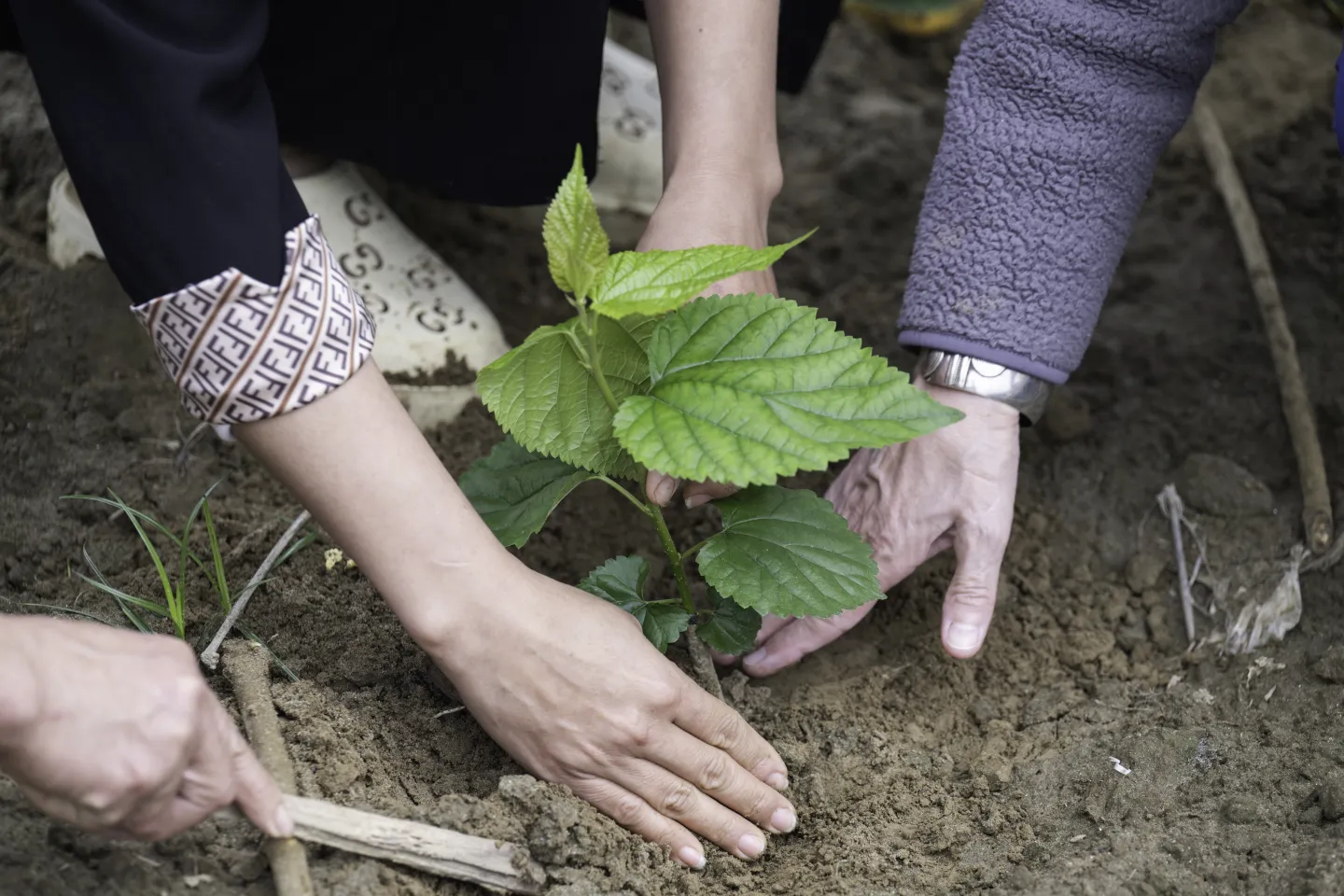
After Typhoon Bualoi struck central Viet Nam in October 2025, the approach expanded southwards. In Thanh Hoa, Nghe An and Ha Tinh provinces, 104 cooperative member households participated in EIIP activities, generating 1,040 workdays. Each household received VND 3.5 million within the framework of an employment-based recovery programme.
Across six provinces, more than 800 households benefited from employment-centred reconstruction initiatives, embedding job creation and decent work standards within local recovery processes.
Dr. Le Tuan An, Director of the Institute of Science, Technology and Environment - the responsible agency for implementing production recovery activities - shared: "In the aftermath of natural disasters, the ILO's support in coordination with the Viet Nam Cooperative Alliance (VCA) has proven highly effective. It has not only provided direct assistance to workers and cooperative members to stabilize their lives, but more importantly, has incentivized them to actively participate in repairing farmland and restoring production for their households and cooperatives through wage-based support."

Building resilience that lasts
Yet, recovery is only part of the story. Across the typhoon-affected regions, the ILO invested heavily in longer-term capacity building that turns communities from passive victims of disaster into active agents of their own resilience.
Training programmes reaching 491 participants across Lao Cai, Phu Tho, and Hai Phong covered everything from disaster awareness and occupational safety to first aid and business continuity planning. The courses were designed to be inclusive: more than half of all participants were women, and many were members of ethnic minority communities who are often the most exposed when disaster strikes.
Mr. Truong Manh Hung, President of the Lao Cai Cooperative Alliance: “Training courses on community-based disaster risk management and business continuity planning organized by the ILO and the Vietnam Cooperative Alliance are very important and have had a positive impact on local communities, particularly cooperatives and ethnic minority communities in mountainous areas. Agricultural production today faces significant risks due to climate change, including increasingly extreme weather events such as heavy rainfall, floods and landslides, while agricultural insurance products remain limited. Therefore, the ability to assess and anticipate risks, and to prepare response and recovery plans, is crucial for cooperatives to maintain and restore their production activities.”
To ensure that EIIP becomes a national tool rather than a one-off intervention, the ILO facilitated the participation of a senior official from the Viet Nam Dike Disaster Management Agency in the EIIP Academy in Turin - Italia in October 2025. The engagement aimed to strengthen institutional understanding of employment-intensive methodologies and support their integration into national disaster management frameworks, strengthening national capacity to link disaster recovery with employment creation.
Extending social protection to those at risk
Natural disasters often expose another vulnerability: limited access to formal social protection.
To address this gap, the ILO conducted outreach sessions on the amended Social Insurance Law, helping workers, particularly those in cooperatives, better understand their rights and options. Ensuring that vulnerable workers can access social insurance is a critical part of building resilience in disaster-prone areas.

A dedicated study involving 201 cooperative workers and managers in Typhoon Yagi-affected areas, more than half of them women, examined the status of social insurance coverage. The findings aim to inform practical solutions to expand coverage, especially in mountainous and remote regions where climate risks are rising.
For many workers, social insurance remains distant or difficult to navigate. By combining livelihood recovery with stronger social protection systems, including a shocks-responsive approach, the ILO seeks to reduce vulnerability before the next crisis strikes.
Recovery rooted in decent work
From the muddy fields of Yen Bai to the cooperatives of central Viet Nam, the recovery process has shown that rebuilding after disaster is not only about restoring what was lost. It is about creating safer workplaces, stronger institutions and more inclusive systems.
Ms. Nguyen Thi Hoai Linh, Vice President of the VCA emphasized: "In fulfilling our mandate to represent and protect the legal rights and interests of cooperatives and their members, the VCA has always regarded the ILO as a steadfast partner in supporting cooperative members and communities in disaster-affected areas, including those hardest hit by Typhoon Yagi. The ILO's support programme has not only helped communities overcome hardship but also created new opportunities, enabling people to rebuild their livelihoods and restore production."
“The ILO supports the reconstruction of societies affected by recurrent disasters through promoting decent work, enhancing preparedness, mitigating potential impacts and increasing resilience,” Ms Sinwon Park, Director of ILO Country Office for Viet Nam affirms. “In disaster scenarios the ILO provides support to its constituents by contributing to disaster prevention, mitigation, preparedness and recovery with a focus on employment creation, income generation, protection of vulnerable livelihoods and promotion of sustainable local development.”
Viet Nam is one of the world's most disaster-prone countries, and climate change is making that reality more severe with each passing year. With the support of the Government of Australia and the Government of Japan, the work of 2024 and 2025 is not an endpoint. It is the foundation of a more resilient future, built by the communities themselves, with the tools, knowledge, and support they need to stand firm after the typhoons.
You may also be interested
Country portal
Viet Nam

Topic portal
Cooperatives
Multi-sector assessment highlights recovery needs from Typhoon Yagi for employment, livelihoods and social protection

When hope becomes a way forward