

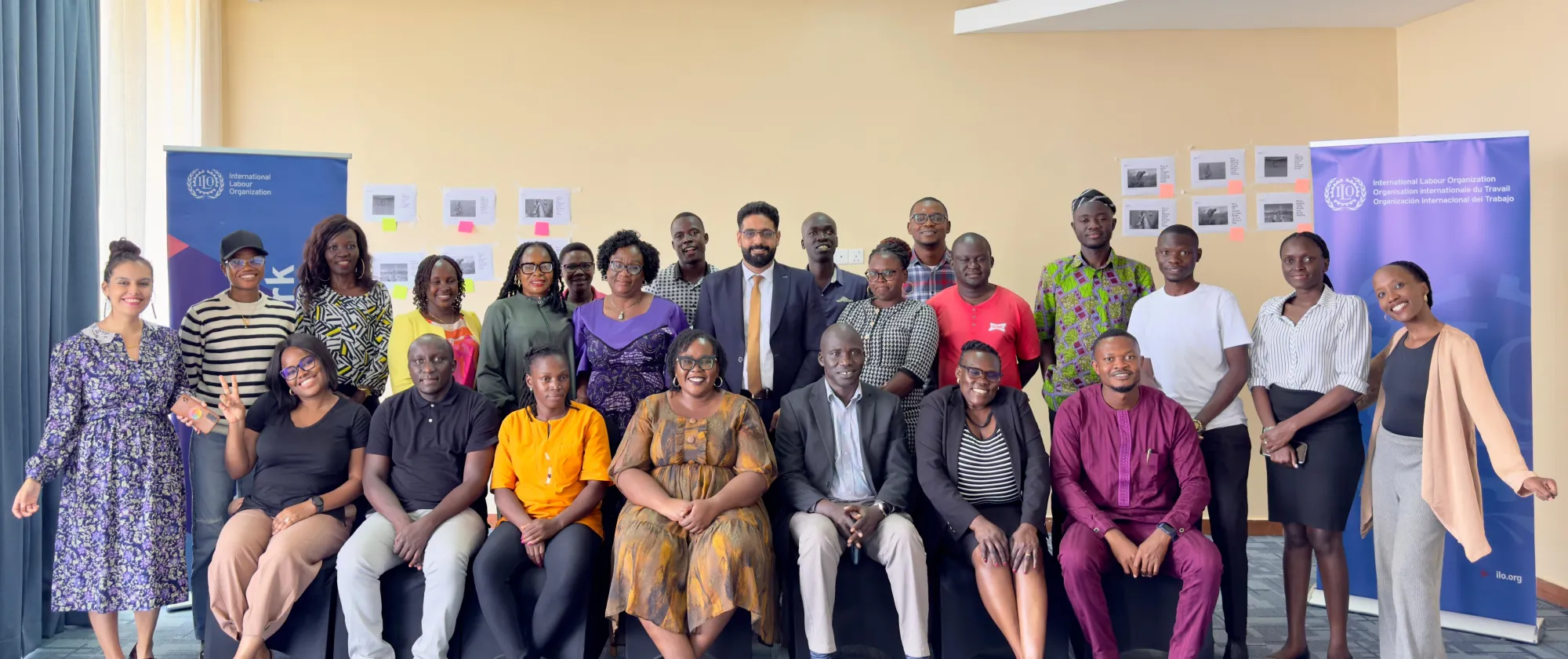
African journalists play a crucial role in preventing reversals in the fight against child labour
26 September 2024
By: Manuel Odeny - Journalist from Kenya, participant to the "Voices against child labour" training
September 25, 2024 – Reporting from Entebbe, Uganda
African journalists and media have been challenged to ensure gains made to eradicate child labour in the continent are not reversed.
Caroline Khamati Mugalla Director for the ILO Country Office in Dar es Salaam, overseeing operations across Tanzania, Kenya, Rwanda, Burundi, and Uganda, said the continent still grapples behind in fighting child labour.
“We will need stories that will bring the issues of child labour to the forefront as the figures we have still grim, and we should not roll back on the gains we have made,” Mugalla said.
She said media is the eyes of the community, and the stories provided to them should strive to make ripple effects through the continent to help to bring positive change.
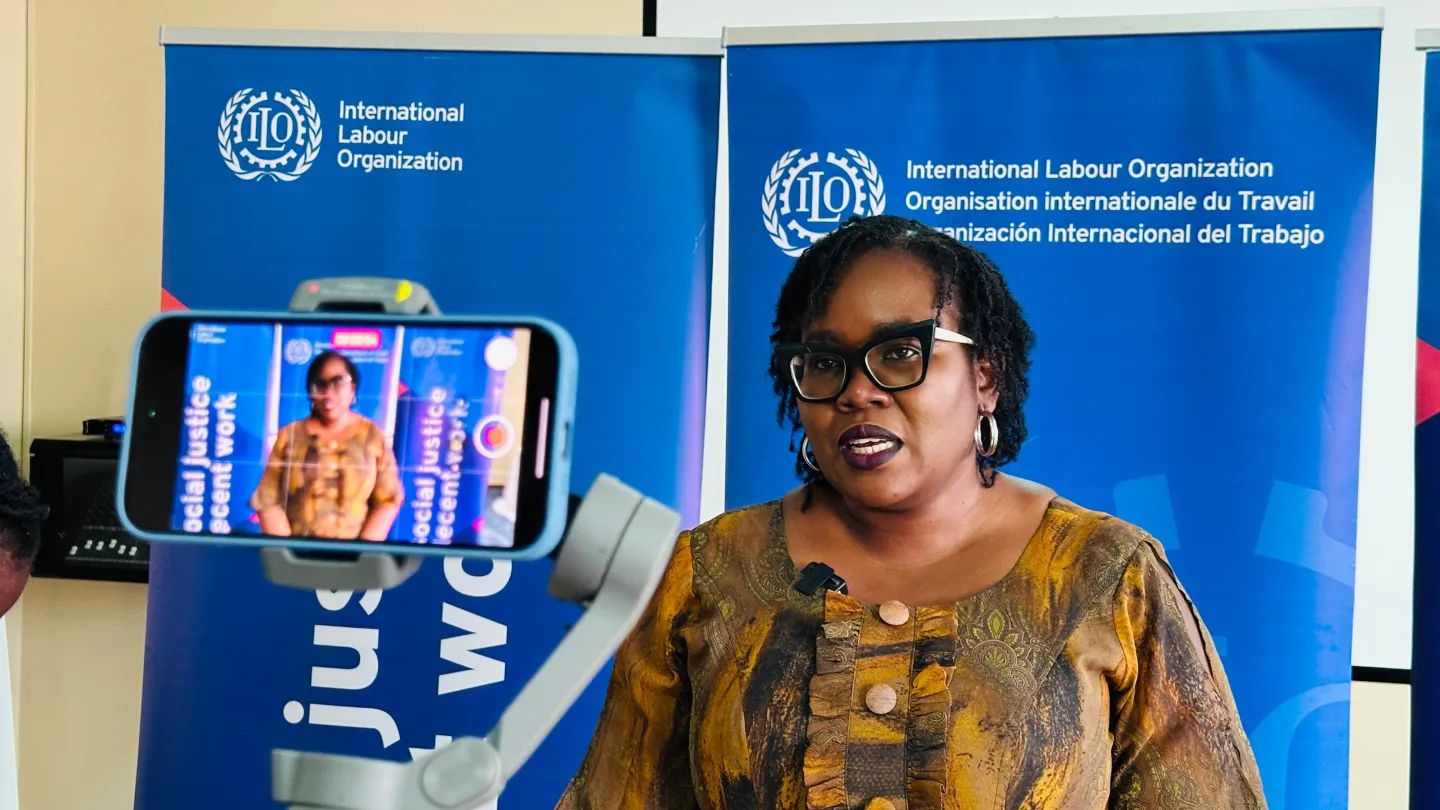
She was speaking on Wednesday 25 September, 2024 in Entebbe, Uganda when she closed a three day training workshop organised by ILO which targeted 16 journalists from across the continent.
The journalists were drawn from Malawi, Kenya, Egypt, Ghana, Uganda and Nigeria.
“We have seen passion and commitment from the training, and we need to keep the fire burning because we have covered the subject of child labour through several angles which will be reflected in coverage,” she said.
Across the globe 160 million children aged between five and 17 years are involved in child labour with 49.4 per cent of them in hazardous environment.
Out of the figures, Sub-Sahara Africa accounts to 23.9 per cent of the number across the globe while Northern Africa and Western Asia accounting to 7.8 per cent.
Her sentiments were shared by Apollo Onzoma, the Uganda Assistant Commissioner of Industrial Relations at Ministry of Gender, Labour & Social Development.
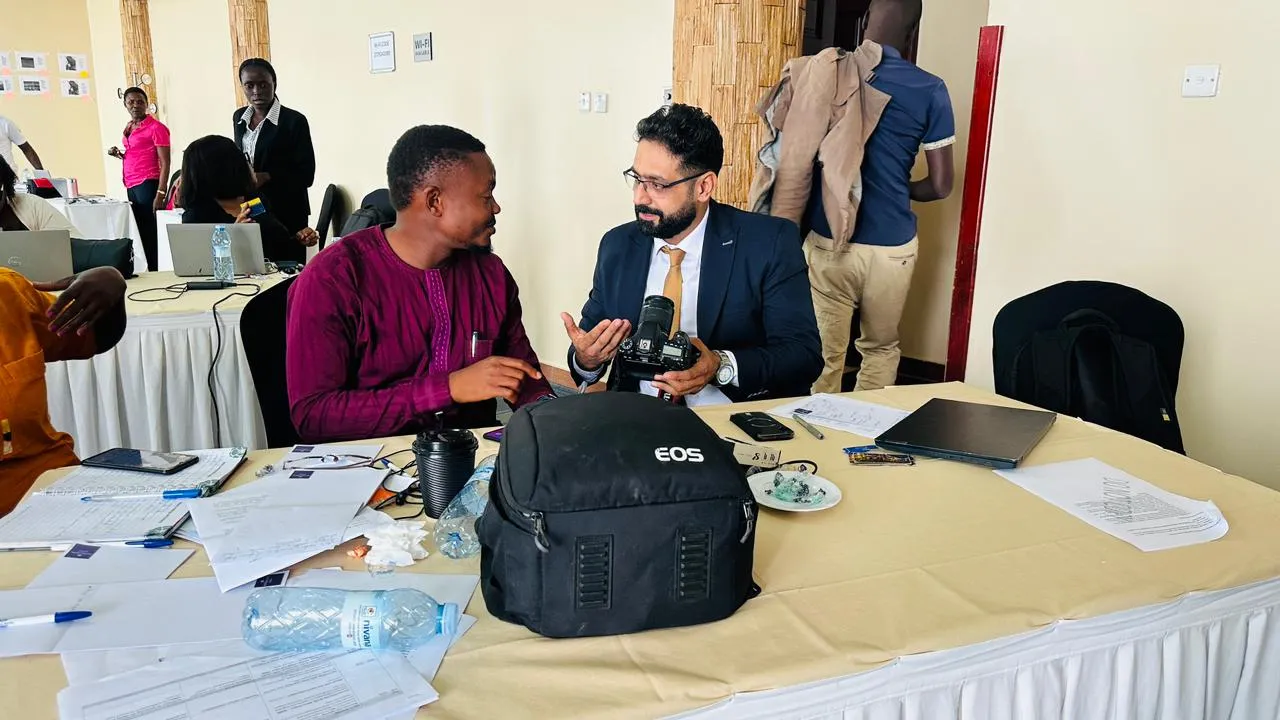
Onzoma said Uganda was honoured to have hosted the training because media plays a key role on creating awareness and sensitization, which strongly supports the eliminate child labour.
“Media will improve the entire performance to tackle child labour, as journalists your role is very critical in bringing out these issues through information to the public, education, mobilizing opinion and highlighting cases for learning and taking action,” he said.
He said child labour is not only a violation of Fundamental Principles and Rights at Work, but it also undermines sustainable development, “as we will lack required skills and the labour market in the future.”
Uganda has placed ending child labour at the center of its 2040 national development plan, and has ratified and developed international and country laws, polices and implementation plans.
Under this context, the ILO has rolled out The ACCEL Africa Project with the main goal of accelerating the action towards the elimination of child labour in continent especially in cocoa, cotton, coffee, tea and gold supply chains.
“It adopts an innovative systems-approach to tackling child labour that moves away from project-based downstream interventions towards strengthening existing systems that are critical to tackle root causes of child labour,” Jackie Banya, National Project Coordinator for Uganda explained.
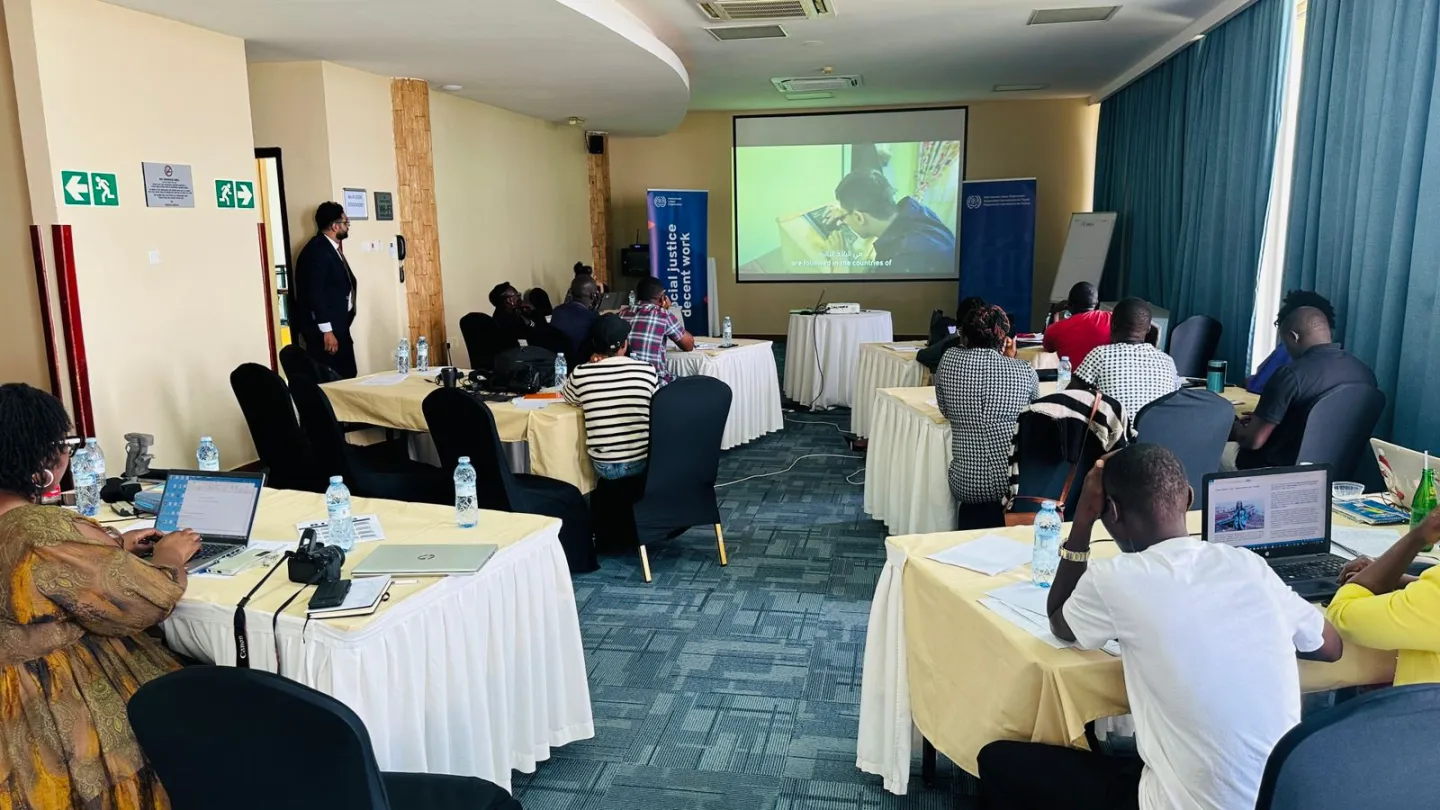
Angelica Munoz, Knowledge Sharing Officer at ACCEL Africa said while a single training will not end child labour in the continent. However, this is the best way to welcome more stakeholders into the picture.
“I think we need to involve all related stakeholders, so that we can, all together, help fight child labour. It is important for journalists to take their part and influence other actors to take part as well” she said.
Helen Shok-Jok, a Nigerian journalist with Voice of Nigeria (VoN) said the training and past engagement with ILO has helped her have a critical eye on child labour which is often seen as a normal occurrence not only in her country but across Africa.
“I decided to use my profession as journalist to fight child labour and put an end to it, I use my stories to bring awareness to people, reach the decision makers to make policies that will rescue the children from streets, exploitative homes, and destruction of education to give them a brighter future,” Helen said.
“I got this training as an opportunity to report on child labour in an impactful way, I will not relent until child labour is brought to an end in Nigeria,” she said.
Relevant projects
Feasibility study and design of an impact bond to reduce child labour in Côte d’Ivoire