


Advancing skills and climate-resilient roads in rural Zambia
A pilot road project in Mikango, Chongwe, is creating jobs, building skills and promoting climate-resilient construction. Using labour-based methods, 22 participants gained hands-on training while improving rural road access and supporting sustainable development.
16 June 2026
CHONGWE, ZAMBIA (ILO News) – A demonstration road project in Mikango, Chongwe District, is showing that rural infrastructure can do more than improve access, it can also create jobs, build skills and promote climate-resilient construction.
Implemented by the National Council for Construction (NCC) with support from the International Labour Organization (ILO), the project focused on low-volume sealed roads using labour-based technologies.
This approach is cost-effective, environmentally sustainable and suited for community-level development.
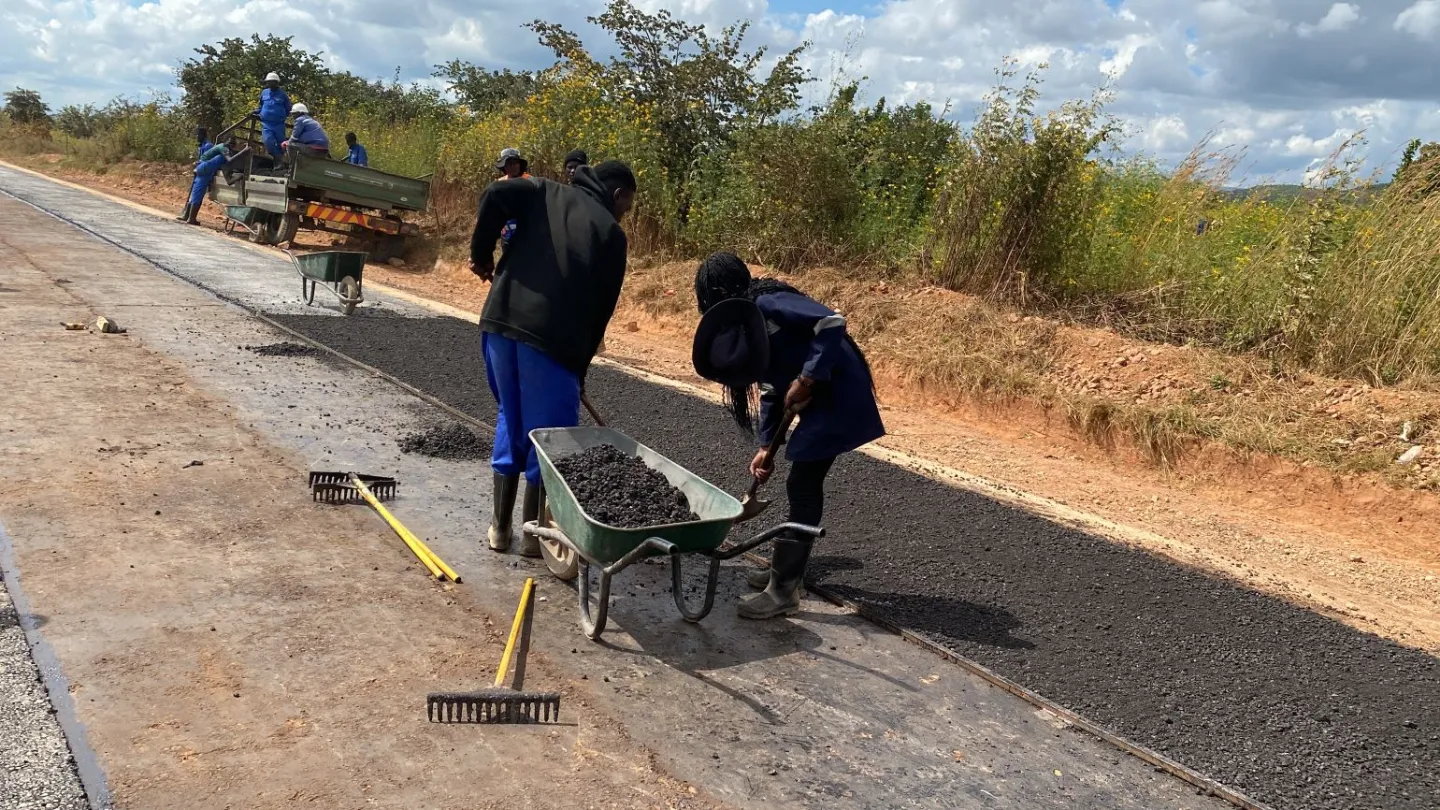
Through the initiative, 22 local participants received training while earning income, combining skills development with temporary employment.
Training covered key road surfacing techniques, including material testing, bituminous binders, cold-mix asphalt, double surface dressing and cape seals. Participants also learned about weather conditions, traffic control and occupational safety and health.
Practical work was carried out on a 150-metre stretch of the Katoba–Lwimba feeder road, where trainees took part in site clearing, subgrade and subbase preparation, constructing a cement-treated base and priming for sealing.
Exposure to different sealing methods provided hands-on experience in climate-resilient construction.
“Before this project, I had never seen a road built using different sealing methods. Now I have skills I can use to earn a living,” said trainee Prisca Kashikilo.
NCC lead trainer Engineer Martin Daka said the project demonstrates that labour-based road construction builds both infrastructure and opportunity. “It is about creating jobs, building skills and opening up remote communities,” he said.
Despite challenges such as delayed equipment and material changes, the project strengthened participants’ resilience.
Overall, the Mikango initiative highlights how infrastructure projects can support skills development, employment and sustainable rural development.