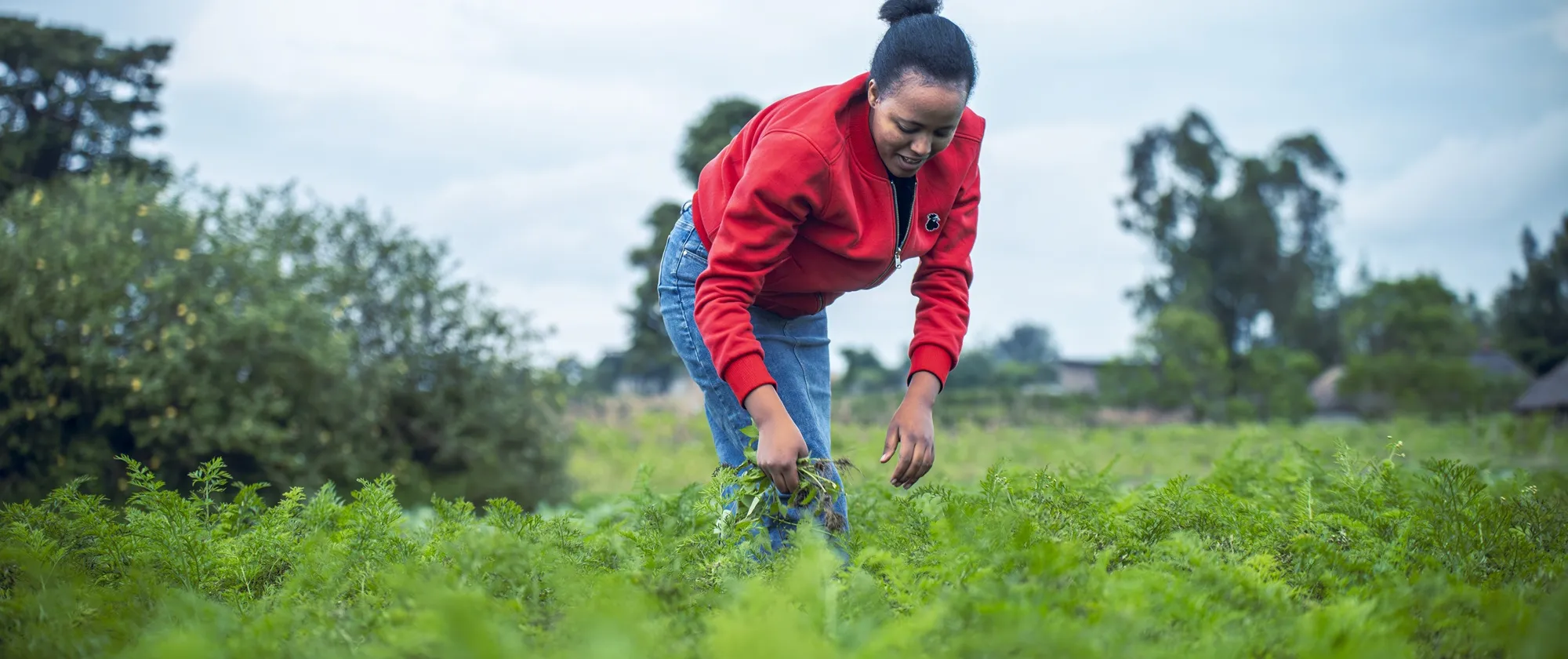
Agri-businesses ecosystem
Advancing agri-businesses through improved and inclusive entrepreneurship ecosystems in the Sidama Region of Ethiopia
Key actors in Ethiopia’s agri-entrepreneurship sector gathered in Hawassa to validate a study on ecosystem challenges. The study identified major barriers in market access and financing for small agri-businesses in Sidama. Stakeholders discussed solutions, emphasizing collaboration, innovation, and sustainable development.
27 February 2025
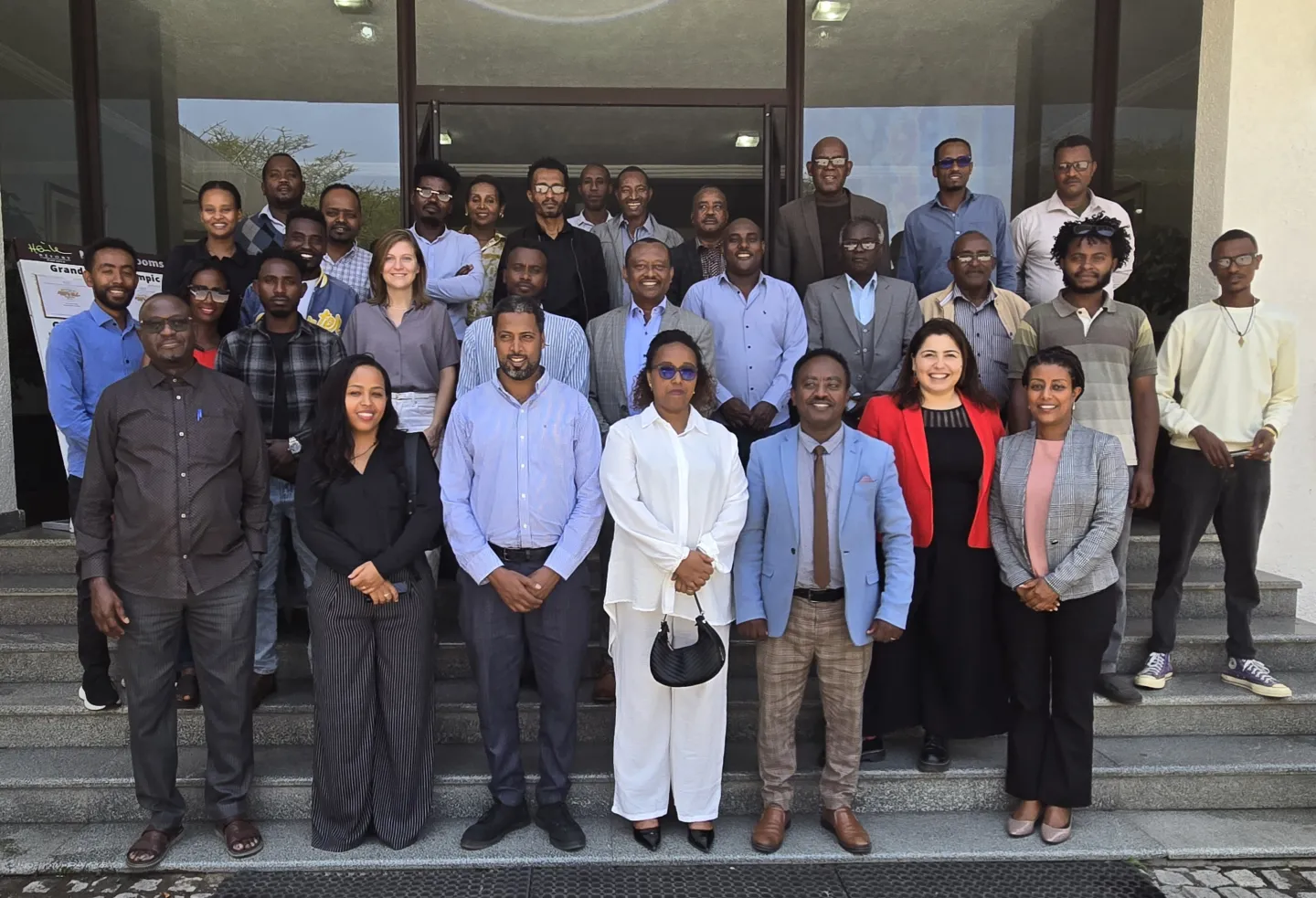
Hawassa, Ethiopia (ILO News)-On 19 February 2025, key actors in the entrepreneurship ecosystem gathered in Hawassa, Sidama region of Ethiopia, to discuss and validate comprehensive study findings on the agri-entrepreneurship ecosystem conducted by the ILO ProAgro Ethiopia project. The event had the presence of 41representatives of the government, private sector, NGOs, cooperatives, and smallholder farmers. The study is based on the ILO’s approach to Inclusive Entrepreneurship Ecosystems Development (IEED).
The study assessed major challenges faced by micro, small, and medium agri-enterprises in Sidama and proposed concrete recommendations to enhance the region’s agri-entrepreneurship ecosystem. Through the validation workshop, the ILO ProAgro Ethiopia project consolidated a platform to bring together various key actors involved in agri-entrepreneurship development in the Sidama region of Ethiopia.
“This platform created an opportunity to bring together and foster discussions among various actors working towards entrepreneurship development. I personally expanded my network by meeting and discussing the study findings with key actors in the system. The networking and collaboration will help to avoid gaps and overlaps among us, the different stakeholders, enabling us to effectively utilize the limited resources we have at hand.”
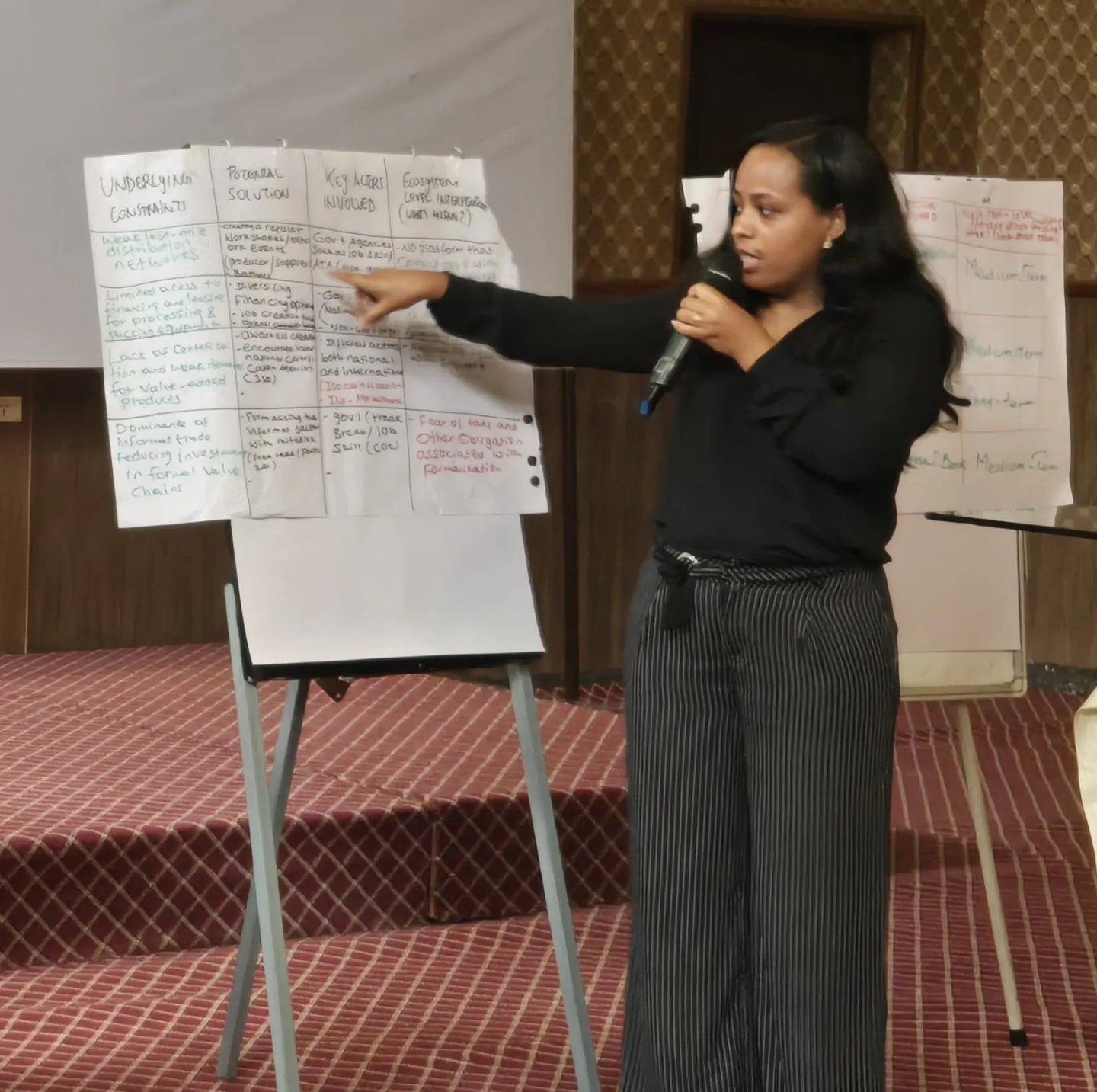
The key findings of the study and subsequent discussions undercovered underlying constraints behind the following critical challenges in Sidama’s agri-entrepreneurship ecosystem. Based on the assessment, the project has decided to focus its initiatives on strengthening the Market and Finance pillars of the ecosystem. Challenges in the Market pillar include: 1) Limited access to reliable market information; 2) Logistical constraints and inadequate marketing spaces; 3) High costs and limited access to agricultural inputs; 4) Low competitiveness and minimal value addition; and 5) Environmental and climate risks. Challenges in the Finance pillar include: 1) Limited access to credits and loans; 2) Inadequate financial products tailored to agribusiness; and 3) Poor financial literacy and lack of awareness about financial opportunities
“The study findings clearly outlined key challenges in the entrepreneurship ecosystem. We have thoroughly discussed the challenges on the ground related to access to finance and market linkages and provided additional input. We hope the input provided by ATI and other key actors in the system will help the ILO strengthen its efforts in creating improved entrepreneurship ecosystems in Ethiopia.”

This validation workshop provided an invaluable opportunity for group discussions, which greatly helped to dig deep into the underlying constraints behind the challenges and identify actors that can perform new or improved functions to address identified systemic constraints. The importance of coordination and networking, inclusion, technology and innovation, and climate and sustainability were discussed as major cross-cutting dimensions to be considered when tackling the ecosystem challenges.
"The study systematically identified challenges within the entrepreneurship ecosystem. Key stakeholders, including government officials, financial institutions, and NGOs, discussed recommendations to address issues related to input, supply, market, and production in the agro-business sector. We suggested that the Sidama Development Association contribute by providing a virtual agri-business platform to create an organized and cost-effective marketplace, bringing together all stakeholders in the sector."