

ADIJEFE: an innovative project to facilitate youth integration and business formalization in Senegal
The ADIJEFE project, executed by the ILO and funded by the Italian Agency for Development Cooperation (AICS), embodies an ambitious initiative aimed at creating decent jobs for young people while promoting business formalization. Here’s a look at the progress, challenges, and prospects of a project driving profound transformations.
8 May 2025
Senegal faces a major challenge: the professional integration of its youth in a context where over 70% of the population is under 35 years old. This situation, combined with a saturated labor market, pushes many young people towards informal entrepreneurship. Aware of this issue, the ADIJEFE project, which aligns with national priorities such as Senegal 2050 and the Transformation Agenda, offers an innovative response by targeting two key objectives: improving youth integration and formalizing businesses.
A Collective Commitment for Concrete Results
The project aims for tangible results. It plans to reform the National Convention State-Private Employers (CNEE), formalize 400 artisanal businesses, create 10 cooperative societies of artisans, and integrate 200 young people through the status of entrepreneur. Additionally, efforts are directed towards signing 100 apprenticeship agreements with young artisans, illustrating an integrated and inclusive approach.
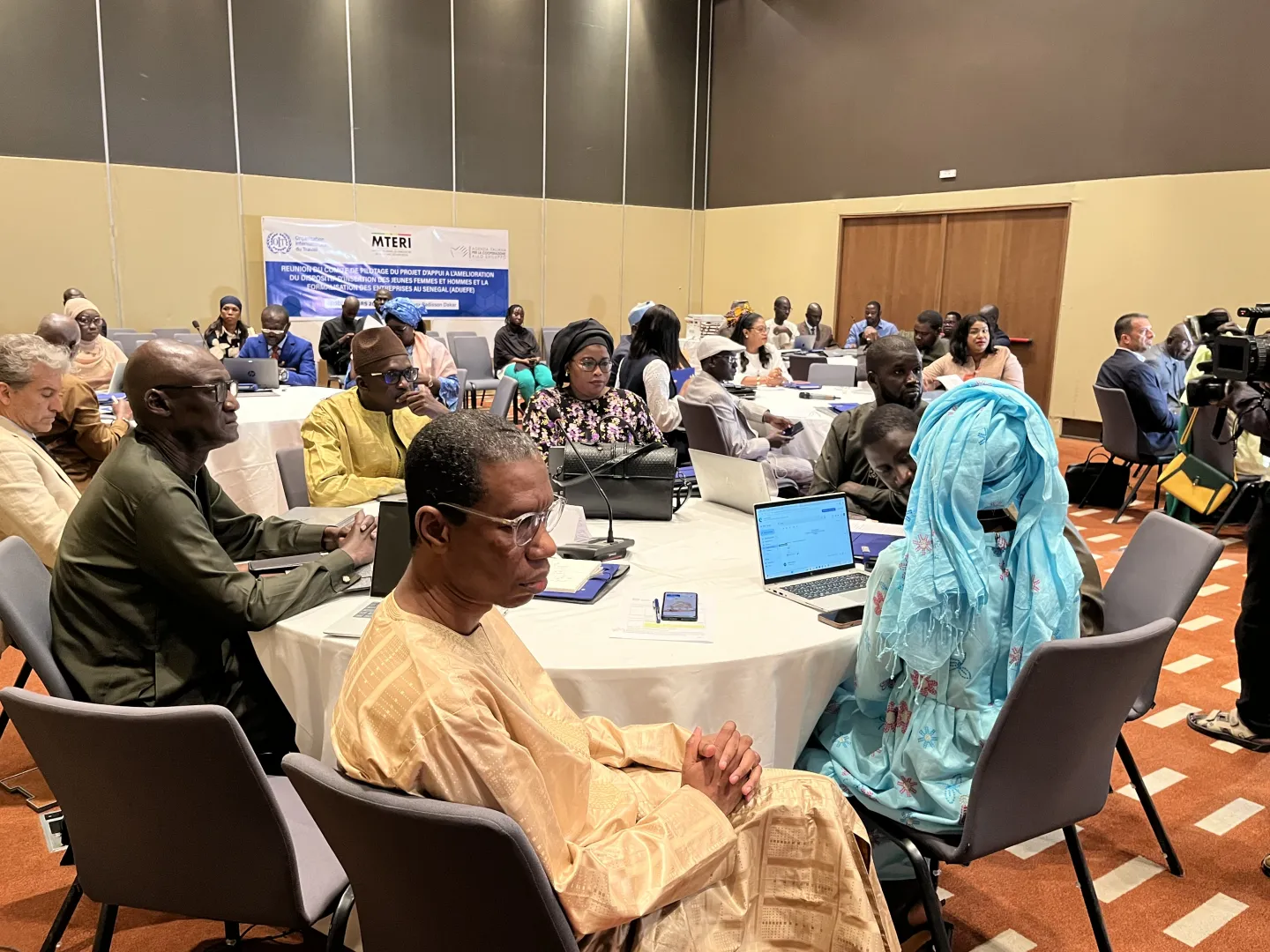
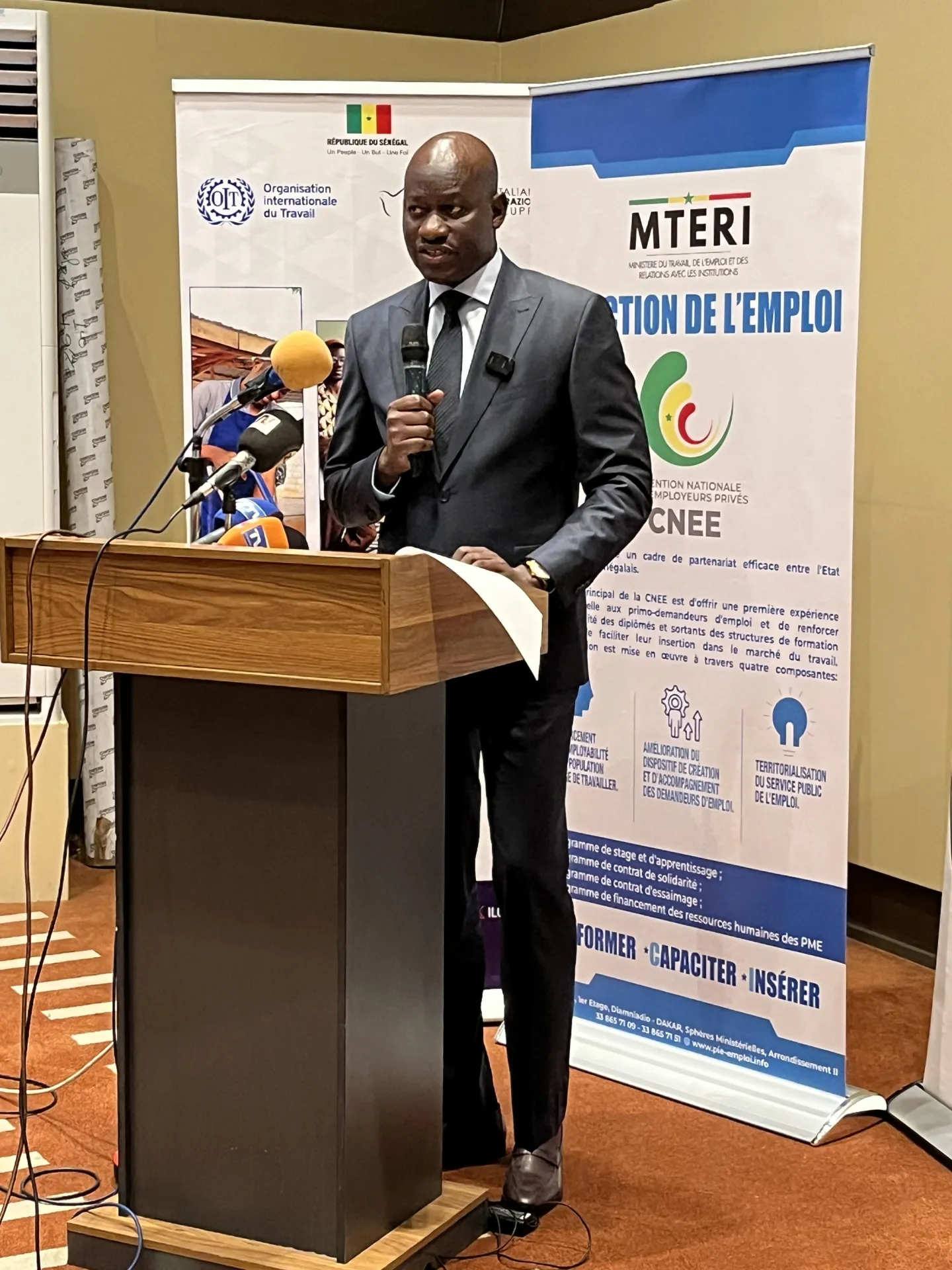
During the recent steering committee meeting, chaired by Mr. Abass FALL, Minister of Labor, Employment, and Relations with Institutions, in the presence of Ms. Samira DAOUD, Director of the ILO office in Dakar, and Mr. Giovanni GRANDI, Director of the Italian Agency for Development Cooperation, stakeholders praised the project's progress while acknowledging the challenges encountered. Notable achievements include the establishment of the monitoring and evaluation committee for the entrepreneur status, training its members on international best practices, impact assessment of the National Convention State-Private Employers (CNEE), and studies aimed at determining incentive measures to encourage formalization.
Institutional and Operational Challenges
Despite its successes, ADIJEFE has faced certain obstacles. Government transition led to institutional changes impacting the project, while delayed appointment of focal points and late establishment of the steering committee and monitoring and evaluation committee slowed initial progress. These challenges required constant adjustments to maintain pace and ensure goal achievement.
Systemic Impact on Employment and Entrepreneurship
Preliminary results of the CNEE impact assessment study, presented by Professor Abou KANE, highlight several key points. Although 98.7% of beneficiary businesses are registered, their level of formalization remains low, particularly in terms of compliance with accounting and social standards. Conversely, the project has increased regular employment opportunities for beneficiaries while improving their remuneration prospects.
To address these challenges, strategic recommendations have been formulated, including replacing the salary reimbursement mechanism with a compensatory tax credit and implementing incentive measures to encourage better business formalization and fair remuneration.
Perspectives and Lessons Learned
The project coordinator presented an ambitious action plan for the coming months. This includes disseminating new CNEE provisions, developing online self-training modules for the new CNEE, and creating practical guides for beneficiaries. These initiatives aim to strengthen stakeholder capacities and optimize project impact.
Furthermore, lessons learned from implementation highlight the importance of early and active stakeholder involvement. This approach ensures not only their adherence but also the sustainability and sense of ownership of the project.
A Promising Future
In closing the meeting, the Minister of Labor and Employment expressed satisfaction with the progress made. He encouraged technical and financial partners to consolidate the results obtained while exploring new incentive measures. With stakeholder support and strong political will, the ADIJEFE project positions itself as a transformative lever for Senegal's entrepreneurial ecosystem, offering young people better professional integration and businesses a path to formalization.

ADIJEFE is more than a project: it is a vision for the future that, through its holistic approach, aims to contribute to Senegal's sustainable and inclusive development. The coming months will be decisive in confirming its ability to embody this expected systemic change.