

Addressing the impacts of extreme heat through social protection
International stakeholders at the Global Labour Market Conference (GLMC) in Riyadh explored how social protection can help protect workers, including migrant workers across the GCC-South Asia corridor, from the growing impacts of extreme heat.
26 January 2026
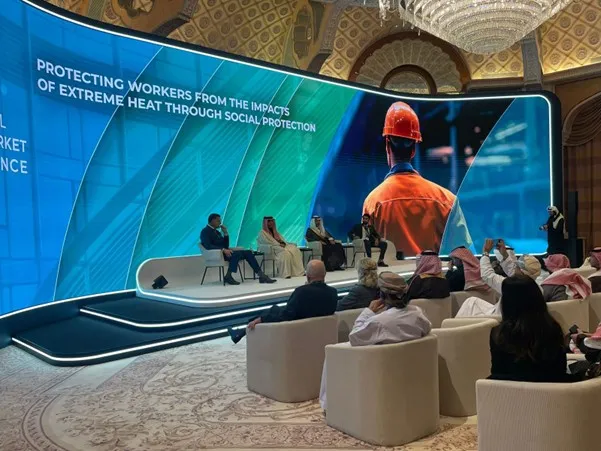
RIYADH (ILO News) – A dedicated session on “Protecting workers from the impacts of extreme heat through social protection” at the Global Labour Market Conference (GLMC) in Riyadh, Saudi Arabia, on 26 January 2026 explored ways to adapt social protection systems to address the effects of rising global temperatures and heat stress at work. Organized by GLMC in partnership with the International Labour Organization’s (ILO) STREAM Programme, the session brought together participants representing governments, experts, diplomatic missions and development partners from across the Arab region, Asia and Europe.
Opening the session, Sattam Al-Harbi, Deputy Minister of Work Environment and Inspection at the Ministry of Human Resources and Social Development of Saudi Arabia, stressed that extreme heat is no longer a seasonal issue, it is a structural challenge for labour markets and worker protection. He highlighted that “Saudi Arabia has strengthened preventive measures through seasonal midday work bans, stronger inspection and compliance, and awareness for employers and workers, while advancing integrated approaches that link occupational safety and health, social protection, and labour market resilience.”
In his opening remarks, Christophe Farnaud, Ambassador of the European Union to Saudi Arabia, Bahrain and Oman, noted that “as climate change intensifies extreme heat risks, protecting workers’ health and safety has become a shared global challenge.” He affirmed that “the European Union values its cooperation with Saudi Arabia and the ILO in advancing social protection systems that safeguard migrant workers and promote decent work in the Gulf and beyond.”
From a regional perspective, Mohammed bin Hassan Al-Obaidli, Director General of the Executive Bureau of the GCC Council of Ministers of Labour and Social Affairs, highlighted that “all GCC countries have implemented effective summer campaigns to prevent extreme heat.” Addressing heat risks requires “an approach that goes beyond working-hour regulations to include labour market policies, social protection, health and insurance coverage, awareness, and capacity building,” he said.
Yasmine Chatila Zwahlen, Ambassador of Switzerland to Saudi Arabia, underscored that responding to extreme heat must go beyond preventive measures alone. "Protecting workers from extreme heat requires more than prevention measures alone; it demands inclusive social protection systems that leave no worker behind, including migrant workers and their families,” she noted.
The session was closed by Claire Courteille-Mulder, Deputy Regional Director of the ILO Regional Office for Arab States, emphasizing that “heat stress is both an occupational safety and a social protection challenge.” Without adequate income protection, access to healthcare and employment injury coverage, workers bear the full cost of climate-related risks. She stressed that, through the STREAM Programme, the ILO is committed to supporting Saudi Arabia and other countries across the GCC-South Asia corridor, and beyond, to better prepare social protection systems to address the impacts of extreme heat.
Why can heat stress no longer be ignored?
Around the world, excessive heat exposure is an increasingly serious challenge for workers, employers and governments. Prolonged work in high temperatures can lead to acute injuries, long-term health conditions such as chronic kidney disease, and even heat-related deaths.
The ILO estimates that 71 per cent of workers worldwide are exposed to excessive heat, resulting in an estimated 22.85 million non-fatal occupational injuries and nearly 19,000 deaths each year. Workers in poorly ventilated indoor environments and those engaged in outdoor sectors – such as agriculture, delivery services, construction, and extractive industries– face the greatest risks. In the absence of social protection, heat-related illness or injury can lead to temporary or permanent income loss, high out-of-pocket medical costs, and an increased risk of poverty. In the most severe cases, permanent disability or death can deprive families of their main breadwinner.
Extreme heat also harms employers, as they face reduced productivity, lost working hours, and higher costs – especially when temperatures make it unsafe to work. At scale, this can translate into lower economic output, particularly where no protective systems are in place.
Gulf Cooperation Council (GCC) countries are among the most affected and have made great progress in developing occupational health and safety measures to reduce the risks of heat exposure. All GCC countries have introduced seasonal restrictions on outdoor work, typically through “midday work bans” during the hottest summer months. Most countries also require employers to educate workers and provide basic protective measures such as hydration, rest areas and safety equipment. Some countries, such as Qatar and Saudi Arabia, have integrated scientific heat-stress thresholds into their regulations. This progress is particularly important for migrant workers, who make up between 76 and 95 per cent of the workforce in GCC countries, including in sectors at most risk from extreme heat.
While effective OSH measures are fundamental for prevention, the session identified the need for greater coordination between OSH measures on the one hand, and social protection measures on the other – an important but often overlooked link in comprehensive heat-stress risk management.
How can social protection help address the impacts of heat stress?
Social protection systems complement preventive OSH measures by providing income security and access to healthcare when the impacts of extreme heat materialize – that is, when prevention is ineffective or insufficient, acknowledging that some residual risk always remains. In addition, some social protection schemes can strengthen the preventive function of OSH measures. In a technical framing presentation, Jana Bischler, ILO Technical Officer for Social Protection and Climate Change, explained the functions of various social protection schemes for heat risk management:
- Partial unemployment benefits provided through “adverse weather unemployment schemes” allow employers to temporarily stop work during hazardous conditions, as insurance mechanisms cover workers’ wages. This reduces the risks to workers’ health, and lowers compensation and medical costs, while ensuring that employers do to not directly bear the financial burden for lost working time.
- Sickness benefits enable workers to stop working when heat exposure causes illness. These benefits support recovery and reduce the risk of worsening symptoms, complications, and long-term health damage and disability.
- Work injury compensation can support workers who have suffered heat-related illnesses, injuries or death. This involves covering medical costs or providing earnings-related periodic cash benefits for workers with disabilities, or the dependents of deceased workers, including funeral grants.
However, her presentation also highlighted that compensation often depends on the ability to attribute injuries and illnesses to work, which is particularly difficult in the case of heat-related conditions. This underscores the need for a basic layer of social protection – a social protection floor – in both countries of origin and destination, including social health protection to ensure universal access to healthcare for heat-related conditions, as well as disability and survivor benefits.
From theory to practice: Experiences across Europe, Asia and the Middle East
The session provided a platform for sharing experiences and best practices from countries that are already strengthening social protection schemes to address the effects of extreme heat.
Valeria Bonavolontà, Head of International Relations at Italy’s National Institute for Social Security (INPS) explained that, since 2016, Italian employers can claim short-term benefits (wage guarantee fund) if work activities are suspended or reduced when temperatures exceed 35°C, or even below this threshold when other factors such as humidity are high. She also highlighted that the Italian employment injury insurance provides compensation for heat-related illnesses or accidents at work.
“The South of Italy has become very hot, registering peaks of temperatures never seen before,” she said. “Above 35 degrees, working outdoors may become very dangerous. It is crucial to have safety guidelines and training, but when work becomes too risky, it should be suspended and social security should cover the economic loss for employers and employees. The wage compensation fund reimburses the employer for wage payments on days where work stoppages are necessary to avoid heat-related injuries or even deaths.”
The session also highlighted regulatory approaches to recognizing heat-related risks within employment injury frameworks. Jaime Lim, Director of the Major Hazards Department and OSH Specialists Department at the Ministry of Manpower of Singapore, explained that diseases caused by excessive heat have been added to Singapore’s list of occupational diseases eligible for compensation under the Work Injury Compensation Act (WICA), which also covers migrant workers.
In Saudi Arabia, strengthening the link between heat-related OSH requirements and income protection has been identified as essential to ensuring that compliance remains sustainable, credible and protects workers’ livelihoods. Nasser A. Al-Jaryad, President of the Saudi National Committee of Worker Committees, noted: “Extreme heat poses a particular challenge because its impacts are often cumulative and not always immediately visible, which makes preventive action essential. In Saudi Arabia, where temperatures can periodically reach 45–50°C, regulations have been introduced to protect workers from excessive heat exposure. The effectiveness of these measures depends not only on their design, but also on practical implementation and compliance on worksites. In this context, linking OSH requirements with appropriate social insurance or compensation mechanisms can help support compliance and protect workers’ health and income. We are keen to explore and support such approaches going forward.”
Looking ahead: Towards stronger and more heat-responsive social protection systems for migrant workers
In a forward-looking discussion, representatives of migrant worker organizations, countries of origin, and regional and international bodies highlighted existing gaps, opportunities and priorities for better protecting migrant workers from the impacts of extreme heat through social protection.
Perspectives of migrant workers and origin countries
Chetana Jagadeshgari from Migrant Forum Asia and Social Volunteer at the Indian Embassy in Riyadh shared the lived experiences of migrant workers and their families. She highlighted the particularly difficult situation of women, both as migrant workers themselves and as dependents who are often left to fend for their families when extreme heat leaves their spouses disabled or even dead. She also called for closer collaboration and integration between the social protection systems of countries of origin and destination to ensure the portability of benefits: “The living conditions of many migrant workers can exacerbate the problem where they sometimes have even less access to cooling than in the workplace. Migrant workers might be covered by social protection while they are in the host country, but when they go back, they lose all their benefits – so what about chronic health conditions? Countries of origin and destination should work together to close this gap.”
This sentiment was echoed by Md. Saiful Haque Chowdhury, Additional Secretary at the Ministry of Expatriates’ Welfare and Overseas Employment of Bangladesh: “Bangladesh has various welfare programmes that are also accessible for migrant workers when they return. But assistance for medical treatment of returning migrants with chronic health conditions would be very helpful for us. Hopefully, host countries can cooperate with us to find a solution.”
Entry points for reform
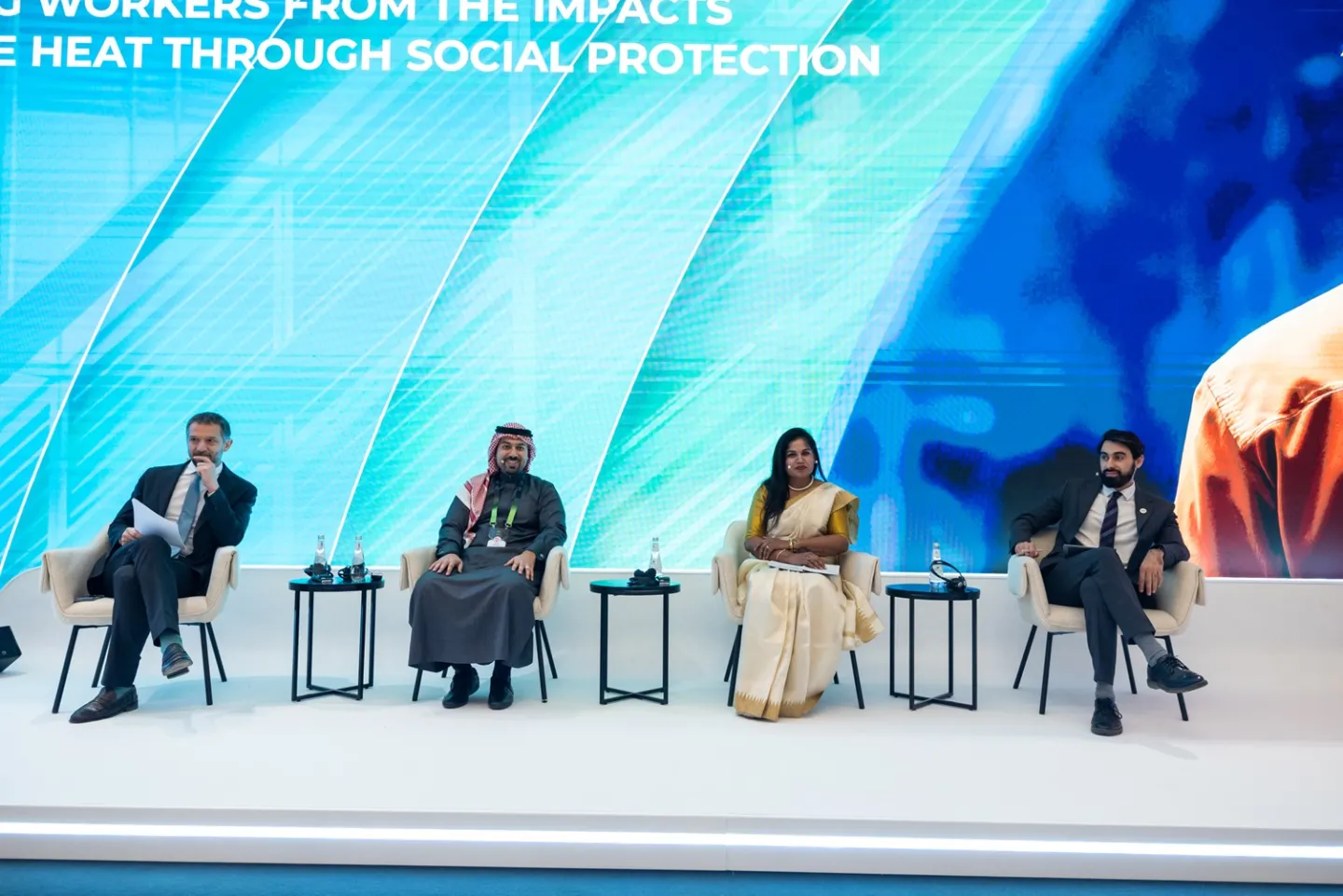
Participants identified a range of promising and concrete entry points for strengthening social protection systems in GCC and origin countries so that they are better prepared to provide support to all workers, including migrant workers, as well as employers in the context of heat stress.
Majed Al-Fuwaiz, Secretary General of the National Council of Occupational Safety and Health of Saudi Arabia, highlighted the need to expand social protection to workers in the informal economy and in new forms of employment. “In the absence of formal contracts, it is challenging to provide protection to workers in the informal economy,” he said. “This is further complicated by the rise of platform work, where workers are also exposed to risks and where urgent formalization efforts are needed.”
Jasim Alhamrani, Director of Strategic Planning and Communication at the Executive Bureau of the GCC Council of Ministers of Labour and Social Affairs, provided encouraging reflections on the way forward: “Since COVID-19, all countries in the GCC have reflected on their social insurance systems. This has created great momentum we can build on to link heat stress with social insurance. Employment injury insurance could be a good starting point. These schemes already exist in all GCC countries and tweaking them might be easier than establishing new schemes, for instance by expanding occupational disease lists like Singapore did. There is a lot of appetite in GCC countries to improve their work injury schemes.”
This observation was confirmed by Momin Badarna, ILO Regional Social Protection Officer, who shared the preliminary results of an ongoing comparative regional review of employment injury compensation schemes in GCC countries: “The review shows that there is a need to move away from fragmented employer-liability arrangements and towards social insurance systems that provide predictable income support rather than one-off lumpsum payments. The review also finds that, across the region, occupational disease lists are still very narrow. This makes it harder to recognize and compensate emerging risks such as heat-related illnesses, even when they are clearly linked to working conditions.”
Way forward
A range of recommendations to ensure that social protection systems – both globally and in the Gulf – keep pace with rising temperatures were summarized by Luca Pellerano, ILO Senior Technical Advisor and STREAM Programme Manager. These include:
- Getting the basics right: Countries should focus on extending comprehensive social protection coverage to all workers – especially to those in high-risk sectors and non-standard forms of employment – to prevent health impacts from becoming economic losses and provide the foundation for further heat-related adaptations.
- Adapting social protection schemes to extreme heat: Priorities should include introducing wage compensation for heat-related work stoppages, explicitly recognizing heat-related injuries and diseases in employment injury schemes, and integrating heat in the benefit packages of social health protection schemes. No-fault or universal disability and life insurance, that provide basic protection against illness and disability regardless of cause, are a critical complementary measure to help overcome attribution challenges in employment injury schemes.
- Closing protection gaps for migrant workers: Migrant workers are often among the most exposed, yet the least protected. Ongoing reforms will be essential, notably the transition away from employer-liability arrangements for employment injury and end-of-service indemnities toward long-term protection, alongside efforts to develop regional and bilateral social security agreements.
- Investing in evidence, data and research: Adapting social protection systems to heat stress is a new and emerging policy space. It will require more research to quantify impacts, review global best practices, and conduct diagnostics and feasibility studies across countries of destination and origin.
STREAM is a multi-country, multi-partner initiative designed to expand inclusive, gender-responsive and rights-based social protection coverage for migrant workers and their families across the South Asia-GCC migration corridor. Implemented by the ILO in partnership and with funding from the Swiss Agency for Development and Cooperation, the Foreign Policy Instrument of the European Union and the Ford Foundation, STREAM aims to create a world where every migrant worker – no matter their gender, status, or sector - can access the social protection they deserve to live and work in dignity.
Related content

Project
STREAM - Extending Social Protection to migrant workers and their families in the South Asia-Gulf Corridor
Relevant projects
Project
STREAM - Extending Social Protection to migrant workers and their families in the South Asia-Gulf Corridor